



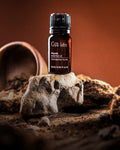

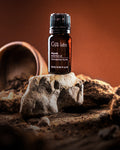
Clary sage is considered one of the gentler essential oils to diffuse around dogs — when it’s well diluted, the room is ventilated, and your dog can leave whenever it wants. But it should never be ingested, never used around pregnant dogs, and never applied to puppies. Topical use needs your vet’s sign-off first. So “safe” depends almost entirely on how you use it.
I want to be upfront about something before we go further. I’m a medical writer, not a veterinarian, and your dog’s vet knows your specific animal in a way no blog ever could. What follows is the research, the safety consensus from places like the ASPCA and Texas A&M’s vet school, and the practical steps I’d want a friend to know. But it doesn’t replace a conversation with your vet especially if your dog is pregnant, very young, elderly, or has health conditions.
Okay. Let’s get into it.
What Is Clary Sage Essential Oil?
Clary sage (Salvia sclarea) is steam-distilled from the flowering tops of the clary sage plant. It has a soft, herbaceous, slightly sweet scent that shows up a lot in evening diffuser blends and relaxation routines. People love it for winding down.
Dogs are a different story not because clary sage is especially dangerous, but because dogs experience scent on a completely different scale than we do. A dog’s sense of smell is somewhere between 10,000 and 100,000 times more sensitive than ours. So a scent that reads as “faint and pleasant” to you can be genuinely intense to your dog.
On top of that, dogs process plant compounds differently. Their livers don’t break down certain aromatic molecules the way ours do. That doesn’t make clary sage toxic in the air — it’s actually one of the oils most often described as dog-friendly. But it’s exactly why the rules around how you use it matter so much.
Can Dogs Ingest Clary Sage Oil?
If you take away one thing from this entire article, make it this.
The real danger with clary sage and almost every essential oil isn’t the smell. It’s ingestion. If a dog licks oil off its paws, drinks from a tipped-over diffuser, or has undiluted oil applied to its skin where it can lick it, that’s where things go wrong.
According to the ASPCA, oral exposure to concentrated essential oils can cause vomiting, diarrhea, and central nervous system depression in dogs. Texas A&M’s veterinary school puts it bluntly: essential oils should never be given by mouth or in a dog’s food. Full stop.
So the number one rule is physical: keep the bottle capped and out of reach, never apply oil somewhere your dog can lick, and if you use a diffuser, put it somewhere it absolutely cannot be knocked over. A curious dog plus a tipped diffuser is the scenario you’re designing against.
Which Dogs Should Avoid Clary Sage Oil?
Some dogs shouldn’t be exposed to clary sage at all, even diffused:
• Pregnant dogs. Clary sage can influence hormones — it’s often discussed in human aromatherapy for exactly that reason. Around a pregnant dog, skip it entirely.
• Puppies under 8 weeks. Too young, too sensitive. Their systems aren’t ready for essential oil exposure of any kind.
• Dogs with respiratory conditions. Asthma, collapsing trachea, or any breathing issue — added airborne particles can make things worse.
• Elderly or ill dogs. Compromised liver or kidney function means a harder time processing anything unusual. Ask your vet first.
• Dogs that have shown sensitivity before. If your dog reacted to any oil in the past, don’t experiment.
And one note that isn’t about dogs: if you have cats in the house too, be extra careful. Cats lack a liver enzyme that helps process these compounds, which makes them far more vulnerable than dogs. A blend that’s fine for your dog could be a problem for your cat sharing the same room.
How to Diffuse Clary Sage Safely Around Dogs
If your dog is healthy, not pregnant, and you’ve got the all-clear, here’s the careful approach:
1. Use a passive diffuser when possible. Reed diffusers or a few drops on a cotton ball release scent without spraying actual oil droplets into the air. The Pet Poison Helpline notes passive diffusers carry less risk than active misting ones.
2. Keep it brief. 10 minutes of diffusing, then 30 minutes for the air to clear. Not all day. Not background-noise constant.
3. Ventilate the room. Open a window or door. The air should move.
4. Always leave an exit. Your dog should be able to walk out of the room any time. Never diffuse in a crate, a closed small room, or anywhere your dog is confined.
5. Keep the diffuser out of paw-and-nose reach. High shelf, stable surface, nowhere it can tip onto your dog.
6. Watch your dog. This is the real safety check — more on that next.
Browse Gya Labs Clary Sage Essential Oil if you’re putting together a calm-evening diffuser setup, and the clary sage diffuser blends guide has pairing ideas.
Signs of Essential Oil Toxicity in Dogs
Your dog can’t tell you it’s uncomfortable, so you have to read the signals. Stop diffusing immediately and move your dog to fresh air if you notice any of these:
|
Mild (stop & ventilate) |
Moderate (call vet) |
Serious (emergency) |
|
Watery eyes or nose |
Repeated vomiting |
Difficulty breathing |
|
Sneezing |
Diarrhea |
Wobbliness / unsteady gait |
|
Leaving the room |
Drooling |
Lethargy or collapse |
|
Mild restlessness |
Pawing at face |
Tremors |
The mild signs usually just mean “this is too much, turn it off.” The serious ones mean call your vet or a poison helpline right now.
What to Do If Your Dog Ingests Clary Sage Oil
If the worst happens the diffuser tips, your dog licks spilled oil, or you see serious symptoms here’s the protocol veterinary sources recommend:
1. Turn off the diffuser and get your dog into fresh air immediately.
2. If oil is on the coat or paws, wipe it off with a dry cloth, then wash the area with liquid dish soap (like Dawn) not water alone, which spreads the oil.
3. Do NOT induce vomiting. Essential oils can cause aspiration pneumonia if brought back up. Both the Pet Poison Helpline and Merck Veterinary Manual advise against it.
4. Call for help. Pet Poison Helpline: 855-764-7661. ASPCA Animal Poison Control: 888-426-4435. Both are 24/7 (note: they charge a consultation fee).
5. Bring the bottle. Whoever you call will want to know exactly which oil, how concentrated, and how much.
Keep those two numbers somewhere findable. You’ll almost certainly never need them. But the one time you might, you won’t want to be searching.
Clary Sage vs. Other Essential Oils for Dogs
Clary sage usually lands on the “gentler” side of the spectrum. For context, here’s how a few commonly-discussed oils compare — though “gentler” never means “use freely,” and every oil here still follows the same diffuse-with-care rules:
|
Oil |
Botanical Name |
General Note |
|
Clary Sage |
Salvia sclarea |
Gentler to diffuse; avoid for pregnant dogs |
|
Lavender |
Lavandula angustifolia |
Among the most-discussed calming oils |
|
Frankincense |
Boswellia carterii |
Warm, resinous; used in calm blends |
|
Chamomile |
Matricaria chamomilla |
Soft, often paired with lavender |
|
Cedarwood |
Cedrus atlantica |
Woody; check variety — some cedars are flagged |
|
Tea Tree |
Melaleuca |
AVOID — toxic to dogs even in small amounts |
That last row matters. Tea tree gets lumped into “natural and safe” marketing constantly, but the ASPCA notes as few as 7–8 drops of concentrated tea tree oil can cause serious toxicity in dogs. Natural does not mean safe. Always check before you diffuse anything new.
Explore the full Gya Labs essential oil collection — just run any new oil past your vet before using it around your dog.