


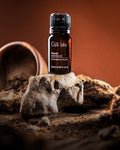
A hydrosol is the fragrant water left over when plants are steam distilled to make essential oil. It holds the plant’s water soluble compounds and a tiny amount of essential oil, so it smells soft and can usually go straight on skin. Use it as a face mist after cleansing and before moisturizer: misting alone dries off, but moisturizer locks the water in. A hydrosol isn’t the same as a formulated toner. Check the label for “flower water”, and keep the bottle cool and clean.
Rose water, lavender water, orange blossom water: hydrosols are among the gentlest ways to bring botanical scent into a skincare routine. Here’s what they are, how they differ from essential oils and toners, and how to use one.
What Is a Hydrosol?
When plants are steam distilled, the steam carries the plant’s aromatic compounds into a condenser. The liquid that comes out separates into two layers:
• Essential oil, which floats on top
• Hydrosol, the water underneath, which holds the plant’s water soluble compounds and a small amount of dissolved essential oil
A hydrosol is not essential oil mixed into water. It’s a separate product of the same distillation, with its own composition and a much softer scent. You’ll also see hydrosols called floral waters, hydrolats or distillates.
Hydrosol vs Essential Oil
|
|
Hydrosol |
Essential oil |
|
What it is |
The water layer from distillation |
The oil layer from distillation |
|
Strength |
Very mild |
Highly concentrated |
|
Scent |
Soft, often greener than the oil |
Strong |
|
On skin |
Usually used undiluted |
Must be diluted (1 to 2%) |
|
Texture |
Water |
Oil |
|
Keeps |
Months; can spoil like any water product |
Years, depending on the oil |
|
Typical uses |
Face mist, toner step, linen spray, diffuser |
Diffuser, diluted skin blends, perfume |
One caution: “mild” doesn’t mean suitable for everyone. Patch test any new product, and keep sprays out of your eyes. For essential oils, see Gya Labs’ Safety & Dilution Guide.
How to Spot a True Hydrosol
Read the ingredient list:
|
Label says |
What it is |
|
“Rosa damascena flower water” |
A true rose hydrosol |
|
“Water, rose oil, polysorbate” or “water, fragrance” |
Scented water, not a hydrosol |
|
A preservative listed |
A hydrosol with a preservative added, which keeps it fresher for longer |
Hydrosol vs Face Mist vs Toner
|
|
Hydrosol |
Face mist |
Toner |
|
What it is |
An ingredient (the distillation water) |
A format (any spray for the face) |
A skincare step (a formulated product) |
|
Typical contents |
Plant water |
Often a hydrosol, sometimes with glycerin or other ingredients |
Can include humectants, acids or other actives |
|
Does it hydrate on its own? |
Briefly |
Depends on the formula |
Depends on the formula |
A hydrosol can be your face mist, and it can sit in the toner step, but it won’t do what an exfoliating or hydrating toner does. If you rely on a toner for a specific job, keep it.
How to Use a Hydrosol as a Face Mist
1. Cleanse your face.
2. Hold the bottle about 20 to 30 cm away, close your eyes, and spray 2 or 3 times.
3. While your skin is still damp, apply serum, then moisturizer.
4. In the morning, finish with sunscreen.
Why the moisturizer matters: water left on its own evaporates, and can leave skin feeling drier than before. The mist works best as the layer under a moisturizer, not on its own.
Other ways to use one:
• As a toner: spray onto a cotton pad and sweep over your face.
• In a clay mask: mix the clay with hydrosol instead of water.
• During the day: a light spritz over makeup, then let it dry.
• On linens or in a diffuser: most ultrasonic diffusers can mist a hydrosol; empty and rinse the tank afterward. See what can go in an ultrasonic diffuser.
Choosing a Hydrosol by Scent
|
Hydrosol |
Botanical name |
Scent |
Good for |
|
Rose |
Rosa damascena |
Soft, sweet, green rose |
Face mist, toner step |
|
French lavender |
Lavandula angustifolia |
Herbal floral; greener than the oil |
Face mist, pillow spray |
|
Orange blossom (neroli water) |
Citrus aurantium var. amara |
Light, sweet floral with a citrus edge |
Face mist |
|
Rose geranium |
Pelargonium graveolens |
Rosy and green |
Face mist, body |
Gya Labs also sells peppermint, eucalyptus, rosemary and lemongrass hydrosols. These are stronger and better suited to linen, room or hair sprays than to the face. Keep peppermint and eucalyptus sprays away from babies’ and young children’s faces.
How Often Can You Use a Hydrosol?
Most facial hydrosols can be used once or twice a day as part of your routine. Start once a day for a week to see how your skin responds, and stop if you notice redness or stinging.
How to Store a Hydrosol
Hydrosols are mostly water, so they can grow bacteria or mold once opened, especially if they have no preservative.
• Keep the cap or spray nozzle closed and don’t touch the nozzle.
• Store it cool and out of sunlight. A refrigerator is a good place once opened, and a cold mist feels nice too.
• Use it within the time on the label.
• Throw it away if it turns cloudy, grows strands or specks, or smells sour or different.
Final Thoughts
A hydrosol is the gentle water side of distillation: soft in scent, easy to use, and a simple way to add a botanical step to your routine. Mist it after cleansing, follow with moisturizer, and keep the bottle cool and clean.
Choose rose, lavender or orange blossom by the scent you enjoy, and check the label for “flower water” to make sure it’s the real thing.