



To manage fall frizz and static, use one to three drops of a lightweight hair oil such as argan or jojoba through the mid lengths and ends. Apply to damp or dry hair, focusing on areas that feel dry or look flyaway. A tiny amount can smooth the appearance of frizz and add shine without making hair greasy.
I’ve found that the trick is less about finding a "miracle" oil and more about using the right amount. Too little may not make much difference. Too much can leave your hair flat and oily.
So let's find that sweet spot. Below is why fall makes frizz and static worse, which lightweight oils suit which hair type, exactly how many drops to start with, a simple three ingredient blend you can mix at home, and the mistakes that turn a finishing oil into a greasy one
Why Does Hair Frizz and Go Static in Fall?
Fall can be particularly frustrating for hair because several small changes happen at once.
The air gets cooler and often drier. Indoor heating starts coming back into use. You may also be wearing more sweaters, scarves, hats, and jackets, all of which create friction against your hair.
That combination can make already dry or textured hair look more unruly.
Staticity is another part of the problem. When hair rubs against fabrics, especially in dry conditions, individual strands can become charged and start repelling one another. That's when you get those tiny flyaways that seem determined to stand straight up.
I've noticed that static is particularly obvious around the crown and front of the hair. Frizz, meanwhile, tends to show up more noticeably through the lengths and ends.
That's why I don't treat them exactly the same way.
For frizz, I want something that lightly smooths the hair.
For static, I want to reduce the dry, flyaway feeling without adding enough product to make the hair limp.
This is where a lightweight hair oil for frizz can be surprisingly useful.
The goal isn't to saturate your hair. Think of it more like putting a tiny finishing layer over the areas that need it most.
If you want the wider view of which oils suit frizzy hair generally, our guide to 7 essential oils and 8 carrier oils for frizzy hair covers the full list. This post is about how much to use and what to do about static.
Lightweight Oils That Smooth
When choosing an oil for fall hair, texture matters.
A rich oil can be lovely for very dry, coarse hair, but someone with fine hair may find that the same product makes their strands look greasy.
I usually start with lightweight oils and increase the amount only if my hair needs more.
Three ingredients I particularly like for this kind of routine are argan oil, jojoba oil, and a very small amount of rose geranium essential oil. All three sit in the Carrier Oils collection and the wider Hair and Scalp Care collection.
Argan Oil
Argan oil is one of my first choices when I want an anti frizz hair oil that still leaves hair looking polished rather than coated.
It has a naturally silky feel and works especially well as a finishing oil.
Argan oil is cold pressed from the kernels of the Argania spinosa tree, which grows in Morocco. That cold pressing is what keeps Gya Labs Organic Argan Oil light and fast absorbing rather than heavy, and it is why argan works as a finishing oil rather than a deep treatment.
I like applying a couple of drops between my palms, rubbing my hands together, and then lightly smoothing them over the mid lengths and ends.
That's important.
I don't start at the roots.
If you're trying to create a hair oil for shine, argan oil can also be a good option because you don't need much to make the hair look more finished.
One of my favorite tricks is to use it after styling rather than before. Once the hair is already dry and shaped, I can see exactly where the frizz is and use the oil only where it’s needed.
Jojoba Oil
Jojoba oil is another useful option for hair, particularly if you prefer a lighter feeling oil.
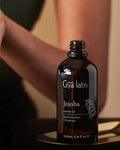
Jojoba comes from Simmondsia chinensis, a shrub that grows in harsh desert climates. It is worth knowing that jojoba is technically a liquid wax rather than a true oil, and that is exactly why Gya Labs Organic Jojoba Oil feels light on hair and sits on the strand without weighing it down. There is more on using it through a full routine in our jojoba oil for hair guide.
Jojoba has a texture that makes it easy to incorporate into simple hair care routines. I particularly like it when I'm trying to smooth dry looking ends without making the entire hairstyle look oily.
It's also a useful ingredient for people who want to make their own hair oil blend.
If your hair is fine, start with less than you think you'll need.
Seriously.
One or two drops can be enough.
You can always add another drop.
Removing excess oil is considerably less convenient.
Rose Geranium Essential Oil
Rose geranium isn't the ingredient I'd use as the main oil in a hair routine. Instead, I think of it as an aromatic addition.
Its floral, slightly rosy scent can add a softer character to an otherwise straightforward hair oil.
Gya Labs Rose Geranium Oil is steam distilled from the leaves and stems of Pelargonium graveolens var. roseum, grown mainly in Egypt, China and Réunion Island. It is the aroma that earns it a place here, not a claim about the hair itself.
If you decide to include essential oils in a hair blend, remember that essential oils are highly concentrated and should be properly diluted in a suitable carrier oil.
The carrier oil does the heavy lifting here.
The essential oil is there primarily to add aroma to your routine.
How to Apply Hair Oil Without Making It Greasy
This is where most hair oil routines go wrong.
The problem usually isn't the oil.
It's the amount.
When someone tells me, "Hair oil makes my hair greasy," my first question is always: How much did you use?
A few drops and a handful are two very different things.
For most people, I'd start with one to three drops and adjust from there.
- Warm the oil between your palms first. This distributes it more evenly and makes it easier to apply a very thin layer.
- Smooth it over the mid lengths and ends.
- Don't dump it onto one section of hair.
- Don't keep adding more because you can't immediately see a dramatic difference. Give it a moment.
For Fine Hair
Fine hair needs a particularly light touch.
Start with one drop.
Yes, one.
Rub it thoroughly between your palms, then gently skim your hands over the ends and any obvious flyaways.
If your hair still feels dry, add another drop.
For fine hair, I generally prefer applying oil to dry hair as a finishing step because it's easier to control exactly where the product goes.
If you're making your own blend for frizzy hair, keep the formula lightweight rather than loading it with several heavy ingredients.
For Thick or Curly Hair
Thicker and curlier hair can usually handle more product.
Instead of one or two drops, you may find that a few additional drops spread through the lengths work better.
I prefer applying oil to slightly damp hair after washing when working with thicker or textured hair. It makes distributing the product through the lengths easier and helps the hair feel more manageable during styling.
The important thing is still moderation.
Even thick hair can become weighed down if you apply too much.
Static Busting Extras
If static is your main problem, don’t rely entirely on oil.
Look at what’s creating the static in the first place.
Your clothing and accessories can make a noticeable difference. Synthetic fabrics tend to create more friction than some natural materials, so switching up scarves, hats, or other fabrics that touch your hair may help reduce that constant flyaway battle.
Your brush matters too.
Aggressive brushing through dry hair can create more friction, especially when the air is already dry.
I also like to keep a tiny amount of oil available for emergency flyaways.
Not enough to make the hair visibly oily.
Just enough to smooth the most rebellious strands.
This is where a lightweight oil can work as a finishing touch on static rather than a full hair treatment.
A Simple Static Fighting Routine
My fall routine is surprisingly basic.
First, I avoid overloading my hair with styling products.
Then I use a lightweight conditioner after washing.
Once my hair is mostly dry, I take one or two drops of argan or jojoba oil and smooth it through the ends.
If static shows up later, I use whatever tiny amount remains on my palms to lightly press down flyaways.
That's it.
No elaborate seven step routine.
And that's exactly why I stick with it.
Argan or Jojoba: Which Should You Choose?
If you're deciding between argan and jojoba, think about what your hair actually needs.
|
|
Organic Argan Oil |
Organic Jojoba Oil |
|
Botanical |
Argania spinosa kernels, Morocco |
Simmondsia chinensis, desert shrub |
|
What it is |
Cold pressed oil |
Liquid wax rather than a true oil |
|
Feel on hair |
Silky, polished, more visible shine |
Lighter, barely there |
|
Best for |
A finishing oil when you want shine |
Everyday use and fine hair |
|
Start with |
1 to 2 drops on dry hair after styling |
1 drop on fine hair, 2 to 3 on thicker hair |
|
Apply to |
Mid lengths and ends |
Mid lengths and ends |
Argan is my pick when I want a silky finish and a bit more visible shine.
Jojoba is a great option when I want something lightweight and versatile for everyday use.
Neither needs to be poured over the hair.
Both work best when used sparingly.
If you're looking for the best oil for frizzy hair, don't automatically choose the richest option. The best choice is the one that gives your hair the finish you want without leaving it weighed down. Our hot weather hair guide works through the same two oils for humid summer conditions, which behave very differently from dry fall air.
Your hair type, density, texture, and styling routine all matter.
How Often Can You Use Hair Oil?
You don't necessarily need hair oil every day.
Some people may prefer a couple of drops after every wash, while others may only need it when their hair looks particularly dry or frizzy.
I tend to use less during humid weather and slightly more during dry, cooler months.
That's because my hair usually needs a little extra help with dryness and flyaways when the weather changes.
Start with a small amount once or twice a week and see how your hair responds.
If your strands look greasy or feel coated, reduce the amount.
If your ends still look dry, try adding one more drop.
The goal is to find the smallest amount that gives you the finish you want.
A Simple DIY Fall Hair Oil
If you want to make your own lightweight hair oil for frizz, keep the recipe simple.
What You'll Need
- 2 tablespoons argan oil
- 1 tablespoon jojoba oil
- 1 drop rose geranium essential oil
That single drop in 3 tablespoons of carrier oil works out to well under half a percent, which is a very conservative aromatic level for a leave in blend.
How to Make It
- Add the oils to a clean glass bottle and gently swirl or shake to combine.
- Start with one or two drops when applying.
- Warm the oil between your palms and smooth it over the mid lengths and ends.
Because this blend contains an essential oil, don't apply it undiluted, and patch test your finished blend on a small area of skin and wait 24 hours before regular use.
I like this recipe because it doesn't try to do too much.
The argan oil provides the silky finish I want.
The jojoba keeps the texture light.
And the rose geranium adds a pleasant botanical aroma.
The Biggest Hair Oil Mistakes to Avoid
The first mistake is using too much.
I can't emphasize this enough.
The second is applying oil directly to the roots when your scalp and roots don't need it. For a lightweight finishing routine, the mid lengths and ends are usually the better place to start.
The third is assuming every oil will behave the same way.
A lightweight oil may work beautifully on fine hair, while someone with very thick curls may need a richer blend.
And finally, don't expect oil to solve every cause of frizz.
Hair texture, humidity, friction, heat styling, washing habits, and overall hair condition can all affect how your hair looks.
Think of oil as one useful tool in your routine, not the entire routine.
A Few Safety Notes
These oils are cosmetic products for external use, and a few basics are worth keeping in mind.
- Keep oils and blends away from your eyes. If any gets in, rinse with plenty of water.
- Never apply an essential oil undiluted to your hair, scalp or skin. It belongs in a carrier oil.
- Patch test a new blend on a small area of skin and wait 24 hours before using it more widely.
- Avoid applying blends to a scalp that is broken, irritated or sunburned.
- Stop using a blend if it causes itching, redness or discomfort.
- If you are pregnant or nursing, have a scalp or skin condition, take medication, or are making a blend for a child, check with a qualified healthcare professional before using essential oils topically.
- Keep essential oils out of reach of children and pets, and do not take them internally.
Final Thoughts
Fall hair does not need gadgets. When everything starts flying away and frizzing up, I go back to basics: less friction, good conditioning, and a little light oil.
Argan and jojoba are two of my favorite options because they're versatile and easy to work into a routine. A couple of drops can be enough to smooth the appearance of flyaways, give dry looking ends a more polished finish, and add a little extra shine.
The trick is knowing when to stop.
Your hair should look like hair, not like it has been dipped in oil.
So start with a drop, work it through the ends, and add more only if you need it. Once you find that balance, fall frizz and static become much easier to manage.