


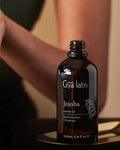

If you're deciding between arnica vs wintergreen for a post-workout massage oil, the right choice depends on the experience you're looking for. Arnica-infused massage oils are often chosen for a comforting massage after physical activity, while diluted wintergreen essential oil is valued for its crisp, cooling aroma. Many people even combine the two, provided they're used safely and appropriately diluted.
There's something satisfying about finishing a workout, stretching for a few minutes, and following it up with a good massage. I've experimented with plenty of massage blends over the years, and I've learned one thing: you don't always need a shelf full of products. A thoughtfully made massage oil, paired with a few minutes of self-care, often feels far more rewarding than an overly complicated recovery routine.
One question comes up again and again though.
Should you choose arnica or wintergreen?
The short answer is that both have a place in a post-workout massage routine, but they bring very different qualities to the experience.
Let's look at how each one works in everyday wellness.
Arnica vs Wintergreen for Post-Workout Massage: What's the Difference?
Although they're often mentioned together, arnica and wintergreen aren't interchangeable.
Arnica is generally available as an infused carrier oil or massage oil, while wintergreen is a concentrated essential oil that always needs to be diluted before topical use.
That difference alone changes how they're used.
Arnica massage oil is appreciated because it's simple to apply directly as part of a massage routine. Wintergreen, on the other hand, is usually added in very small amounts to a carrier oil to create a custom massage blend.
I tend to think of arnica as the building block in any at-home massage blend, and wintergreen as the statement ingredient. I use arnica as the smooth, easy-to-work-with base, and then wintergreen to add that instantly recognisable cool, invigorating aroma.
Neither one replaces the other.
Instead, they complement each other surprisingly well.
Quick Comparison
|
Feature |
Arnica Massage Oil |
Wintergreen Essential Oil |
|
Product Type |
Infused massage oil |
Essential oil |
|
Aroma |
Mild, herbal |
Fresh, minty, cooling |
|
Used For |
Massage after physical activity |
Added to massage blends for aroma |
|
Requires Dilution |
Usually ready to use |
Yes, always dilute |
|
Best Choice For |
Everyday massage routines |
Cooling massage experiences |
How Arnica Massage Oil Is Commonly Used
If you've ever booked a sports massage, there's a good chance you've already experienced arnica without realising it.
Massage therapists often reach for arnica-based oils because they glide smoothly across the skin and work well during longer massage sessions.
One thing I appreciate about arnica massage oil is its simplicity.
There's no measuring.
No blending.
No worrying about dilution.
You simply warm a small amount between your hands and massage it into the desired area.
That's probably why it has become one of my favourite choices after strength training. By the time I finish cleaning up after a workout, the last thing I want is another project in the kitchen mixing oils together.
A ready-to-use massage oil wins every time.
When to Reach for Arnica Massage Oil
Most often, I use arnica massage oil after:
• Weight training
• Long walks
• Weekend hikes
• Cycling
• Gardening
• Moving furniture (which somehow always turns into an unexpected workout)
The massage itself matters just as much as the oil.
Taking five or ten minutes to slow down, breathe deeply, and massage tired muscles often becomes the most relaxing part of my evening.
That simple ritual is one I actually stick with.
Wintergreen Essential Oil: Aroma, Benefits, and Safety
Wintergreen has one of the most recognisable aromas in aromatherapy.
Fresh.
Minty.
Cooling.
Just opening the bottle immediately creates a sense of freshness.
That's why many people enjoy adding diluted wintergreen to a post-workout massage oil blend.
The cooling sensation and invigorating aroma create an entirely different massage experience compared to arnica alone.
Personally, I don't use much.
A little really does go a long way.
One drop too many can easily overpower the blend.
Why People Like Wintergreen
Some of the reasons wintergreen remains popular include:
• Refreshing aroma
• Cooling sensation during massage
• Blends well with peppermint and eucalyptus
• Complements herbal carrier oils
That recognisable cooling sensation is one reason wintergreen is commonly found in many sports and massage products.
It's instantly recognisable.
Safety Comes First
Whenever someone asks me about wintergreen essential oil, my answer always includes safety.
Wintergreen essential oil is highly concentrated.
It should never be applied directly to the skin without proper dilution.
It's also important to avoid assuming that more oil creates a better massage.
It doesn't.
In fact, using excessive amounts may increase the likelihood of skin irritation.
For most massage blends, following recommended dilution guidelines is the safest approach.
People who are pregnant, nursing, taking blood-thinning medication, planning surgery, or managing certain health conditions should speak to a healthcare professional before using wintergreen essential oil.
Patch testing every new blend is another habit I never skip.
It only takes a minute and can help prevent unwanted skin reactions.
Choosing Between Arnica and Wintergreen for Your Routine
Choosing between arnica and wintergreen isn't really about deciding which one is "better." It's about understanding what you want from your massage.
Over time I've found myself reaching for each one at different moments. Some days a soft, soothing massage is exactly what I need after a long hike. On other days, after a more intense gym session, I prefer a blend with a cool, invigorating scent.
Instead of thinking of them as competitors, think of them as two tools with different strengths.
After an Intense Workout
If you've just finished a challenging workout — whether it's strength training, running, cycling, or a long sports session — a massage can be a great way to slow down and transition into recovery.
This is where many people enjoy a cooling massage experience.
A massage blend containing diluted wintergreen essential oil offers a fresh, cooling aroma that many people associate with post-workout care. I like pairing it with a lightweight carrier oil because the scent feels invigorating without becoming overwhelming.
When making a blend exclusively for post-workout recovery, I tend to keep it simple. It can be tempting to combine every effective essential oil at once, but they can easily overpower one another. A focused, two or three-ingredient blend usually creates a more balanced and enjoyable aroma.
Sometimes less really is more.
For a Relaxing Massage Experience
There are days when I don't need anything particularly cooling.
Maybe I've spent the afternoon gardening, assembling furniture, or simply sitting at my desk for too long. In those moments, I want a massage that helps me unwind rather than wake me up.
That's when arnica massage oil usually becomes my first choice.
Its mild herbal character allows the massage itself to take centre stage. I often warm a small amount between my hands before applying it, which makes the entire experience feel more comforting.
If I'm looking for a richer aroma, I'll occasionally add one properly diluted drop of lavender or cedarwood essential oil to the carrier oil instead of wintergreen. It creates a completely different atmosphere that's better suited to an evening routine.
There's no right or wrong choice here.
Your routine should reflect how you want to feel when the massage is over.
Can You Mix Arnica and Wintergreen?
One question I hear surprisingly often is: can you mix arnica and wintergreen?
Yes — many people combine an arnica-infused massage oil with properly diluted wintergreen essential oil to create a custom massage blend.
In fact, that's one of my favourite ways to use them.
Arnica provides a smooth, easy-to-work-with massage base, while wintergreen contributes its crisp, cooling aroma. The combination feels balanced because neither ingredient overpowers the other.
The key, however, is moderation.
Wintergreen essential oil is highly concentrated, so only a very small amount is needed. Adding more won't necessarily improve the massage experience and may increase the chance of skin irritation.
Whenever I make this blend, I measure carefully instead of estimating. Essential oils deserve that level of attention.
Safe Dilution and Important Precautions
If there's one section I hope readers don't skip, it's this one.
Essential oils are incredibly concentrated, and wintergreen is no exception.
General Dilution Guidelines
For most adult massage blends, follow these guidelines (per the essential oil safety and dilution guide):
• 1% dilution: Approximately 6 drops of essential oil per 30 ml (1 oz) of carrier oil.
• 2% dilution: Approximately 12 drops of essential oil per 30 ml (1 oz) of carrier oil.
If you're new to essential oils or have sensitive skin, start with the lower dilution and increase only if appropriate.
Always Patch Test
Even if you've used wintergreen before, it's worth performing a patch test whenever you make a new blend or use a different carrier oil.
Apply a small amount to the inside of your forearm and wait 24 hours before broader use.
It isn't the most exciting step, but it's one I never skip.
Who Should Use Extra Caution?
Wintergreen essential oil may not be suitable for everyone.
People who are pregnant, nursing, taking blood-thinning medication, planning surgery, or managing certain health conditions should speak to a healthcare professional before using wintergreen essential oil.
Children should also avoid products containing wintergreen essential oil unless advised otherwise by a qualified healthcare provider.
Massage oils are intended for external use only.
DIY Post-Workout Massage Blend with Arnica and Wintergreen
One of my favourite massage blends is also one of the simplest.
It doesn't require an extensive collection of essential oils, and it takes less than five minutes to make.
What You'll Need
• 30 ml Gya Labs Arnica Massage Oil
• 2 drops Gya Labs Wintergreen Essential Oil
• 2 drops Gya Labs Peppermint Essential Oil (optional, for a fresher aroma)
• Dark glass bottle
How to Make It
1. Pour the arnica massage oil into a clean glass bottle.
2. Add the wintergreen essential oil.
3. If you'd like a fresher aroma, add peppermint essential oil.
4. Secure the lid and shake gently to combine.
How I Like to Use It
After a workout, I warm a small amount between my palms before massaging it into my shoulders, legs, or back using slow, circular motions.
The massage itself is just as important as the oil.
Spending five or ten uninterrupted minutes focusing on the massage often helps me switch from workout mode into relaxation mode — and that has become one of my favourite parts of the routine. For more blend ideas and technique guidance, the massage rituals guide is a good starting point.
Final Thoughts: Arnica vs Wintergreen for Your Massage Routine
When it comes to arnica vs wintergreen, there's no single winner — only different strengths for different situations.
Arnica massage oil provides a ready-to-use base that works well for everyday massage after physical activity. Wintergreen adds a cool, invigorating aroma when used correctly and in appropriate dilution.
If you're just starting out, begin with arnica and build a regular massage routine. As you become more familiar with essential oils, you can experiment with adding a carefully diluted amount of wintergreen to personalise the experience.
Sometimes the best post-workout routine isn't about finding the perfect oil. It's about taking a few quiet minutes to slow down, care for your body, and make recovery part of your routine.