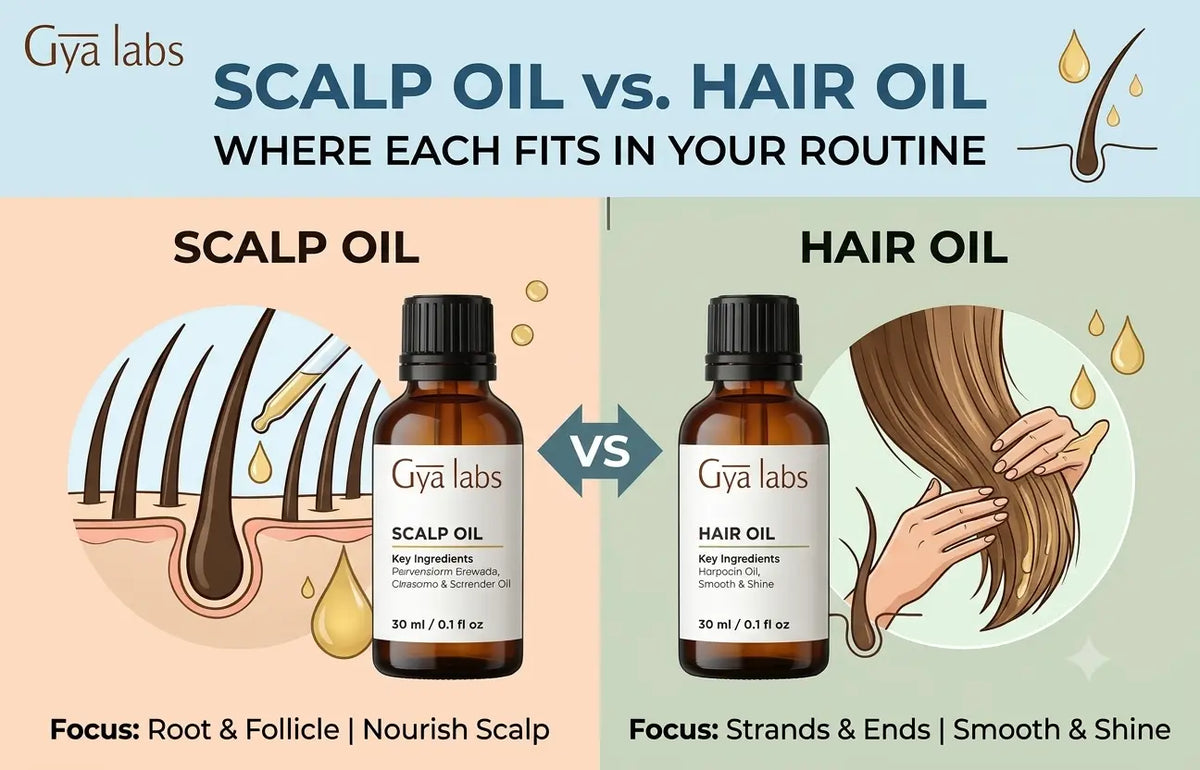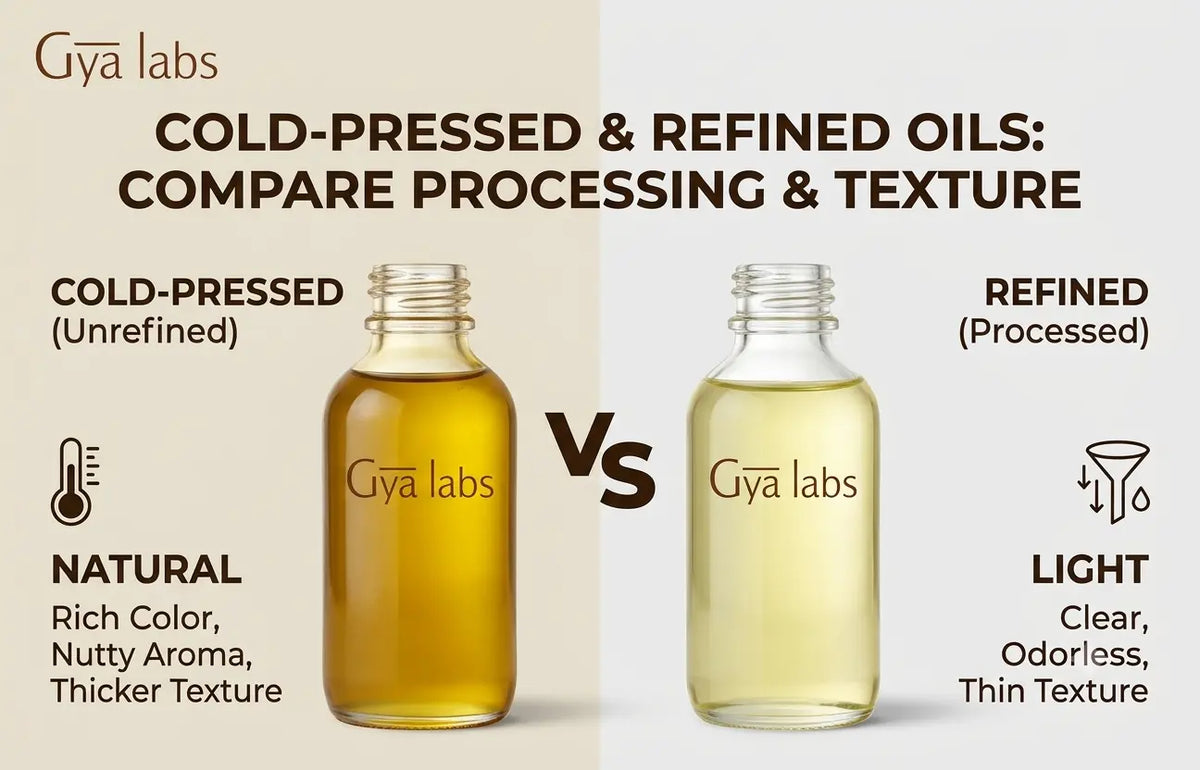




Rosemary essential oil is concentrated, so it always goes into a carrier oil before it touches your scalp. The carrier oil you choose decides how the blend feels: jojoba and argan are light, sweet almond sits in the middle, and coconut and olive are rich. Start with about 6 drops of rosemary oil in 30 mL (1 oz) of carrier oil.
Quick Answer: Jojoba is the best all round carrier oil for rosemary oil if you want a light blend that washes out easily. Choose coconut or olive oil for a richer pre wash treatment on thick or coarse hair. Add 6 drops of rosemary essential oil to 30 mL of carrier oil (about 1%), use 1 to 3 teaspoons per treatment, leave it on for 30 minutes to an hour, then shampoo. Once or twice a week is plenty.
Why Rosemary Oil Needs a Carrier Oil
Carrier oils are mild plant oils pressed from seeds, nuts or kernels. They dilute essential oils before they go on skin or scalp, and they decide how a blend feels.
Rosemary essential oil is used by the drop. Put on undiluted, it can irritate the scalp. A carrier oil:
• dilutes the rosemary oil to a safe strength
• spreads it evenly over your scalp and hair
• sets the texture of the finished blend, from light to rich
• makes it easy to use as a pre wash treatment
The carrier oil does not change the rosemary oil. It changes how the blend feels on your hair and how easily it washes out.
Best Carrier Oils for Rosemary Essential Oil
|
Carrier oil |
Texture |
Main fatty acids |
Best for |
|
Jojoba |
Light and fluid |
Not a true oil: a liquid wax |
Fine hair, scalp blends, easy rinsing |
|
Argan |
Light to medium |
Oleic and linoleic; natural vitamin E (tocopherols) |
Hair lengths and ends |
|
Sweet almond |
Smooth, medium |
Mostly oleic, some linoleic |
An everyday middle ground |
|
Coconut |
Rich; solid below about 76°F (24°C) |
Mostly lauric |
Thick or coarse hair, traditional oiling |
|
Olive |
Rich and thick |
Mostly oleic |
Thick hair, longer pre wash treatments |
How an oil feels also depends on how much you use. Even a light oil feels greasy if you use too much.
Jojoba Oil
Jojoba is a liquid wax rather than a true oil, which is why it feels lighter than most plant oils. It spreads easily over the scalp, has almost no scent of its own, and keeps well. If you are unsure where to start, start here.
Keep in mind: it costs more per ounce than olive or sweet almond oil.
Argan Oil
Argan oil is pressed from the kernels of the argan tree. It sits between light and medium weight and leaves hair looking smooth, which makes it a good choice when you mostly want to oil your lengths and ends.
Keep in mind: it is one of the pricier carrier oils, and it has a light nutty scent.
Sweet Almond Oil
Sweet almond oil is smooth and medium weight, and it is easy to find. It is a good everyday base when jojoba feels too thin and coconut feels too heavy.
Keep in mind: it comes from almonds. Skip it if you have a nut allergy.
Coconut Oil
Coconut oil is the traditional choice for hair oiling. It turns solid below about 76°F (24°C), so warm the jar in a bowl of warm water first, then add the rosemary oil once it is liquid. Do not microwave it.
Keep in mind: it is heavy on fine hair and can take two shampoos to remove.
Olive Oil
Olive oil is rich and thick, and most kitchens already have it. It suits thick or coarse hair and longer pre wash treatments.
Keep in mind: it feels greasy on fine hair and has a noticeable smell. Mixing it half and half with jojoba makes it lighter.
Other Carrier Oils to Try
Baobab oil is another rich option that sits between sweet almond and coconut. You can mix any two carrier oils, such as jojoba with coconut, to land on the texture you like. Compare textures in the Gya Labs Carrier Oils collection.
Which Carrier Oil Should You Choose?
|
Your hair |
Try |
Why |
|
Fine or gets oily fast |
Jojoba |
Lightest; washes out easily |
|
Medium, or not sure |
Jojoba or sweet almond |
Light to medium; easy to adjust |
|
Dry lengths and ends |
Argan |
Smooths without much weight |
|
Thick, coarse or curly |
Coconut or olive |
Rich; good for longer treatments |
|
Somewhere in between |
Half jojoba, half coconut |
Mix to the texture you like |
You can also use two blends: a light one for the scalp and a richer one for the lengths.
How Much Rosemary Oil to Add to a Carrier Oil
Start at 1%: about 6 drops of rosemary essential oil in 30 mL (1 oz) of carrier oil. Use 0.5% if your scalp is sensitive. Do not go above 2% for a blend you wash out.
|
Carrier oil |
0.5% (sensitive scalp) |
1% (starting point) |
2% (maximum) |
|
10 mL |
1 drop |
2 drops |
4 drops |
|
15 mL |
1 to 2 drops |
3 drops |
6 drops |
|
30 mL (1 oz) |
3 drops |
6 drops |
12 drops |
These figures assume about 20 drops per mL. Drop sizes vary between bottles, so treat them as a guide. If you mix two carrier oils, count the drops against the total amount of carrier oil. Stronger is not better: if a blend feels mild, that is how it should feel.
For more dilution charts, see our step by step guide to diluting essential oils.
How to Make a Rosemary Hair Oil Blend
You’ll need:
• 30 mL (1 oz) of your chosen carrier oil
• 6 drops of Gya Labs Rosemary Essential Oil
• a clean, dry, dark glass bottle with a dropper
Steps:
1. Pour the carrier oil into the bottle. If you are using coconut oil, melt it first.
2. Add the rosemary oil, counting the drops.
3. Close the bottle and roll it gently between your hands to mix.
4. Label it with the ingredients, the strength and the date.
5. Patch test before the first use (see the safety section).
A 30 mL batch gives about 6 to 12 treatments, depending on your hair length.
How to Apply Rosemary Oil to Your Hair and Scalp
1. Start with dry hair, before you wash it.
2. Use the right amount: about 1 teaspoon for short or fine hair, 1 to 2 teaspoons for shoulder length, 2 to 3 teaspoons for long or thick hair.
3. Section your hair and put a few drops along each part with your fingertips or a dropper.
4. Massage gently for a few minutes with your fingertips, not your nails.
5. Smooth what is left over the lengths and ends, if you like.
6. Leave it on for 30 minutes to an hour. Overnight is not necessary.
7. Wash it out. Put shampoo on before you wet your hair, work it in, then rinse. Oil comes out more easily this way. You may need a second shampoo.
How often: once or twice a week is plenty. If your hair feels greasy or limp the day after washing, use less oil or a lighter carrier.
Safety Tips
• Never use rosemary oil undiluted on your scalp or skin.
• Patch test first. Put a little of the finished blend on your inner arm and wait 24 hours. Stop if you notice redness, itching or burning.
• Keep it away from your eyes. Oil can run down your forehead when hair gets wet, so wipe your hairline before you shower.
• Avoid rosemary oil if you are pregnant, breastfeeding or have epilepsy. Ask your doctor first if you have high blood pressure.
• Keep it away from young children. Never use it on or near the face of a child under 5.
• Check for nut allergies before using sweet almond or argan oil.
• Watch your footing. Oil makes shower floors slippery.
• See a dermatologist if you notice hair loss, a flaky or itchy scalp, or soreness that does not go away. A hair oil is a cosmetic, not a treatment.
For more on safe use, read our Safety and Dilution Guide.
How to Store Your Rosemary Oil Blend
• Keep it in a dark glass bottle, tightly closed, away from sunlight and heat.
• Keep water out of the bottle; do not let it near the shower spray.
• The blend lasts as long as the carrier oil does. Jojoba keeps the longest.
• Make a small batch you will use within a month or two.
• Throw it away if the smell, color or texture changes.
Final Thoughts
The best carrier oil for rosemary oil is the one that suits your hair. Jojoba is the easy, light starting point. Argan works well on lengths and ends, sweet almond sits in the middle, and coconut and olive suit thick hair and longer treatments.
Whichever you choose, keep it simple: 6 drops of rosemary oil in 30 mL of carrier oil, a teaspoon or two per treatment, 30 minutes to an hour, then shampoo. Patch test the first time, and use it once or twice a week.