


Scalp oil and hair oil may sound like interchangeable products, but they serve different purposes in a hair-care routine. One is applied to the skin beneath your hair, while the other is primarily used on the lengths and ends of your strands. Choosing the right one depends on where your hair needs attention and how you want it to feel.
Understanding the difference between scalp oil and hair oil also makes it easier to decide when to apply each, how much to use, and whether you need both. From a pre-wash scalp massage to a few finishing drops on freshly washed ends, each has a place in a well-planned routine.
Quick Answer: Scalp Oil vs Hair Oil
Scalp oil is formulated or selected for application to the skin on your head and is commonly used as a pre-wash massage oil. Hair oil is intended mainly for the lengths and ends to add softness, shine and a smoother appearance. Some carrier oils can serve both purposes, but the application area, amount and timing make the difference.
What Is Scalp Oil?
Scalp oil is an oil or oil blend applied directly to the scalp as part of a pre-wash or personal-care routine. It is typically massaged gently into the skin using the fingertips, rather than distributed through the entire length of the hair.
The purpose is to create a nourishing, comfortable-feeling scalp-care ritual. Depending on the formulation, scalp oils may contain lightweight carrier oils such as jojoba, which has a fluid texture and is often chosen for its less heavy feel.
A few things to consider when choosing an oil for scalp application include:
-
Texture: Lightweight oils can be easier to distribute without leaving the roots feeling heavily coated.
-
Application: A small amount is generally enough to cover the intended area.
-
Timing: Scalp oil is often applied before shampooing so excess oil can be washed away.
-
Formulation: Carrier oils can be used alone, while essential oils must be diluted appropriately before topical application.
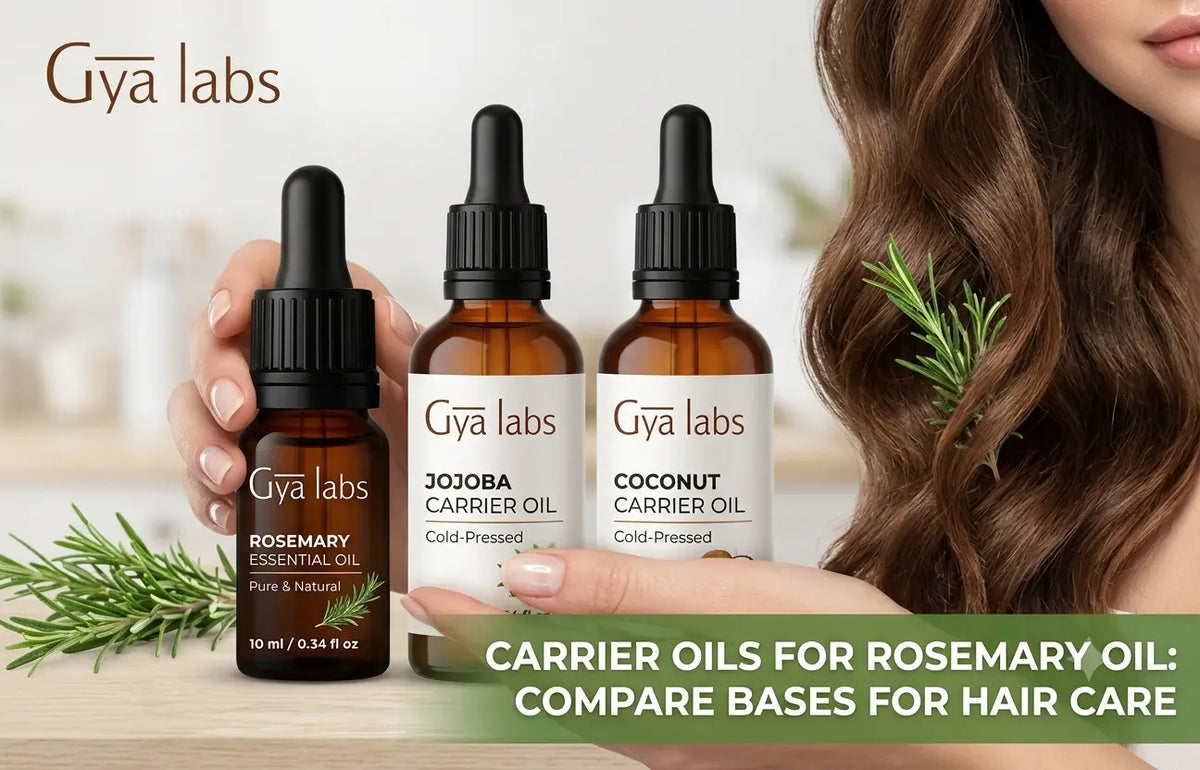
Jojoba Carrier Oil is one option for a simple scalp-oiling routine. Its lightweight feel makes it a useful starting point for people who prefer not to use a particularly rich oil at the roots.
Explore Gya Labs Jojoba Carrier Oil for a straightforward carrier-oil option.
What Is Hair Oil?
Hair oil is primarily used on the hair shaft, particularly the mid-lengths and ends. Unlike scalp oil, which is applied to the skin, hair oil is intended to improve the cosmetic appearance and feel of the strands.
It can help hair look smoother, feel softer and appear shinier. It is also commonly used to manage the appearance of flyaways and frizz, especially when the ends look dry or feel rough.
Common carrier oils used in hair-care routines include:
-
Argan oil: Offers a silky feel and helps give lengths a smoother, shinier appearance.
-
Baobab oil: A richer-feeling option that can suit thicker or coarser hair.
-
Prickly pear oil: A plant-based oil option for people exploring different textures in their hair-care routine.
-
Jojoba oil: A lighter-feeling choice for those who prefer less weight on their strands.
The amount matters just as much as the oil itself. Fine hair may need only a drop or two, while thicker hair may accommodate a slightly richer application.
For lengths that need a smoother finish, explore Gya Labs Argan Carrier Oil or Baobab Seed Carrier Oil.
Scalp Oil vs. Hair Oil: Side-by-Side Comparison
Although both are oils used in hair-care routines, their application areas and typical uses differ.
|
Feature |
Scalp Oil |
Hair Oil |
|---|---|---|
|
Primary Application |
Scalp skin |
Mid-lengths and ends |
|
Main Purpose |
Scalp-care and massage routine |
Softness, shine and smoother-looking strands |
|
Typical Texture |
Often lightweight and easy to massage |
Varies from lightweight to rich |
|
Application Timing |
Usually before washing |
After washing or on styling days |
|
Common Oil Choices |
Jojoba and suitable carrier-oil blends |
Argan, Baobab, Prickly Pear and Jojoba |
|
Amount |
Small amount distributed across the scalp |
A few drops, depending on hair length and thickness |
|
Best Suited For |
People incorporating scalp massage into their routine |
People looking to improve the appearance and feel of their hair lengths |
|
Washing |
Usually shampooed out |
Can be left on when used sparingly as a finishing oil |
Key Difference: The main distinction is the application area. A scalp oiling routine focuses on the skin beneath the hair, while a hair-oiling routine focuses on the strands themselves.
Can You Use Hair Oil on Your Scalp?
Yes, some hair oil for scalp applications are possible, provided the oil is suitable for topical use and applied sparingly. However, not every hair oil is designed for the scalp.
A lightweight carrier oil such as jojoba may be easier to distribute across the roots than a richer oil that can leave the area feeling heavily coated. The formulation also matters. Products containing fragrance or other ingredients intended specifically for the lengths may not be suitable for direct scalp application.
Before applying a hair oil to your scalp, consider these points:
-
Check the product label to confirm that it is suitable for scalp or skin application.
-
Start with a small amount rather than saturating the roots.
-
Massage gently using your fingertips.
-
Avoid applying oils close to the eyes.
-
Wash the oil out if it feels uncomfortable or leaves excessive residue.
If your roots become greasy quickly, keeping richer hair oils on the mid-lengths and ends may be a more practical approach.
Where Each Fits in Your Routine
Both oils can fit into the same hair-care routine, but they do not need to be applied at the same time. Their timing depends on whether you are preparing for wash day, finishing freshly washed hair or styling between washes.
Before Washing: Scalp Oil
Doing a pre-wash scalp massage is an easy way to take advantage of the benefits of scalp oils.
Begin by parting your dry hair to reach the scalp. Dab small amounts of a chosen carrier oil onto your fingertips and massage it into the sections you intend to treat.
Leave it on for around 15–30 minutes as a starting point, then shampoo as usual. Adjust the amount and frequency depending on how your scalp feels and how easily the oil washes out.
For more guidance, read Hair Oiling: How Often Should You Do It for Fine, Dry or Oily Hair?.
After Washing: Hair Oil
Once you have washed and conditioned your hair, a small amount of hair oil can be applied to damp lengths and ends.
Warm one or two drops between your palms and distribute the oil through the areas that need extra softness or shine. Avoid applying too much near the roots, particularly if your hair is fine or becomes oily quickly.
For thicker or longer hair, you may need a little more, but it is better to start small and build up gradually.
On Styling Days: Hair Oil for Finishing
Hair oil can also be used between wash days as a finishing product. A small amount smoothed over dry ends can help give the hair a more polished appearance and reduce the look of flyaways.
If you use a blow dryer, straightener or curling tool, remember that pure carrier oils are not substitutes for dedicated heat-protection products.
Read Hair Oil Before Heat Styling: What It Can and Cannot Do to understand how to use hair oil around heat styling.
Choosing Oils by Scalp and Hair Type
The best hair and scalp oil depends on the texture of your hair, how quickly your roots become oily and the finish you prefer. You do not necessarily need separate products for every concern. Sometimes, choosing an appropriate carrier oil and adjusting where you apply it is enough.
Oily-feeling scalp: A lightweight oil such as jojoba may be easier to manage when used sparingly. If your roots already feel greasy, you may prefer to keep oil away from the scalp and concentrate on the ends.
Dry-feeling scalp in winter: A small amount of jojoba can be incorporated into a pre-wash massage when the scalp feels tight or uncomfortable. For seasonal routine ideas, see Dry, Flaky Scalp in Cooler Weather: A Nourishing Oil Routine.
Fine hair: Lightweight options such as jojoba are generally easier to use without weighing down the strands. Keep the amount minimal, particularly around the roots.
Thick or curly hair: Richer-feeling options such as argan or baobab can be considered for the lengths and ends, depending on how much oil your hair comfortably accommodates.
If you follow a layering routine, the LOC Method: How to Choose Between LOC and LCO guide explains where oil fits alongside liquid and cream-based products.
You can also explore the Hair & Scalp Rituals collection and Carrier Oil collection for different options.
Adding Essential Oils to a Scalp Blend
Carrier oils and essential oils are the ingredients in your scalp care blend and each have a different use. Carrier oils are the base of your blend and essential oils are highly concentrated aromatic plant extracts that need to be diluted before they are applied to the skin.
For example, Rosemary Essential Oil can be incorporated into a properly diluted carrier-oil blend when its aroma is preferred. However, essential oils should never be applied directly to the scalp.
Keep these precautions in mind:
-
Always follow Gya Labs' recommended dilution guidance.
-
Use a suitable carrier oil as the blending base.
-
Patch test a new blend before wider application.
-
Keep essential oils away from the eyes and other sensitive areas.
-
Avoid applying a blend to irritated or broken skin.
-
Discontinue use if irritation or discomfort occurs.
Peppermint and rosemary essential oils should be handled carefully and kept away from the eyes. Do not assume that a natural ingredient is automatically suitable for every person or scalp.
For detailed instructions, refer to the Gya Labs Essential Oil Safety & Dilution Guide before preparing a blend.
Final Thoughts
scalp oil and hair oil will often both have a spot in an effective, balanced hair-care routine, but understanding which is which will help to give both products more purpose. A scalp oil is best applied to the scalp before washing, whereas hair oil is more for smoothing down and shining hair.
You do not always need two different bottles. A suitable carrier oil may work for both purposes when the product is appropriate for topical use and the application is adjusted accordingly. Start with a small amount, pay attention to how your hair feels and build a routine that fits your wash days.