


Quick Answer: LOC means Liquid, Oil, Cream; LCO means Liquid, Cream, Oil. Both start with water or a water based leave in; they differ in whether the oil goes before or after the cream. As a starting rule, try LOC if your hair soaks up water fast and dries out quickly (higher porosity) and LCO if products tend to sit on top of your hair (lower porosity). Use just 2 to 4 drops of oil per section, then compare the two methods on two wash days.
The LOC and LCO methods are popular ways to layer products on curly, coily, and textured hair. Both use the same three products: a liquid, an oil, and a cream. The only difference is the order.
This guide explains what each layer does, how to choose between the two orders, how much oil to use, and which carrier oils to try.
What Is the LOC Method?
The LOC method is a layering routine used mostly for curly, coily, and textured hair. You apply three products in order: liquid, oil, cream.
What each layer does
• Liquid: Water, or a water based leave in conditioner. This is the only step that actually adds moisture, because moisture in hair means water.
• Oil: A carrier oil coats the hair’s surface. It adds slip, reduces friction between strands, and slows down how quickly water moves in and out of the hair.
• Cream: A leave in or styling cream adds conditioning, softness, and curl definition.
What “sealing” really means
Oil doesn’t moisturize hair; water does. What oil does is form a thin film on the surface. Research published in the Journal of Cosmetic Science found that oil films on the hair surface lower how much moisture hair takes up from the air. The same film slows water leaving the hair, which is why oil is described as “sealing in” moisture. Applying more oil doesn’t add more moisture. It just adds more coating.
LOC vs LCO: What’s the Difference?
Both start with a liquid. LOC puts the oil second, under the cream. LCO puts the cream second and finishes with oil on top.
|
Feature |
LOC method |
LCO method |
|
Order |
Liquid, Oil, Cream |
Liquid, Cream, Oil |
|
Oil position |
Under the cream |
On top, as the final layer |
|
Finish |
Softer; the cream sits on the surface |
Shinier, with more surface slip |
|
Often suggested for |
Higher porosity hair that loses water quickly |
Lower porosity hair where products sit on top |
|
Watch out for |
Cream not spreading well over oil |
Finish feeling greasy or heavy |
How porosity helps you choose
Porosity describes how easily water gets into and out of your hair:
• Higher porosity hair soaks up water quickly but dries out fast. Many stylists suggest LOC, so the oil goes on early to slow water loss and the cream adds a final protective layer.
• Lower porosity hair takes a long time to get wet, and products tend to sit on top. Many suggest LCO, so the cream can work into damp hair first and a light oil goes on last.
Treat this as a starting point, not a rule. The popular “float a strand in water” test is a rough guide at best, and how your hair actually feels after a few days is a better measure.
Which should you try first?
Start with the one porosity suggests, then test the other:
1. Wash day 1: Use LOC with your usual products.
2. Wash day 2: Use LCO with the same products and amounts.
3. Compare: How does your hair feel once dry, and on day 2 and day 3? Soft, defined, and manageable means it’s working. Coated, limp, or greasy means too much product, or the wrong order.
Change only the order, nothing else, so you know what made the difference.
How Much Oil to Use
Oil is the step most people overdo. Start small:
|
Hair |
Oil per section |
Sections |
|
Fine or low porosity |
2 drops |
4 to 6 |
|
Medium |
2 to 4 drops |
4 to 6 |
|
Thick, coily, or high porosity (including many 4C textures) |
4 to 6 drops |
6 to 8 |
Rub the oil between your palms first, then smooth it from mid lengths to ends. Add more on the next wash day only if your hair still feels dry by day 2.
Choosing a Carrier Oil for LOC or LCO
Choose by weight and feel, not curl pattern alone.
|
Oil |
Weight |
Good for |
|
Jojoba |
Light (technically a liquid wax) |
Fine or low porosity hair; LCO top layer |
|
Argan |
Light to medium; silky |
Most hair types; adds shine |
|
Baobab |
Medium to rich; cushioning |
Thick, dry, or coily ends; LOC |
Jojoba for a light finish
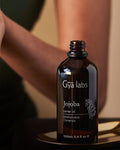
Jojoba is the lightest of the three. It’s a good first choice for fine hair, low porosity hair, or anyone who finds oils make their curls limp. In LCO, it makes a light final layer that adds shine without weight.
Argan for slip and shine
Argan is silky and spreads easily, giving smooth, shiny lengths. It suits most hair types in either order.
Baobab for thick, dry, or coily hair
Baobab is richer and more cushioning. A published analysis (shown on the Gya Labs product page) found baobab seed oil is about 36% linoleic, 25% oleic, and 29% palmitic acid. That high palmitic share is why it feels richer than jojoba and can turn cloudy in a cold room. It works well as the oil layer in LOC on thick or high porosity hair. Try Gya Labs Baobab Seed Carrier Oil.
Compare all three, and other options, in the Gya Labs Carrier Oils collection.
Which Oil Is Best for 4C Hair?
No single oil is best for all 4C hair. 4C describes the curl pattern: tight, zigzag coils. It doesn’t tell you strand thickness or porosity, and those matter more.
As a starting point:
• Fine 4C strands: jojoba or argan, 2 to 4 drops per section
• Thick or coarse 4C strands: argan or baobab, 4 to 6 drops per section
• High porosity 4C hair: try LOC with baobab
• Low porosity 4C hair: try LCO with jojoba
How to Do the LOC or LCO Method
LOC
1. Liquid: Spray hair with water or apply a water based leave in to damp hair, section by section.
2. Oil: Smooth 2 to 6 drops of carrier oil over each section, mid lengths to ends.
3. Cream: Apply your leave in or styling cream, then style as usual.
LCO
1. Liquid: Spray with water or apply a water based leave in.
2. Cream: Apply your cream to each section.
3. Oil: Finish with 2 to 4 drops of a light oil, smoothed over the surface.
Work in sections for even coverage. Browse more products in the Hair & Scalp Care collection.
Adding essential oils
If you’d like a scent in your hair oil, add 1 to 2 drops of an essential oil such as lavender or rosemary per 10 ml (2 teaspoons) of carrier oil, about 0.5 to 1%. Never put essential oils straight onto your hair or scalp, and patch test any new blend for 24 hours.
Signs Your Routine Needs Adjusting
• Hair feels greasy or coated soon after styling
• Curls look limp or heavy
• More oil doesn’t make hair feel any softer
• Buildup increases between wash days
These usually mean too much product, not the wrong oil. Cut the oil by half, or simplify to two products, before buying something new. A clarifying wash every few weeks removes buildup.
For more on using light oils to manage frizz, read Fall Frizz and Static: A Lightweight Hair Oil Fix.
Common Mistakes
1. Using too much oil. Start with 2 drops per section.
2. Treating oil as a moisturizer. Water moisturizes; oil slows its loss.
3. Skipping the liquid. Oil on dry hair has nothing to seal in.
4. Changing everything at once. Change one thing per wash day.
5. Choosing by curl type alone. Strand thickness and porosity matter more.
Final Thoughts
LOC and LCO use the same three products in a different order: the oil goes either under the cream or on top. Use porosity as your starting guide (LOC for hair that loses water fast, LCO for hair where products sit on top), keep the oil to a few drops per section, and compare the two on separate wash days. The routine that leaves your hair soft and defined on day 3 is the right one.