



Jojoba oil is a simple, lightweight carrier oil for a dry, flaky feeling scalp, and can be used alone or diluted with tea tree or peppermint essential oil. Massage a small amount in before washing, once a week to start. Persistent or worsening flaking is worth a dermatologist visit.
For a dry, flaky feeling scalp, jojoba oil is a simple carrier oil to start with because it can be used on its own or as a base for diluted essential oils. Tea tree and peppermint essential oils can also be added in small, properly diluted amounts for a fresh, comforting scalp care routine.
When the weather starts cooling down, I notice that my scalp can feel different too. The air feels drier, indoor heating starts running more often, and suddenly that comfortable scalp feeling I've gotten used to can turn into tightness, dryness, or a little more visible flaking.
If you've been dealing with a dry, flaky feeling scalp, adding oil to your routine can be a simple way to give your scalp some extra care during the colder months. You don't need a complicated routine or a cabinet full of products. A small amount of the right carrier oil, used before washing your hair, can easily become a weekly ritual.
Jojoba oil is one of my favorites for this because it feels lightweight and works well as a base for a scalp oil routine. If you enjoy essential oils, a properly diluted amount of tea tree or a touch of peppermint can add a fresh aromatic element too.
The goal here isn't to treat a scalp condition. It's simply to create a nourishing, comfortable routine for a scalp that feels dry, tight, or flaky as the seasons change.
Why Cool, Dry Air Affects the Scalp
Cold weather can change how comfortable your scalp feels.
When the temperature drops, the air generally contains less moisture. Spending more time indoors can also mean exposure to heated, dry air. Add frequent hot showers, frequent shampooing, hats, or changes in your usual hair routine, and your scalp may start feeling different.
For me, this is usually when a routine that worked perfectly during warmer months starts feeling like it needs a small adjustment.
A dry scalp may feel tight after washing. You might notice small flakes around your hairline or on dark clothing. Your scalp may simply feel less comfortable than usual.
That doesn't automatically mean dandruff.
Dryness and dandruff aren't interchangeable terms, which is why it's useful to pay attention to what your scalp is actually experiencing rather than immediately reaching for a treatment product. Our Essential Oils for Dry Scalp & Dandruff guide goes deeper on telling the two apart, and on the wider range of oils that can help with each.
Instead, if your scalp simply feels dry during the colder months, a little extra nourishment and a gentler routine may be all you want to introduce.
Nourishing Oils for Comfort
When I think about a simple dry scalp oil routine, I prefer keeping the ingredient list short. Our Essential Oils for Hair collection is a good place to browse if you want to see the fuller range Gya Labs carries for scalp and hair care.
There are three oils I'd consider first: jojoba, tea tree, and peppermint.
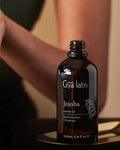
Jojoba Oil
A great option to start with is jojoba due to its relatively light consistency and versatility. Jojoba makes a great carrier oil, in which essential oils can be added for dilution, or it can be used pure.
For anyone looking for a scalp oil for dry scalp, jojoba is particularly convenient because you don't need much. A small amount massaged into the scalp before washing can turn an ordinary hair washing day into a more intentional care ritual.
I also like that it doesn't require a complicated recipe. If your preference is minimalism, jojoba alone can be enough. Our jojoba oil guide and guide to carrier oils for hair are worth a look if you'd rather compare a few carrier options before choosing.
Tea Tree Essential Oil
Tea tree has a distinct fresh, herbal aroma and is one of the more recognizable essential oils used in scalp and hair care routines.
You may have come across tea tree oil for scalp care because of how commonly it appears in shampoos, scalp oils, and cleansing focused hair products.
For a DIY routine, however, remember that essential oils are highly concentrated. Tea tree essential oil should always be diluted in a suitable carrier oil before applying it to the scalp.
I like using just a small amount when I want the blend to have that unmistakably fresh tea tree character without making the routine feel too intense.
Peppermint Essential Oil
Peppermint brings something completely different to the blend.
Its crisp, cooling aroma can make a pre wash scalp massage feel especially refreshing. I think of peppermint essential oil as an optional addition rather than an essential ingredient.
If your scalp is already feeling sensitive or uncomfortable, I'd keep things simple and start with jojoba alone. You can always introduce an essential oil later if your scalp is comfortable with your basic routine.
Cinnamon Bark Essential Oil
Cinnamon Bark offers a warm, spicy aroma that will dramatically change the way your scalp oil blend smells. Compared to the fresher aroma of tea tree and peppermint, it makes this routine warmer and fragrant.
Cinnamon Bark is a very potent essential oil, and I'd treat it differently from the other two. Most essential oil safety references cap leave on skin use of Cinnamon Bark at well under half a percent, meaningfully less than a single standard drop in a tablespoon of carrier oil, which is why I wouldn't add it to a leave on pre wash blend at all. If you enjoy the aroma, it's a better fit for a diffuser blend than for anything left on the skin or scalp.
For a simple, skin safe routine, I'd treat Cinnamon Bark as an aromatic option elsewhere in your day, not as an ingredient in this particular oil routine. If your scalp is sensitive or already irritated, the gentler route is to use a plain carrier oil on its own.
Choosing Oils for a Flaky Feeling Scalp
When you're looking at oils for flaky scalp care, the most important thing isn't how many ingredients you can fit into one bottle.
It's finding a combination that works comfortably with your existing routine.
A simple jojoba base gives you a nourishing starting point. Tea tree can add a fresh herbal aroma, while peppermint can provide a cooling sensory experience.
You don't need to use all three at once.
In fact, starting with one ingredient at a time makes it much easier to understand what works for your own routine.
The Dry Scalp Oil Routine
The easiest way to incorporate scalp oil is as a pre wash treatment.
I prefer this approach because it gives the oil a defined place in my routine rather than leaving me wondering when or how often to use it.
You can keep the process simple:
1. Start with dry hair and a comfortable scalp.
2. Take a small amount of your chosen carrier oil.
3. Part your hair in a few places so you can reach the scalp.
4. Massage the oil gently with your fingertips.
5. Leave it on for a short period before washing.
6. Shampoo as you normally would.
The important word here is gently.
You don't need to vigorously scrub or massage your scalp. The purpose is to distribute the oil comfortably, not to create friction.
Pre Wash Massage
A pre wash massage is one of my favorite parts of this routine.
I usually start at the front of the scalp and work backward, using my fingertips rather than my nails. I keep the pressure light and take a few minutes to work the oil through the areas that tend to feel driest.
If you're using an essential oil blend, make sure it has already been properly diluted in your carrier oil.
For a straightforward starting point, you could use jojoba oil on its own. If that feels comfortable and you want to experiment later, introduce a properly diluted essential oil blend.
This is also where I think many people overcomplicate things. You don't need to soak your scalp until the hair is dripping with oil. A small amount is enough to cover the scalp without creating an unnecessarily difficult wash day.
How Often Should You Oil Your Scalp?
There isn't one schedule that works for everyone.
If you're new to scalp oiling, once a week is a reasonable place to start. You can then see how your scalp and hair respond to the routine.
Some people may prefer doing it every week during colder weather, while others may find that every other week is enough.
More oil isn't automatically better.
If your hair becomes weighed down or your scalp feels coated rather than comfortable, reduce the amount or frequency.
The goal of dry scalp care is to create a routine that feels sustainable, not to add another daily task to your schedule.
Dry Scalp vs Dandruff: When to See a Pro
Dryness and dandruff can sometimes look similar, but they're not necessarily the same thing.
A dry scalp may simply feel tight or flaky, particularly when the weather becomes colder or your routine changes. Dandruff, on the other hand, can involve persistent flakes and other scalp changes that may require a different approach. Our Essential Oils for Dry Scalp & Dandruff guide covers that distinction in more depth if you're not sure which one you're dealing with.
That's why I wouldn't use an oil routine as a substitute for professional advice when something doesn't seem right.
If your flaking is persistent, severe, recurring despite changes to your routine, or accompanied by significant redness, swelling, pain, sores, or other concerning changes, it's worth speaking with a dermatologist.
A dermatologist can help determine what's actually causing the scalp changes and recommend an appropriate approach.
Essential oils can be part of a personal grooming routine, but they aren't a replacement for professional diagnosis or treatment.
A Simple DIY Scalp Oil Blend
If you want to try something beyond plain jojoba, keep the recipe uncomplicated.
For a small pre wash blend, combine:
• 1 tablespoon jojoba oil
• 1 drop tea tree essential oil
• 1 drop peppermint essential oil
Mix well before use.
Apply a small amount to the scalp, massage gently with your fingertips, and leave it on before washing your hair.
Because everyone's skin can react differently, patch testing is a sensible step before using a new essential oil blend more broadly. If your scalp feels irritated or uncomfortable, stop using the blend and return to a simpler routine.
And if your scalp is particularly sensitive, skip the essential oils altogether and start with jojoba.
What If You Have Color-Treated Hair?
Having color treated hair doesn't necessarily mean you have to avoid every type of scalp oil routine.
The bigger consideration is how the oil fits into your overall hair care routine and whether your particular color treatment instructions recommend avoiding certain products.
I'd keep the application focused on the scalp rather than coating the lengths of your hair. Use a small amount, keep it as a pre wash treatment, and wash thoroughly afterward.
If you're unsure about a specific color treatment, check the manufacturer's care instructions or ask your stylist before introducing a new oil routine.
A Few Things I Wouldn't Do
A good scalp oil routine is as much about what you skip as what you add.
I wouldn't drench the scalp in oil simply because it feels dry. Start with a small amount.
I also wouldn't pile several essential oils into one blend. More ingredients don't necessarily make a better routine.
And I would not scratch a flaky scalp aggressively with your fingernails. If your scalp is already dry or painful, too much rubbing will only make it worse.
Lastly, not every flake means you have to reach for an even stronger product. Sometimes a change in seasons simply calls for a milder, gentler routine.
Final Thoughts
When cooler weather arrives, your scalp routine may need a little more attention.
You don't need to completely overhaul the way you care for your hair. A simple pre wash oil ritual once a week can be an easy addition, especially if your scalp tends to feel tight or flaky as the weather changes.
For me, jojoba is the easiest place to start. It's simple, versatile, and doesn't require a complicated recipe. If I want something more aromatic, a properly diluted touch of tea tree or peppermint can change the experience without turning the routine into a ten step process.
The best dry scalp care routine is ultimately one you'll actually stick with. Keep it gentle, keep it simple, and pay attention to how your scalp responds.