


Carrot seed oil is a nourishing botanical oil commonly used in skincare to help skin feel soft, conditioned, and look radiant. While it can complement a glow-focused routine, carrot seed oil is not a sunscreen and should never replace SPF.
There is a certain point after summer when I look in the mirror and think, Where did my glow go?
Between long days outdoors, heat, dry air, and a skincare routine that may have become a little less consistent, skin can start looking dull, tired, or simply less fresh than it did a few months ago. That's usually when I start reaching for nourishing facial oils.
One ingredient that deserves a closer look is carrot seed oil.
The first thing to know is that carrot seed oil isn't a magic fix, and it isn't a replacement for sunscreen. What makes it interesting is its naturally rich composition and its ability to bring a nourishing, conditioned feel to a skincare routine.
If you're curious about carrot seed oil benefits, especially carrot seed oil for skin, this guide breaks down what it is, how it can fit into your routine, and one very important myth to leave behind.
Meet Carrot Seed Oil
Carrot seed oil is pressed or distilled from the seeds of Daucus carota, the wild carrot, and it is valued in aromatherapy, personal care, and natural beauty routines for its distinctive earthy, herbaceous aroma and its conditioning feel on skin.
Here is the part most articles skip. "Carrot seed oil" is sold in two different forms, and they are not interchangeable.
|
|
Carrot Seed Essential Oil |
Organic Carrot Seed Oil (carrier) |
|
Botanical |
Daucus carota, dried seeds |
Daucus carota, seeds |
|
How it is made |
Steam distillation |
Cold pressing or infusion |
|
Origin |
Europe, India |
Europe, India |
|
Concentration |
Highly concentrated aromatic oil |
Far less concentrated, ready to use on skin |
|
On the face |
Never neat. Dilute to 0.5 to 1 percent in a carrier oil first |
Can be used as it comes, or blended into a facial oil |
|
Use it for |
Adding aroma and character to a facial oil blend |
The nourishing base of a facial oil |
|
Format |
10ml bottle |
30ml bottle |
So if you are shopping, decide which job you want it to do. Gya Labs Organic Carrot Seed Oil is the one to reach for if you want to use it on your face without mixing anything, and Gya Labs Carrot Seed Essential Oil is the one to reach for if you are building a blend and want the earthy aroma in it. Both sit in the Carrier Oils for Skin and Skincare collections.
For facial care, that distinction matters.
Essential oils are highly concentrated, so they aren't generally something I would apply directly to the face. Instead, I prefer treating them as one small part of a thoughtfully formulated skincare ritual, diluted appropriately in a suitable carrier oil.
The appeal of carrot seed oil is its versatility. It can be incorporated into facial oil blends, body care formulas, or simple evening rituals when your skin is craving a little extra nourishment.
And there's something particularly appealing about using a botanical oil after a season when your skin has been exposed to plenty of sun and outdoor elements. It makes the routine feel restorative without requiring ten different products.
What It Can Do for Skin
Carrot seed oil can help skin feel nourished and conditioned while supporting a soft, healthy looking glow. It can be used as part of a simple facial oil routine, especially when skin looks dull or tired. It is not intended to treat any skin condition.
When I think about carrot seed oil for skin, I don't think of it as a treatment for a specific skin condition. I think of it as a botanical ingredient that can complement a simple routine focused on maintaining a healthy looking glow.
Here are a few qualities that make it worth considering.
A Rich, Radiant-Looking Finish
One of the biggest reasons botanical facial oils remain popular is the way they can make a routine feel more nourishing.
Carrot seed oil has a naturally rich profile and can help give skin a soft, conditioned appearance. When used as part of an appropriate facial oil blend, it can leave the complexion looking moisturised and more polished.
This is where I find facial oils genuinely useful. It does not have to be an elaborate routine. It can simply be the last step, the one that takes a minute and makes the rest of it feel finished.
If your complexion has been looking a little flat lately, adding a lightweight facial oil can also make your skincare routine feel more intentional.
A Natural Addition to a Glow-Focused Routine
When skin looks dull, it's tempting to keep adding products in the hope that one of them will instantly bring back that fresh, luminous look.
I've found that a simpler approach often feels better.
A gentle cleanser, a moisturiser, and a suitable facial oil can be enough to create a comforting routine. Carrot seed oil can fit into that final nourishing step, particularly when you want your skin to feel soft and conditioned.
This is also why I like pairing botanical oils with a consistent nighttime routine. There is something satisfying about applying a few drops, massaging them between your palms, and pressing them gently into the skin before bed.
The point is not a perfect complexion. It is a routine simple enough that you actually keep doing it, with one step that gives your skin a little extra care.
The SPF Myth: Read This First
No, carrot seed oil is not a natural sunscreen. It does not provide reliable sun protection and should not replace a broad-spectrum sunscreen.
This is the most important distinction to make when discussing carrot seed oil.
You may see claims online suggesting that carrot seed oil can provide meaningful sun protection or replace sunscreen. That's not how I would use it.
While carrot seed oil can add beneficial nourishment to your skincare routine, it cannot be relied on as tested sun protection. If you'll be spending any time outside then be sure to use an appropriate broad-spectrum sunscreen with adequate SPF and apply it according to its usage directions.
Think of carrot seed oil as skincare, not sun protection.
This distinction is especially important if you're interested in using it after summer. Sun-exposed skin can benefit from a gentle, nourishing routine, but that doesn't mean an oil should be positioned as an alternative to sunscreen.
And honestly, keeping those roles separate makes the whole routine much easier to understand.
|
|
Broad spectrum sunscreen |
A facial oil |
|
What it does |
Protects against UV exposure |
Cosmetic nourishing and conditioning |
|
Is it tested and rated? |
Yes, an SPF value is measured |
No. There is no SPF value |
|
When to use it |
Before and during sun exposure, reapplied |
As the last step of a routine, usually evening |
|
Can it replace the other? |
No |
No |
Both can have a place in a skincare routine, but they do very different jobs.
How to Use Carrot Seed Oil
To use carrot seed oil on your face, dilute carrot seed essential oil in a suitable carrier oil and apply a small amount as part of your skincare routine. Always follow appropriate dilution and product directions.
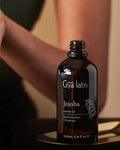
Jojoba oil, sweet almond oil, and other cosmetic carrier oils can work well as the base of a simple facial oil blend. Gya Labs Organic Jojoba Oil is the one I use most, because it is light and it does not compete with the aroma.
Dilution
Because essential oils are concentrated, a low dilution is a sensible place to begin for facial applications.
For a leave-on facial product, keep the overall essential oil concentration appropriately low and follow the specific product's directions.
If you're making your own blend, measure your ingredients rather than adding essential oils by guesswork. More isn't necessarily better when you're working with concentrated botanical oils.
Layering
I like to think of facial oil as the finishing step rather than the star of the entire routine.
After cleansing, apply your usual water-based skincare products or moisturizer and then use a small amount of facial oil as the final nourishing layer, depending on your routine and the products you're using.
You only need a few drops.
Warm them between your fingertips and gently press or massage the oil onto the face and neck.
There's no need to drench your skin.
For Dull, Sun-Weary Skin
If your complexion is looking tired after summer, this is where carrot seed oil can become part of a simple evening ritual.
Start with clean skin. Apply your usual moisturizer, then follow with a small amount of a properly diluted carrot seed oil blend.
I like taking an extra minute here rather than rushing through the process. Gently massage the oil across the cheeks, forehead, and jawline, then leave it to absorb while you wind down.
The goal is a nourished, comfortable, well-conditioned feel and a complexion that looks fresh and cared for.
It isn't about reversing sun exposure or repairing skin damage. It's simply a soothing, cosmetic ritual for skin that could use some extra attention after a long season outdoors.
Who Should Patch Test?
Even natural ingredients can be unsuitable for some people, so I always recommend patch testing a new facial oil before making it part of your regular routine.
Apply a small amount of the properly diluted blend to a discreet area of skin and observe how your skin responds.
If irritation or discomfort occurs, discontinue use.
This is particularly important when introducing essential oils because they're concentrated botanical extracts.
It's also worth remembering that your face can respond differently from the skin on your arms or body. A blend that feels perfectly comfortable elsewhere may not be the right choice for facial use.
When in doubt, keep your facial routine simple and choose products formulated specifically for facial application.
A Simple Carrot Seed Oil Ritual
If you want to try carrot seed oil for skin, here's the approach I'd start with.
You'll need:
- 1 tablespoon jojoba oil
- A properly diluted amount of carrot seed essential oil appropriate for facial use
- A clean, dark glass bottle
How to use it:
- Add the jojoba oil to your bottle.
- Add the appropriate amount of diluted carrot seed essential oil according to your intended concentration.
- Close the bottle and gently roll or shake it to combine.
- After cleansing and moisturizing, apply a few drops to your face.
- Massage gently or press the oil into your skin.
- Store the bottle somewhere cool and away from direct sunlight.
The beauty of this kind of routine is that it takes less than a minute once everything is prepared.
And if you're already using a facial oil you love, you don't necessarily need to replace it. Carrot seed oil can simply be an ingredient to explore when you're looking to diversify your botanical skincare routine.
Final Thoughts
The best skincare routines aren't necessarily the ones with the longest ingredient lists.
For me, carrot seed oil is appealing because it fits into that simpler approach. It's a botanical ingredient with a naturally distinctive character that can add nourishment and conditioning to a facial oil routine, particularly when your complexion is looking a little dull after summer.
Just remember the most important rule: carrot seed oil is skincare, not sunscreen.
Use SPF when you need sun protection, and use facial oils for the cosmetic care and nourishment they can provide.
If you're building a simple glow-focused routine, a properly formulated carrot seed oil blend can be a lovely addition. A few drops, a minute of gentle massage, and a little consistency can turn an ordinary evening skincare routine into something that feels much more intentional.