


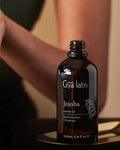

For fall skincare, switching from lightweight to slightly richer face oils can help your routine feel more comfortable as the weather becomes cooler and drier. Argan, baobab, and marula-style oils are good options to consider, while oily or combination skin can start with a few drops and adjust based on how the skin feels.
When summer starts fading and the mornings suddenly feel a little cooler, I notice the same thing every year: my skincare routine starts feeling slightly off.
The lightweight oil that was perfect in July doesn't feel quite as satisfying in September. My skin can feel less supple after cleansing, and the moisturizer I loved all summer suddenly seems like it needs a little extra help.
That's usually my cue to make a seasonal switch.
Not a complete skincare overhaul. Just a thoughtful move from lighter textures toward richer face oils that feel more comfortable as the weather changes.
If you've ever wondered how to switch skincare for fall, the good news is that you don't have to replace everything at once. A few small adjustments, such as changing your face oil, applying it at the right time, and paying attention to how your skin feels, can make your routine feel much more balanced.
Why Skin Changes in Fall
Fall weather can feel completely different from summer, even within the same week.
The temperature starts dropping, the air may feel less humid, and indoor heating eventually becomes part of the equation. After months of lightweight summer skincare, those changes can make your usual routine feel less comfortable.
For me, the first sign isn't necessarily visible dryness. It's how my skin feels.
After cleansing, there may be a little more tightness. My usual lightweight moisturizer may seem to disappear faster. And the face oil I relied on during humid weather might suddenly feel too light.
That's when I started thinking about fall skincare.
The goal isn't to assume that everyone's skin needs a heavy oil simply because the calendar says autumn. Instead, I look at how my skin is behaving and make gradual adjustments.
This is particularly important because skin doesn't follow a seasonal schedule perfectly. Someone with oily skin may still prefer a lightweight texture throughout fall, while someone with naturally dry skin may want something richer much earlier.
Your skin gets the final vote.
Don't Blame Everything on the Weather
It's tempting to think that cooler weather automatically means dry skin.
But your routine matters too.
Long, hot showers can leave skin feeling uncomfortable. So can frequent cleansing, harsh-feeling products, and spending more time indoors with heating.
That's why I don't immediately replace every product when autumn arrives.
I first look at the basics.
Is my cleanser too drying?
Am I moisturizing consistently?
Does my current facial oil still feel comfortable?
Once I've answered those questions, I can decide whether it's actually time to make my oil richer.
Lightweight vs Richer Oils
The difference between a lightweight and richer facial oil isn't simply about one being "better."
It's primarily about texture, feel, and how the oil fits into your routine.
During warmer months, I tend to gravitate toward oils that feel light and easily spreadable. They're particularly pleasant when the weather is humid and I don't want anything that feels heavy.
As autumn arrives, I often prefer a slightly more nourishing-feeling texture.
That's where face oils for fall come in.
A richer oil can make a simple nighttime routine feel more comforting without requiring you to add several new products.
One of my favorite things about seasonal skincare is that the change can be incredibly small.
Instead of:
Summer routine → completely new fall routine
I prefer:
Summer routine → slightly richer moisturizer or oil → observe → adjust again if needed
It's much less disruptive.
|
Face Oil |
Texture |
Best For |
How I'd Use It in Fall |
|
Argan Oil |
Silky, lightweight to medium |
Normal, combination, dry-feeling skin |
A few drops after moisturizer, especially at night |
|
Baobab Oil |
Richer, nourishing feel |
Dry-feeling skin |
Use in a nighttime routine when you want a more substantial finish |
|
Marula-Style Oil |
Smooth and silky |
Normal to dry-feeling skin |
Use alone or layered over moisturizer |
|
Jojoba Oil |
Lightweight, silky |
Oily, combination, or normal skin |
Start with a few drops and adjust as needed |
What Makes an Oil Feel Richer?
Several factors influence how an oil feels on the skin, including its fatty acid composition, texture, and how quickly it spreads and absorbs.
Some oils feel silky and lightweight even when they're highly emollient. Others feel denser and more cushioning.
This is why I wouldn't choose an oil based solely on whether it is described as "rich."
Texture matters just as much.
For example, argan oil for face routines is popular because it can provide a comfortable, silky finish without necessarily feeling excessively heavy.
That's exactly the kind of balance I look for in autumn.
The Best Carrier Oils for Autumn
When I start building a fall routine, I look for carrier oils that feel comfortable, spread easily, and complement the rest of my skincare.
There isn't one universal best face oil for autumn.
Instead, there are several excellent options depending on your skin type and preferred texture.
Argan Oil
Argan oil is one of the first oils I consider when transitioning into fall.
It has a smooth texture and works beautifully as the final step in a simple evening routine.
I especially like it when I want my skincare to feel richer without becoming overly greasy.
If you're new to facial oils, argan is also an easy place to start because it doesn't require a complicated formula.
A few drops warmed between your fingertips can be pressed gently over moisturized skin.
That's it.
No ten-step routine required.
Baobab Oil
Baobab oil has a richer, more substantial feel, which makes it an interesting option when summer's lightweight textures start feeling insufficient.
I particularly like richer oils such as baobab for nighttime routines.
There's something about applying a slightly more luxurious facial oil before bed that makes a fall skincare routine feel intentional rather than purely functional.
If you prefer a more substantial texture, this is the kind of carrier oil I'd consider experimenting with.
Marula-Style Oils
Marula-style facial oils are another option for people who enjoy a smooth, silky finish.
What I like about oils in this category is that they can sit nicely between lightweight summer oils and very rich winter textures.
That makes them particularly useful during autumn, when you're ready to move away from summer's lightest textures but don't necessarily want something very heavy.
In practice, I use oils in this category in a similar way to argan — a few drops warmed between the fingertips and pressed gently over moisturized skin toward the end of my evening routine.
The finish tends to feel smooth rather than greasy, which makes them easier to adjust to if you're new to facial oils in general.
Fall is, after all, a season of transition.
Your skincare can be too.
⚠ Informational Notice
This article is for informational purposes only and does not constitute medical or dermatological advice. Everyone's skin is different. If you have a skin condition, sensitivity, or specific concerns, consult a qualified healthcare professional before changing your skincare routine.
How to Layer Face Oils for the Season
This is where many people make their routine more complicated than it needs to be.
The basic principle I follow is:
Apply lighter, water-based products first and use facial oil later in the routine to help leave the skin feeling moisturized and comfortable.
For many routines, that means:
1. Cleanser
2. Hydrating serum or essence, if you use one
3. Moisturizer
4. Face oil
However, the exact order can depend on the products you're using and how your skin responds.
I personally prefer applying facial oil toward the end of my nighttime routine.
I use a small amount, warm it between my palms, and gently press it onto my skin rather than aggressively rubbing it in.
The difference is subtle, but it makes the entire routine feel more relaxing.
Dry or Mature Skin
If your skin tends to be oily or combination, don't assume you need to avoid oils completely in fall.
Instead, start with less.
A couple of drops may be enough.
I would also begin with a lighter-feeling option rather than jumping straight into the richest oil available.
Try your usual moisturizer first and follow with a small amount of facial oil at night.
Then pay attention.
If your skin feels comfortable without excessive greasiness, you've probably found a good balance.
If it feels too heavy, reduce the amount or use the oil less frequently.
Seasonal skincare should be adjustable.
Dry or Mature Skin
If your skin naturally feels dry, fall may be the perfect time to move toward a richer texture.
Instead of simply adding more products, I'd first consider switching your lightweight facial oil for a more substantial carrier oil.
You can also layer a few drops of oil over your moisturizer at night.
I find this approach particularly useful during seasonal transitions because it allows you to increase richness without changing your entire routine.
And remember, more oil isn't automatically better.
A small amount can be surprisingly effective from a texture and comfort perspective.
Easing Into the Switch
One of the biggest mistakes I see with seasonal skincare is changing everything overnight.
New cleanser.
New serum.
New moisturizer.
New oil.
New mask.
By the end of the week, you have no idea which product your skin actually likes.
I prefer the opposite approach.
Change one thing at a time.
If your summer face oil suddenly feels too light, that's the first thing I'd replace.
Keep everything else the same for several days.
If your skin feels comfortable, you're done.
If it still feels dry or tight, look at your moisturizer next.
This gradual approach makes it much easier to understand what works for you.
Let Your Skin Guide the Routine
Your skincare routine doesn't have to follow a strict seasonal calendar.
September doesn't automatically mean "rich oil."
October doesn't mean "maximum hydration."
Instead, think of fall as a transition period.
Some mornings might still feel warm and humid. Some evenings might feel surprisingly cool.
Your routine can adapt accordingly.
I sometimes use a lighter oil during the day and a richer one at night.
Other times, I use the richer oil only two or three nights a week.
There's no prize for using the heaviest facial oil every day.
Comfort is the goal.
A Simple Fall Face Oil Routine
If you're wondering where to start with face oils for dry fall skin, I'd keep the routine incredibly simple.
In the evening, cleanse your face as usual.
Apply your usual hydrating product or moisturizer.
Then take two to three drops of your chosen facial oil and warm them gently between your fingertips.
Press the oil over your face and neck.
Less is more here. You want to use just enough oil that your skin feels comfortable, without the skin feeling overly coated. For fall, I tend to reach for argan-style products when I want something silky but lighter, and reserve the richer, heavier oils for nights when my skin feels like it needs the extra nourishment.
That flexibility is what makes seasonal skincare work for me.
What If You Have Oily Skin?
This deserves its own conversation because I know the phrase "richer face oil" can make anyone with oily skin nervous.
But richer doesn't necessarily mean greasy.
Texture and amount matter.
If you have oily or combination skin, you can still experiment with facial oils during fall. Start with a small amount and choose an oil that feels comfortable rather than excessively heavy.
I would also avoid changing your entire routine at once.
Try your oil at night first.
Two or three drops.
Give your skin some time.
If you like the finish, continue.
If you don't, adjust.
That's a much better approach than deciding that your skin type permanently excludes facial oils.
Fall Skincare Doesn't Need to Be Complicated
Every autumn, skincare brands release elaborate seasonal routines with endless steps.
You don't need all of them.
A good fall routine can be incredibly simple:
Cleanse → hydrate → moisturize → apply a few drops of facial oil.
That's enough for many people.
The most important thing is choosing textures that feel comfortable and adjusting gradually as the weather changes.
For me, that usually means replacing one lightweight summer oil with a slightly richer option rather than rebuilding my entire bathroom shelf.
And that's the real lesson behind a seasonal skincare switch.
You don't need more.
You just need the right texture for the season you're actually in.
Final Thoughts
Personally, fall skincare for me is most commonly a subtle one as I slip away from summer's lightest textures and begin a gradual transition to a slightly richer one once my skin begins craving something more substantial.
Sometimes that's argan oil.
Sometimes it's a more substantial carrier oil at night.
And sometimes I don't change anything at all.
That's because good skincare isn't about following a calendar perfectly. It's about paying attention to what your skin needs and making thoughtful adjustments.
So as the weather cools, don't feel like you need to replace your entire routine.
Start with your face oil.
Try a slightly richer texture.
Use a small amount.
Give it time.
And let your skin tell you whether you've made the right seasonal switch.