



You can make a room smell like a log fire without lighting one. Blend a dry wood such as cedarwood, a drop of smoky, rooty vetiver and a warm resin such as frankincense in a diffuser. Add cypress for a fresh, outdoorsy edge. No oil smells exactly like burning wood, but this mix gets close to the warmth of a fireside.
Quick Answer: For a fireplace scent, diffuse 3 drops cedarwood, 1 drop vetiver and 1 drop frankincense in a small room for 30 to 60 minutes. Cedarwood gives the dry wood, vetiver the smoke, frankincense the warm resin. Keep vetiver to 1 drop: it takes over fast. For a fresher log cabin feel, swap the vetiver for 2 drops of cypress.
What Makes a Scent Smell Like a Fire?
A wood fire smells of three things at once: dry wood, smoke and warm resin from the sap. A convincing blend needs one oil for each.
|
Role |
Oils |
What they add |
|
Dry wood (the base) |
Cedarwood, sandalwood |
Warm, dry, woody body |
|
Smoke |
Vetiver |
Earthy, rooty, smoky depth |
|
Warm resin |
Frankincense |
Balsamic, slightly incense like warmth |
|
Fresh evergreen |
Cypress, pine |
The outdoorsy, log pile edge |
|
Embers (optional) |
Clove bud |
Warm spice, 1 drop only |
The trick is balance: lots of wood, a little smoke. Too much vetiver and the blend smells like damp earth instead of a fire.
Oils for a Fireside Scent
Cedarwood: The Wood
Dry, warm and woody: the base of almost every fireplace blend. It’s easy to use and doesn’t overpower. Cedarwood comes in two common types: Atlas is warmer and slightly sweet, while Virginia is drier, like pencil shavings. Check the botanical name on the label.
Vetiver: The Smoke
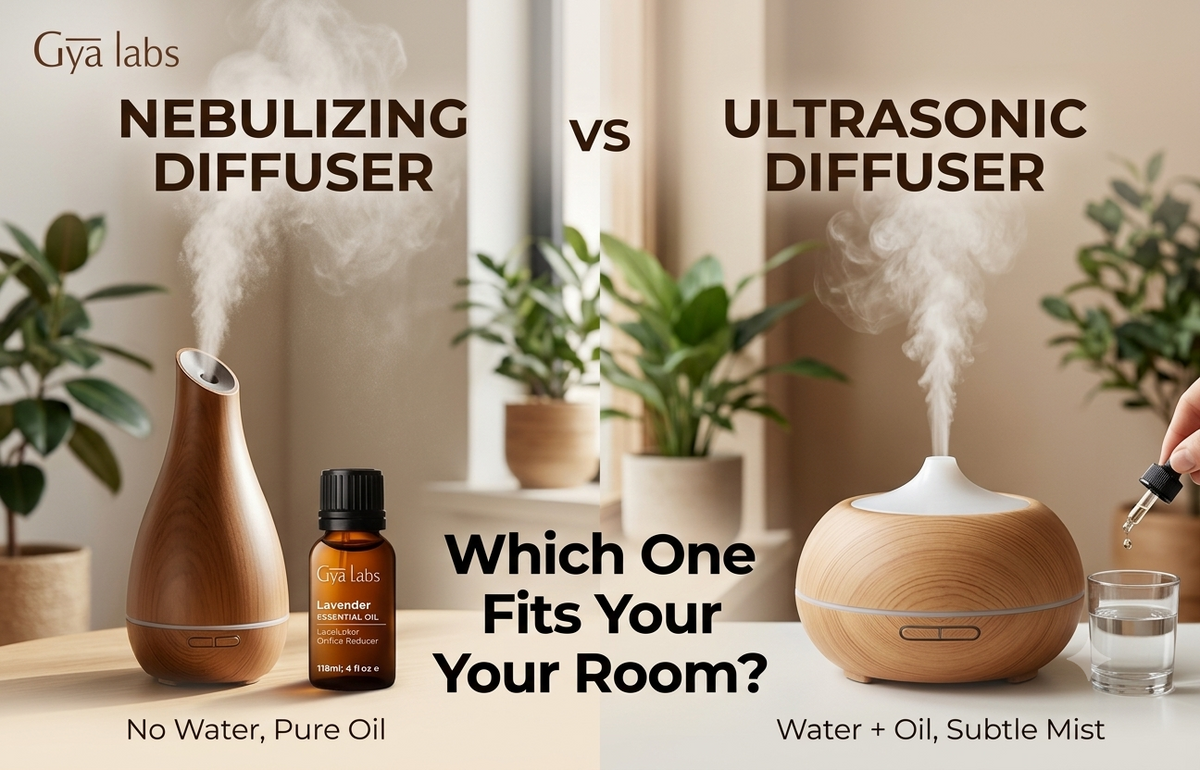
Distilled from the roots of a grass, vetiver smells dry, smoky and rooty. It’s the closest single oil to woodsmoke in most collections. It’s also very strong and very thick: use 1 drop, and warm the bottle in your hands so it drips. Its thickness can clog nebulizing diffusers, so use it in an ultrasonic one.
Frankincense: The Resin
Rich, balsamic and gently sweet, frankincense isn’t smoky itself, but it adds the warm, incense like note of resin in a fire. Gya Labs Frankincense Essential Oil is Boswellia serrata, steam distilled from resin.
Cypress: The Fresh Evergreen
Clean, green and woody, cypress brings the outdoor air into the blend and keeps heavier oils from feeling stuffy. Try Gya Labs Cypress Essential Oil (Cupressus sempervirens, from Spain).
Sandalwood: The Smooth Base
Creamy and soft rather than smoky. Use it to round off a blend that feels too sharp.
Cade: The Smokiest of All
Perfumers get a true campfire note from cade, an oil from juniper wood. Crude cade can contain tar compounds that fragrance safety standards restrict, so only rectified cade is allowed in fragrance. It’s extremely strong. You don’t need it for the blends below.
Browse more woody oils in the Earthy and Woodsy collection.
Five Fireplace Diffuser Blends
For a small room, use 3 to 5 drops; for a medium room, 5 to 8 drops, as Gya Labs’ Diffuser Blend Recipes suggest. These blends are written for a small room; add a drop of the main oil for a bigger space.
|
Blend |
Drops |
Smells like |
|
Campfire |
3 cedarwood, 1 vetiver, 1 frankincense |
Wood, smoke and warm resin: the closest to a fire |
|
Cozy Cabin |
3 cedarwood, 1 frankincense, 1 sandalwood |
Soft, warm wood with no smoke |
|
Log Pile |
3 cedarwood, 2 cypress |
Fresh cut logs and cold air |
|
Smoky Mountain |
1 vetiver, 3 cypress, 1 sandalwood |
Pine forest with a smoky edge |
|
Embers |
3 cedarwood, 1 vetiver, 1 clove bud |
Smoky wood with warm spice |
How to run it:
1. Fill the diffuser with water to the line.
2. Add the drops.
3. Run it for 30 to 60 minutes, then switch it off and let the room air out. You’ll stop noticing the scent after a while, so longer sessions add little.
Adjusting a blend: if it smells too heavy or earthy, remove the vetiver before adding anything else. If it smells too faint, add 1 drop of cedarwood. Change one oil at a time.
Clove bud is a strong irritant: keep it to 1 drop, keep sessions short, and leave it out around cats and young children.
Other Ways to Get a Fireside Scent
Passive: An Aroma Stone
Add 2 or 3 drops of a woody blend to an aroma stone for a gentle scent close by, such as on a nightstand or desk. No power or water needed. See our guide to aroma stones and clay diffusers.
A Fireside Room Spray
For a 100 mL (about 3.4 oz) bottle:
• 85 mL distilled water
• 1 tablespoon (15 mL) witch hazel or high proof vodka
• 10 to 15 drops of essential oil, such as 6 cedarwood, 4 cypress and 2 frankincense
Mix the oils into the witch hazel or vodka first, then add the water. Shake well before every spray: oil and water separate.
• Leave vetiver out of sprays: it’s thick, doesn’t mix well and can mark fabric.
• Spray into the air, not onto furniture, fabric, wood or pets.
• With no preservative, make small batches, label the date, and use within about 2 weeks.
• Never spray near candles, a fireplace or a heater: essential oils are flammable.
For more spray recipes, see our DIY Citrus Lavender Room Spray.
A Simmer Pot, Without the Oils
A pot of water with orange peel, cinnamon sticks, cloves and a sprig of rosemary on a low simmer gives a warm, wintry smell. Don’t add essential oils to a pot on the stove: heat changes their scent, and they’re flammable. Use whole spices instead, and keep an eye on the water level.
A Fireplace Candle
Fireplace scented candles add light as well as scent, but they need supervision. Keep them 12 inches from anything that can burn and never leave them unattended. A diffuser is the easier choice for a bedroom or an evening you might nod off.
Diffuser vs Real Fire vs Candle
|
|
Diffuser |
Wood fire |
Scented candle |
|
Smoke |
None |
Yes |
A little soot |
|
Flame |
None |
Yes |
Yes |
|
Adjustable scent |
Yes, by drops and oils |
No |
No |
|
Light and crackle |
No |
Yes |
Soft light |
|
Needs |
Power and water |
A fireplace and firewood |
Supervision |
Safety Tips
• Keep diffusers and oil bottles away from heaters, stoves and fireplaces. Essential oils are flammable.
• Pets: many essential oils can harm cats, including clove, citrus, peppermint, pine and tea tree, and birds are very sensitive to anything in the air. Diffuse in a room your pet can leave, keep sessions short, and don’t diffuse near birds. See our room by room guide to essential oils and cats.
• Children: place diffusers out of reach, and choose gentler blends (Cozy Cabin, Log Pile) in their rooms.
• Ventilate: open a window now and then, and stop if anyone gets a headache or feels irritated.
• Don’t swallow essential oils, and dilute to 1 to 2% before any skin use.
• Clean your diffuser after woody oils: thick oils such as vetiver leave residue. Rinse the tank and wipe the plate with a cotton swab.
Final Thoughts
A fireplace scent needs three things: dry wood, a little smoke and warm resin. Cedarwood, one drop of vetiver and frankincense give you all three, and cypress adds the fresh air of a winter evening.
Start with the Campfire blend, run it for 30 to 60 minutes, and adjust one drop at a time. Keep your diffuser and oils away from heaters and fireplaces, and give pets a room they can leave.
Browse more oils for winter blends in the Essential Oil Singles collection.