


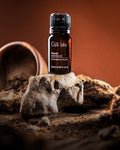
A 10 mL bottle holds about 200 to 300 drops. At 5 drops a day, that’s roughly 6 to 8 weeks. At 5 drops four times a week, it’s about 10 to 15 weeks. To work out your own number, divide the drops in the bottle by the drops you use each week. Then check that you’ll finish the bottle before it passes its shelf life: about 1 to 2 years for citrus oils once opened, and longer for most others.
How long a bottle lasts comes down to three things: how many drops it holds, how many you use each time, and how often you use it. This guide gives you the numbers, a simple worksheet, and a way to work out your cost per use.
How Many Drops Are in a 10 mL Bottle?
There’s no exact count, because drop size depends on the oil’s thickness and the dropper insert. Two figures are worth knowing:
• 20 drops per mL is the common rule of thumb, and it’s the figure Gya Labs’ own dilution charts use. That gives 200 drops in a 10 mL bottle.
• About 30 drops per mL is the average the Tisserand Institute found across three studies, with a range of roughly 20 to 40 drops per mL (Tisserand Institute, “How big is a drop?”). That gives about 300 drops.
So a 10 mL bottle holds roughly 200 to 300 drops. For planning, use 200: your bottle will probably last at least that long, and often longer.
|
Bottle size |
Approximate drops (20 to 30 per mL) |
|
5 mL |
100 to 150 |
|
10 mL |
200 to 300 |
|
15 mL |
300 to 450 |
|
30 mL |
600 to 900 |
Why drops vary: thin oils like citrus form small drops, so you get more per bottle. Thick oils like vetiver, sandalwood and myrrh form bigger, slower drops, so you get fewer.
How Long Does a 10 mL Bottle Last? Quick Table
|
Drops used per day |
How long the bottle lasts |
|
2 drops |
100 to 150 days |
|
3 drops |
67 to 100 days |
|
5 drops |
40 to 60 days |
|
8 drops |
25 to 37 days |
|
10 drops |
20 to 30 days |
These figures assume 200 to 300 drops and daily use. If you use oils a few times a week, your bottle lasts proportionally longer.
Estimate by How You Use It
In a diffuser
What matters is the drops you add per session, not how long the diffuser runs. Gya Labs’ Diffuser Blend Recipes suggest 3 to 5 drops for a small room and 5 to 8 for a medium room.
|
Drops per session |
Sessions from a 10 mL bottle |
|
3 drops |
67 to 100 |
|
5 drops |
40 to 60 |
|
8 drops |
25 to 37 |
Example: 5 drops, five times a week, gives 40 to 60 sessions, or about 8 to 12 weeks.
Waterless nebulizing diffusers run on undiluted oil and use it much faster. If you have one, measure how much the level drops after a week and use that instead.
In roller blends
A roller blend mixes a few drops of essential oil into a carrier oil. For body use, Gya Labs’ Safety & Dilution Guide recommends a 2% blend, which is 4 drops in a 10 mL roller.
At 4 drops per roller, one 10 mL bottle of essential oil makes 50 to 75 rollers. For the face, use 1% (2 drops per 10 mL), and the bottle stretches twice as far.
Don’t add more essential oil to make a roller stronger. Above the recommended dilution, the risk of skin irritation goes up.
In DIY projects
Divide the drops in the bottle by the drops in your recipe. A room spray or craft project using 10 drops gets 20 to 30 batches from one bottle.
Essential Oil Usage Worksheet
Fill in the blanks for one oil you use regularly.
Step 1: Record your usage
|
Item |
Your entry |
|
Bottle size |
10 mL |
|
Drops in bottle (use 200 to plan) |
200 |
|
Drops per session |
______ |
|
Sessions per week |
______ |
|
Bottle price |
$______ |
|
Shelf life once opened (see table below) |
______ years |
Step 2: Work out how long it lasts
1. Sessions per bottle = drops in bottle ÷ drops per session
2. Weeks per bottle = sessions per bottle ÷ sessions per week
Example: 5 drops per session, four sessions a week.
• 200 ÷ 5 = 40 sessions
• 40 ÷ 4 = 10 weeks
So the bottle lasts at least 10 weeks, and up to about 15 if your dropper gives smaller drops.
Step 3: Work out your cost per use
Cost per session = bottle price ÷ sessions per bottle
Example: Gya Labs Lavender Essential Oil is $10.99 for 10 mL {{VERIFY: price at publish}}. At 40 sessions, that’s about $0.27 per session. Bought in a 6 bottle bundle at $8.80 each, it’s about $0.22.
Step 4: Check it against shelf life
Weeks per bottle should be shorter than the oil’s shelf life once opened. If it isn’t, buy a smaller bottle or use it more often.
|
Oil type |
Shelf life once opened |
|
Citrus (lemon, lime, sweet orange) |
1 to 2 years |
|
Tea tree, frankincense, rosemary, bergamot |
2 to 3 years |
|
Lavender, eucalyptus, clary sage |
3 to 4 years |
|
Cedarwood, peppermint, geranium |
4 to 5 years |
|
Patchouli, sandalwood, vetiver |
6 to 8 years |
Source: Gya Labs’ guide, Do Essential Oils Expire?
Example: if you use 2 drops of lemon once a week, a 10 mL bottle lasts 100 to 150 weeks: two to three years. That’s longer than lemon’s shelf life, so expect the last part of the bottle to have aged.
Is a Bigger Bottle Better Value?
Larger bottles cost less per mL, but only if you finish them in time.
Example: Gya Labs Cedarwood Essential Oil comes in 10 mL ($14.99) and 118 mL ($35.99) {{VERIFY: prices at publish}}:
|
|
10 mL |
118 mL |
|
Price per mL |
About $1.50 |
About $0.31 |
|
Approximate drops |
200 to 300 |
2,360 to 3,540 |
|
At 5 drops a day |
40 to 60 days |
About 16 to 23 months |
|
Best for |
Trying a scent; occasional use |
An oil you use every day |
Cedarwood keeps for 4 to 5 years, so the large bottle is good value for a daily user. For a citrus oil that keeps only 1 to 2 years, a large bottle is only worth it if you use it often.
New to oils? Start small. Our guide to building a beginner essential oil kit for under $50 shows how to try several scents before you commit to a large bottle. Browse all 10 mL oils in the Essential Oil Singles collection.
How to Make a Bottle Last Longer
• Count your drops. Most people use more than they think. Tilting the bottle at an angle gives steadier drops.
• Start with fewer. In a diffuser, start at 3 drops and add 1 more only if you need it.
• Cap it straight away. Air is what ages an oil.
• Store it cool and dark. Keep it away from windows, the stove and the bathroom. Refrigerate citrus oils.
• Move the last few mL into a smaller bottle. A nearly empty bottle is mostly air, which speeds up aging.
• Track it. Our {{VERIFY: Essential Oil Inventory guide, once live}} shows how to log opening dates and amounts in a simple spreadsheet.
How to Tell If an Oil Has Aged
Before using an oil you opened a long time ago, check it:
• A sharp, sour or flat smell, or one that’s changed since you opened it
• A cloudy look or a change in color
• A thicker or sticky texture
If you notice any of these, don’t use it on your skin. Aged citrus, pine and tea tree oils are more likely to irritate skin.
Final Thoughts
A 10 mL bottle holds about 200 to 300 drops, which lasts most people from a few weeks to a few months. Count the drops you use, divide, and you’ll know when to reorder and what each use costs.
Then check the result against the oil’s shelf life. The best value bottle is the one you finish while it still smells as it should.