



Aromatherapy can be part of a gentle self care routine for everyday body comfort, especially when paired with relaxing massage, properly diluted essential oils, and soothing carrier oils. Popular choices include lavender, cedarwood, peppermint, and eucalyptus, but aromatherapy is not a treatment for pain and should not replace professional medical care.
Pain Awareness Month offers an opportunity to talk about something many of us experience but don't always know how to approach: everyday body discomfort. After a long day at a desk, an intense workout, hours on your feet, or simply a busy week, your muscles can feel like they've been working overtime.
That's where a gentle aromatherapy ritual can have a place.
A few drops of a properly diluted essential oil blend, a warm shower, and five quiet minutes of self massage can turn an ordinary evening into a much-needed pause. The goal isn't to treat an ache or replace professional care. It's much simpler than that: aromatherapy for comfort can be one small part of a relaxing self care routine.
For me, the biggest lesson has been that these rituals don't need to be complicated. I don't want to spend half an hour preparing a blend after a long day. I want something I can pour into my palms, breathe in, and massage slowly into my shoulders or calves.
That simple approach is what we'll explore here.
Marking Pain Awareness Month Responsibly
Pain Awareness Month is observed each September to encourage greater awareness and understanding around pain and the experiences of people living with it.
For an aromatherapy brand, however, it's important to approach the subject responsibly.
Essential oils aren't a replacement for medical care, and aromatherapy shouldn't be presented as a solution for pain conditions. Instead, we can look at the role of scent, touch, massage, and personal care rituals in creating moments of relaxation and comfort.
That's an important distinction.
When I talk about aromatherapy and massage, I think about the everyday situations that don't necessarily call for a complicated wellness routine. Maybe you've spent eight hours sitting at a computer. Perhaps you've been standing all day. Maybe you've just finished a workout and want a few quiet minutes before bed.
These are the moments when a soothing massage oil can become part of your routine.
Massage itself is also about more than the oil. The slow movement of your hands, the warmth of the product, the aroma in the room, and the decision to stop what you're doing for a few minutes can all contribute to a more relaxing experience.
I see it as a body check-in, not as treatment.
You take a moment.
You become aware of how your body feels.
And you take a few quiet, uninterruptible minutes of tender self care.
This way of looking at things keeps aromatherapy in its appropriate place as a wellness support not a stand in for medical care.
Oils People Find Soothing in Massage
When choosing oils for massage, I usually think about two things first: how the aroma makes me feel and how well the oil fits into the rest of the routine.
Some essential oils have warm, spicy profiles. Others are fresh, minty, woody, floral, or grounding. There isn't one universally “best” oil because scent is incredibly personal.
For a comforting massage ritual, I particularly enjoy oils with warm or refreshing aromatic profiles.
Lavender
Lavender is one of the easiest essential oils to introduce into a massage routine. Its soft floral aroma works beautifully in evening rituals, especially when you want your massage to feel calming rather than invigorating.
I often reach for lavender when I want the massage itself to signal that the day is winding down.
Peppermint
Peppermint brings a completely different character.
Its crisp, minty aroma can make a massage feel refreshing, particularly after a busy day or physical activity. I prefer using peppermint in moderation because its aroma can quickly dominate a blend.
A little can go a long way.
Eucalyptus
Eucalyptus has a clean, fresh aroma that works especially well when you want your massage ritual to feel revitalizing.
I like pairing it with a softer oil such as lavender rather than using it alone. The combination creates a more balanced aromatic experience.
Cedarwood
If you are not so keen on the floral or mint scents, you could consider this. Cedarwood is a wonderful warm woody scent which provides a nice warmth to massage blends. I like to use it in evening body care treatments; it makes a body oil smell grounding and deep without being too sweet.
Black Pepper
Black Pepper essential oil has a warm, spicy aroma that can add character to a massage blend.
It's one of those oils I use sparingly. When combined with a softer carrier oil and a complementary essential oil, it can create a lovely warming feeling massage ritual.
A Gentle Comfort Massage Ritual
You don't need an elaborate setup to create a relaxing massage routine.
My favorite approach takes about five to ten minutes.
Start by choosing a quiet place where you won't immediately be interrupted. If you're using a soothing massage oil, pour a small amount into your palms and rub your hands together. For a broader look at aromatherapy massage techniques, our complete aromatherapy massage guide covers the full approach in detail.
That simple step does two things: it warms the oil slightly and gives you a moment to take in its aroma before you begin.
Then start with slow, broad movements.
Don't rush.
The objective isn't to press as hard as possible. Instead, use comfortable pressure and pay attention to how your body responds.
I usually start with the shoulders because that's where I tend to carry the day's tension. From there, I might move down the arms or spend a few minutes on my calves after a particularly active day.
The important part is keeping the experience comfortable.
If a particular area feels painful, unusually sensitive, swollen, numb, or otherwise concerning, stop rather than trying to massage through it.
Warming Blend for Tired Muscles
If you're looking for essential oils for relaxing muscle massage, a simple warm aromatic blend can be a good place to start.
Try:
Patch Test Reminder
Before applying any new blend to your skin, test a small amount of the diluted mixture on your inner arm. Wait 24 hours. Discontinue use immediately if redness, itching, or irritation develops. Always follow the individual safety guidelines for each essential oil used.
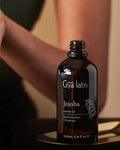
• 1 tablespoon jojoba oil
• 1 tablespoon sweet almond oil
• 2 drops lavender essential oil
• 1 drop cedarwood essential oil
• 1 drop black pepper essential oil
Combine the carrier oils first, then add the essential oils and mix gently.
The result has a warm, woody-floral aroma that works particularly well for an evening massage.
I like this type of blend because none of the ingredients has to dominate. Lavender keeps the aroma soft, cedarwood adds depth, and black pepper provides a subtle spicy note.
Self Massage Technique
You don't need professional massage skills to enjoy a few minutes of self care. If you'd like focused guidance for specific areas, our essential oils for back massage guide covers targeted blend ideas and simple techniques.
For shoulders, place a small amount of massage oil in your palms and use slow circular movements across the upper shoulder area. Keep the pressure comfortable rather than forceful.
For forearms, use your opposite hand to make long, gentle strokes from the wrist toward the elbow.
For calves, use both hands to make slow upward strokes, staying within a comfortable pressure range.
And don't forget your hands.
After typing, driving, cooking, or using your phone throughout the day, your hands can benefit from a little attention too. Work a small amount of oil across the palms and fingers, then gently massage each finger from base to tip.
This is one reason I enjoy self massage oils. You don't need another person, a special appointment, or a complicated setup. The ritual can happen right where you are.
How to Use Massage Oils for Relaxation
A good massage doesn't have to be long.
In fact, I've found that shorter routines are often easier to maintain.
Here's the routine I personally like:
Step 1: Set aside five minutes.
Put your phone down and give yourself a genuine break.
Step 2: Warm the oil.
Place a small amount between your palms and rub your hands together.
Step 3: Start slowly.
Use gentle, deliberate movements rather than rushing through the massage.
Step 4: Pair it with breathing.
Take slow, comfortable breaths while you massage.
Step 5: Finish with a pause.
Don't immediately jump back into work. Give yourself another minute to sit quietly.
That final step is surprisingly important.
If you're using a ready-made product, Gya Labs currently offers several massage oils designed around different aromatic experiences, including Relaxing, Soothing, Destressing, and Calming Massage Oils. The Soothing Massage Oil, for example, is described as a lightweight botanical blend designed for relaxing massage rituals and a smooth massage glide.
For an evening ritual, the Calming Massage Oil has a softer, subtly floral aroma and is designed for slow at home massage and body care routines.
Choosing Between Ready Made and DIY Massage Oils
I've made plenty of DIY blends over the years.
I enjoy experimenting with ratios, changing the aroma, and seeing how different oils complement one another.
But I'm also a big believer in knowing when not to make something yourself.
If I have five minutes and want a massage, reaching for a ready made soothing massage oil is much easier than getting out several bottles, measuring carrier oils, calculating dilution, and cleaning everything afterward.
Gya Labs' massage oil collection currently includes Relaxing, Soothing, Destressing, and Calming Massage Oils. The collection describes the formulas as massage blends made with carrier oils and essential oils and positions them for at home massage and self care rituals.
DIY is great when you enjoy the process.
Ready made is great when you simply want the ritual.
Both have a place.
When to Talk to a Professional
Aromatherapy is appropriate for relaxation and everyday self care, but there are times when a massage or essential oil blend isn't the right next step.
If discomfort is severe, persistent, unexplained, or interfering with your normal activities, it's worth talking with a healthcare professional.
You should also seek professional advice if you notice symptoms such as significant swelling, numbness, weakness, an injury that doesn't seem to be improving, fever, or other concerning changes.
And if something hurts during a massage, don't assume that pressing harder will make it better.
Stop.
Give your body a break.
If the problem continues, get appropriate professional guidance.
This is especially important during Pain Awareness Month. Awareness should encourage people to take persistent discomfort seriously, not encourage them to self-treat indefinitely.
Safety and Dilution
Because essential oils are so concentrated they need to be diluted any time they come into contact with your skin. Starting with low dilution is always prudent especially for body massage on adults (general purpose). 1% dilution (about 1 drop per teaspoon of carrier oil) or 2% (about 2 drops per teaspoon) are good starting places.
These are general guidelines, not universal rules. Always consider the individual essential oil, the intended area of application, age, skin sensitivity, and the manufacturer's directions.
A few other rules I always follow:
• Never apply essential oils undiluted to the skin unless the specific product is expressly formulated and labeled for direct application.
• Patch test new blends.
• Keep essential oils away from eyes and sensitive areas.
• Wash your hands after applying topical blends.
• Stop using a blend if irritation develops.
• Follow individual oil safety information.
• Be particularly cautious with oils that may cause skin sensitivity or photosensitivity.
• Keep essential oils away from children and pets unless the product is specifically appropriate for them.
And remember that “natural” doesn’t automatically mean “risk-free.”
Concentration matters.
Essential Oils for Everyday Self Care
The best thing about aromatherapy, in my opinion, is that it doesn't have to become another task on your to-do list.
A few minutes of massage can become part of an evening shower routine.
A small bottle of diluted oil can live beside your skincare products.
A diffuser can create a different atmosphere while you read, stretch, or get ready for bed.
That's where essential oils for everyday self care make sense.
The purpose isn't to chase a dramatic result.
It's to create small rituals that encourage you to pause.
For me, that might mean five minutes of shoulder massage after a long day at my desk. Another day, it might be a warm shower followed by a lightweight body oil. On a weekend, it could be a longer full body massage.
None of these rituals needs to promise a medical outcome.
They're simply ways of making everyday self care feel more intentional.
Gya Labs Massage Oils for Everyday Comfort
For those who prefer a ready made option, Gya Labs offers four massage oils designed for different moments in your self care routine. The Relaxing Massage Oil is crafted for full body massage and unwinding routines, while the Destressing Massage Oil is designed for calming body care rituals on more demanding days.
Each formula is a smooth, lightweight botanical blend built for at home massage no blending, measuring, or cleanup required. The Soothing and Calming Massage Oils (linked above) complete the range, covering evening rituals, full body use, and body care routines.
Final Takeaway
Pain Awareness Month serves as another good reminder that tuning into what your body is telling you can do a lot of good. So in the case of everyday fatigue, or wear and tear from a full calendar, some basic minutes of consciously caring for yourself can really pay off.
A warm shower.
A little soothing massage oil.
A few gentle movements.
A comforting scent.
And five minutes without a phone.
That's what aromatherapy is for.
It doesn't promise to fix everything. It simply creates a moment to slow down, reconnect with your body, and make everyday comfort part of your routine.
And if something feels more serious than ordinary everyday discomfort, that's the moment to put the essential oils away and speak with a professional.
That's responsible self care.