



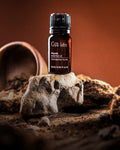

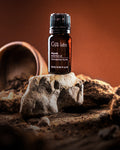
Grounding scents are essential oils with earthy, woody, smoky, or warm aroma profiles that many people associate with feeling settled and present. Vetiver and patchouli are especially popular choices because their rich, deep aromas can create a calm, cozy atmosphere. Try them in a diffuser during a busy afternoon or dilute them in a carrier oil for a personal scent.
Your words, 60 of them, unchanged. Extraction blocks are supposed to read slightly flat.
Busy seasons have a particular way of making the day feel like one long list of things to do.
You wake up already thinking about what has to happen. Then the messages start. Meetings stack up, two errands get added, and suddenly it's evening, and you can't say where the day actually went.
Small rituals help more than they should. Not a routine. Two minutes to stop, breathe, and change what the room smells like.
When I want that kind of pause, I go earthy. Vetiver and patchouli, usually. Neither smells like bright citrus or sharp mint, which is the whole point.
Below: why I use them, why they work together, and two blends. One to diffuse, one to wear.
Why "Grounding" Scents Help Busy Days
When I use the word "grounding" with essential oils, I’m talking about the experience of the aroma rather than a medical effect.
Walk into a room full of bright lemon, then walk into one that smells of wood and warm spice. Same house, different weather.
Grounding oils sit lower down. Earthy, resinous, a bit smoky. They suit the days when I want the routine to feel slower rather than sharper.
Vetiver and patchouli both live in that family, and both sit in the Gya Labs calming and relaxing oils range.
I don’t reach for them when I want something sparkling. I reach for them when I want the room to feel warmer and more settled.
Which is why a grounding ritual isn’t only for the weeks when stress is piling up. It slots into ordinary things. Before you open the laptop. After you shut it. While you’re journaling, or in the shower, or in the last hour before bed.
The ritual can be very simple.
Pick your aroma. A few drops in the diffuser, or a small amount diluted for your skin. Then step away from whatever has been demanding your attention.
That's enough.
Vetiver: Deep and Earthy
Vetiver can change the whole character of a blend.
Gya Labs Vetiver Essential Oil is steam distilled from the roots of Vetiveria zizanioides, a tall grass grown in Haiti, Java and Réunion Island. Roots. Not flowers, leaves, wood or peel, which is what almost every other oil on your shelf comes from. That is the actual reason vetiver smells like damp soil instead of anything floral.
The aroma is deep and dry, earthy with smoke sitting behind it. There is nothing sweet about it, and that is what makes it interesting.
If you've never smelled vetiver, don't expect a background note. It has personality.
Perfumers have used it for a long time for exactly that reason, and it turns up in aromatherapy blends wherever someone wants a deeper base.
In aromatherapy, vetiver gets talked about for how it smells and for the atmosphere that creates. Calming, or settling, depending who you ask. I think of it as the anchor in a blend.
A drop of it can make brighter oils feel balanced instead of thin.
It works with citrus, florals, woods and spices. But when I want something properly earthy, patchouli is where I go.
How Vetiver Smells in a Blend
Rich and earthy, with wood, smoke and a faint grassy edge to it.
Straight from the bottle it is a lot. I use less than I think I need, every single time. Diluted or diffused, the depth is far easier to enjoy.
If you're building a shelf of earthy oils, vetiver earns its place on it. There's a longer breakdown in our guide to what vetiver smells like in detail .
Patchouli: Warm and Steadying
Patchouli is a completely different animal from vetiver, even though the two share that earthiness.
Patchouli Essential Oil is steam distilled from the dried leaves of Pogostemon cablin, grown in Indonesia, the Philippines and India. The leaves are dried and part fermented before they ever reach the still, and that is a fair bit of why the oil ends up as rich as it does.
Warm, sweet, woody, with a soft muskiness underneath. The muskiness is what gives patchouli blends their weight.
It has been in perfumery for generations and it is easy to see why. It lingers. A blend with patchouli in it feels like it wraps around you rather than sitting on top.
Mostly, though, people talk about patchouli for the smell and for how many things you can put it in.
I use it when a blend needs warmth.
On its own it is rich, and a bit polarising. Next to vetiver, it rounds right out.
Vetiver brings the dry, earthy depth.
Patchouli brings warmth and softness.
Together, they create a blend that feels grounded without being flat.
How Patchouli Smells in a Blend
Warm and earthy, woody, with sweet and slightly spicy notes running through it.
People have opinions about patchouli. If you've ever smelled a classic earthy perfume or a stick of incense, you already know roughly what you're dealing with. There's a whole guide to what patchouli smells like if it's new to you.
To soften it: bergamot , sweet orange or lavender.
To go deeper: vetiver, or cedarwood . Sandalwood belongs in this group too, whenever it is back in stock.
Vetiver and Patchouli Together
So why put them together?
Because each one covers the other's gap.
Vetiver is dry, smoky and relentlessly earthy. Patchouli is warmer and a little sweet. Side by side you get a depth that neither of them manages alone.
That is what I like about a vetiver patchouli blend. No long ingredient list required.
Two complementary oils can be enough.
Here is how they differ.
|
|
Vetiver |
Patchouli |
|
Botanical name |
Vetiveria zizanioides |
Pogostemon cablin |
|
Part distilled |
Roots |
Dried leaves |
|
Method |
Steam distillation |
Steam distillation |
|
Origin |
Haiti, Java, Réunion Island |
Indonesia, Philippines, India |
|
Smells like |
Smoky, dry, earthy, woody |
Sweet, musky, resinous, earthy |
|
Role in a blend |
The anchor. Holds everything else down |
The body. Adds warmth and weight |
|
Use when |
You want the blend to feel still |
You want the blend to feel warm |
|
Pairs with |
Lavender, cedarwood, sweet orange |
Bergamot, sweet orange, lavender |
|
How strong |
Very. One drop is usually enough |
Very. Tends to smell rounder as the bottle ages |
|
Price, 10ml |
$12.99 |
$10.99 |
If both scents are new to you, go light on the vetiver and adjust from there. It takes over quickly. Patchouli is more forgiving, and it is what gives the finished blend its rounder, warmer end.
Add a little lavender or bergamot later if you want more layers.
But I'd start with two oils first.
It's easier to understand what you actually like when you're not trying to identify six different aromas at once.
The Grounding Blend Recipe
This is what I actually use when I want earthy and warm and cannot be bothered with anything complicated.
For a diffuser:
• 2 drops vetiver essential oil
• 3 drops patchouli essential oil
• Water to the fill line
The extra drop of patchouli stops the vetiver running the show, and it warms the whole thing up.
Want it drier and smokier? Flip the ratio. 3 drops vetiver, 2 of patchouli.
For skin, a drop count on its own tells you nothing, because everything depends on how much carrier oil it lands in. The roller recipe below has the amounts and the percentage.
No need to overthink it. The best grounding blend is the one you like enough to keep using.
Diffuser Version
Add the drops to your diffuser following the maker's water and oil instructions.
Times I reach for this one:
• A mid afternoon break
• Reading
• Winding down in the evening
• Journaling
• A slow weekend morning
Sharing the space with someone? Start with fewer drops. Vetiver and patchouli are both loud, and a little travels further than you'd expect.
One drop of bergamot or sweet orange brightens it. One drop of lavender softens it.
You're not trying to make the strongest possible smell. Just an atmosphere pleasant enough that you'll come back to it tomorrow.
Roller Version
A roller makes more sense when you want the aroma on you rather than in the room.
For a 10ml roller at roughly 1 percent, which is the gentle starting point for most adults: 1 drop vetiver, 1 drop patchouli, then fill the rest with jojoba or another carrier oil. Two drops in 10ml is about 1 percent.
If you want the warmer, patchouli forward version, make it 1 drop vetiver and 2 of patchouli. That is around 1.5 percent, still under the 2 percent I would treat as the limit for wrists and neck.
Cap it and roll the bottle between your hands to mix.
Patch test before you wear it. A small amount inside your forearm, then leave it 24 hours.
After that, wrists and the back of the neck. Keep it away from your eyes.
One thing worth knowing about these two in particular. Both are dark and thick, and they will mark fabric. Let the blend dry before you get dressed, and keep it off pale collars and cuffs.
New to all this? Start lower. It's the easiest way to find out whether you like both the smell and the feel of it on your skin. Our roll-on blends come pre diluted if you'd rather not mix anything yourself.
When to Use It
There is no correct time for a grounding ritual.
That is part of why I like them.
Use one whenever you want a more deliberate line between two parts of the day.
Before a Busy Work Session
Diffuse for a few minutes before you sit down.
I like this approach because it creates a small boundary between "everything I need to do" and "the one thing I’m doing now."
During an Afternoon Reset
The three o’clock slump is a good excuse to get away from the screen.
Make tea. Stretch. Open a window. Start the diffuser. The essential oils don't have to do all the work here, they're one part of it.
After Work
This is probably my favorite time for a grounding blend.
Once work's done, changing what the room smells like makes the shift into the evening feel like a decision rather than a drift.
Notifications off. Laptop away. Diffuser on. A few minutes with nothing else attached to them.
Before Bed
Both oils also work in something softer for the evening.
Keep it subtle. Let it become part of the normal routine instead of a thing you have to make strong enough to notice.
Making Grounding Rituals a Habit
The usual mistake is making the ritual too big.
Ten products, a fiddly recipe and half an hour of free time, and you won't touch it in the week you need it most.
One or two easy ones is plenty.
For example:
• Morning: something lighter while you are getting ready
• Afternoon: five minutes off the screen with vetiver and patchouli in the diffuser
• Evening: a properly diluted roller as part of winding down
That's enough.
You do not have to rearrange your schedule.
Sometimes a smell is all it takes to mark where one part of the day ends and the next one starts.
Diffuser or Roller for Grounding?
Both work. They just do different jobs.
A diffuser changes the room. Good for reading, working, journaling, being at home.
A roller keeps it on you. Better when you're out, or when you don't want to scent a whole room for one person.
|
|
How much |
What it suits |
Watch for |
|
Diffuser |
2 drops vetiver, 3 drops patchouli, water to the fill line |
A room you are working, reading or winding down in |
Both oils linger. Start lower in a shared space and diffuse in short sessions |
|
Roller, 1 percent |
1 drop vetiver, 1 drop patchouli, fill a 10ml roller with jojoba |
Wearing on wrists and the back of the neck |
Dark oils mark fabric. Let it dry before you dress. Patch test and wait 24 hours |
I diffuse when I want the room to feel different, and roll when I want the ritual to feel private.
Keeping both around is fine too.
Whatever keeps it simple enough that you'll actually use it.
How Many Drops Should You Use?
More is not better here.
For diffusers, go by your model's instructions and start low, especially with two oils this strong.
For skin, always dilute. One percent is the gentle starting point for most adults, and in practice that is 2 drops in a 10ml roller, or 1 drop per teaspoon of carrier oil. Drop sizes vary between bottles, so treat those as ballpark rather than exact. Our step by step guide to diluting essential oils has the full table.
What is right still shifts with the person, the oil and what you are using it for.
If you are mixing a roller, measure. Do not add drops until the bottle "smells right".
And preference counts. Too strong is too strong. Use less.
Can You Wear Vetiver and Patchouli as a Scent?
Yes, as long as they are diluted.
It makes a good personal fragrance, actually. Both oils last, and both have enough depth that you don't need much on.
Too earthy on its own? Add a top note.
Bergamot for brightness. Sweet orange for softness. Lavender to make it more floral. Cedarwood to go woodier still, or frankincense for something dry and resinous.
Start with less than you think and build up. Fixing an overpowering blend is much harder than adding to a quiet one.
Safety First
Essential oils are concentrated. Treat them that way.
• Dilute before skin contact. A 1 percent blend is 2 drops in a 10ml roller, or 1 drop per teaspoon of carrier oil.
• Patch test a diluted blend before you use it more widely, especially with a new oil. A small amount inside your forearm, then wait 24 hours.
• Both vetiver and patchouli are dark and thick, and they can mark fabric. Let a roller blend dry before you get dressed, and keep it off pale collars and cuffs.
• Neither oil is a food ingredient. Do not swallow either one and do not add them to food or drinks.
• Keep both away from your eyes and other sensitive areas.
• These are strong aromas. Diffuse in short sessions in a ventilated room rather than running a diffuser for hours.
• Keep bottles out of reach of children, and out of rooms where pets sleep. Cats and dogs do not process essential oils the way people do.
• Stop using a blend if you notice redness, itching or stinging, and wash the area with a carrier oil or a mild cleanser.
• If you are pregnant, nursing, using essential oils around children or pets, or managing a specific health or skin concern, check with an appropriately qualified professional first.
Safety copy stays plain on purpose. This is the one section where personality is a liability.
For more on how essential oils are composed and why their aromatic characteristics vary, see our guide to the Active Ingredients of Essential Oils.
Final Thoughts
Busy seasons don't leave much room for elaborate self care.
Which is why I'd rather have rituals that take two minutes.
Vetiver and patchouli are a good pair if you are drawn to the deeper, earthier end of things. Vetiver is dry and smoky. Patchouli is warm and rich. Between them you get a simple blend that can just live in your routine without any effort.
You don't need to wait for the perfect quiet day.
Diffuse it while you work. Roll some on before you head out. Use it as the cue to shut the laptop.
The ritual can be small.
What matters is that you give yourself a moment to stop and enjoy the smell.