



Non-comedogenic oils are carrier oils commonly rated between 0 and 2 on the traditional comedogenic scale, meaning they are generally considered less likely to clog pores. Popular options include jojoba oil, argan oil, hemp seed oil, rosehip oil, and sunflower oil. However, these ratings are only general guidelines, not scientifically validated guarantees. An oil's effect can vary depending on its formulation, how it is used, and individual skin type.
Choosing a carrier oil for your skincare routine often comes down to one important consideration: how likely is it to clog your pores? Some oils have a reputation for feeling lightweight and leaving little residue, while others are richer and may not suit every skin type. Understanding comedogenic ratings of carrier oils can help you compare these options before adding one to your routine.
You'll also learn what the ratings mean, which non comedogenic oils are worth considering, and why these numbers should be treated as general guidelines rather than guarantees about how your skin will react.
What Is the Comedogenic Scale?
The comedogenic scale is a rating system used to describe how likely an ingredient is to contribute to clogged pores. It typically ranges from 0 to 5, with 0 representing a low likelihood of pore clogging and 5 representing a higher likelihood.
The scale is commonly used when comparing facial oils, carrier oils, butters and other skincare ingredients. It can be a useful starting point when selecting an oil, particularly if you have oily or combination skin.
What Do Comedogenic Ratings 0–5 Actually Mean?
|
Rating |
Meaning |
General Interpretation |
|---|---|---|
|
0 |
Non-comedogenic |
Very low likelihood of clogging pores |
|
1 |
Low |
Unlikely to clog pores for most people |
|
2 |
Moderately low |
Generally tolerated, but individual reactions vary |
|
3 |
Moderate |
May be less suitable for some blemish-prone skin types |
|
4 |
Fairly high |
Greater potential to contribute to clogged pores |
|
5 |
High |
Considered highly comedogenic in traditional rating lists |
A lower comedogenic rating generally makes an ingredient a more appealing starting point for someone concerned about pore congestion. However, a rating of 0 does not guarantee that an oil will work for everyone.
The scale also has limitations. Many commonly circulated ratings come from older experimental testing, including rabbit-ear assays, rather than extensive controlled studies on human facial skin. The results do not always translate directly to everyday skincare use.
For this reason, the comedogenic scale for oils should be used as a comparison tool, not as a definitive measure of whether an ingredient will cause breakouts.
Full Comedogenic Ratings Chart for Carrier Oils (0–5)
The following comedogenic rating of oils chart brings together commonly referenced ratings for popular carrier oils and cosmetic butters. It includes their general fatty-acid characteristics and typical cosmetic applications to help you compare ingredients.
These are approximate, commonly cited ratings rather than clinically validated predictions. Some oils have conflicting ratings across published lists, so a range is more appropriate where the available references disagree.
|
Carrier Oil |
Comedogenic Rating |
Main Fatty Acids / Composition |
Common Cosmetic Use |
|---|---|---|---|
|
Argan Oil |
0 |
Oleic and linoleic acids |
Facial and body oils |
|
Hemp Seed Oil |
0 |
Linoleic and alpha-linolenic acids |
Lightweight facial oil blends |
|
Sunflower Oil |
0–1 |
Linoleic or oleic acid, depending on variety |
Body and facial moisturising blends |
|
Safflower Oil |
0–1 |
Linoleic acid in high-linoleic varieties |
Lightweight skincare blends |
|
Fractionated Coconut Oil |
0–1 |
Caprylic and capric triglycerides |
Massage and essential oil dilution |
|
Squalane |
0–1 |
Saturated hydrocarbon derived from squalene |
Lightweight facial and body care |
|
Rosehip Oil |
1 |
Linoleic, alpha-linolenic and oleic acids |
Facial oil formulations |
|
Grapeseed Oil |
1–2 |
Linoleic and oleic acids |
Lightweight massage and facial oils |
|
Castor Oil |
1 |
Predominantly ricinoleic acid |
Rich cosmetic oil blends |
|
Jojoba Oil |
2 |
Primarily liquid wax esters |
Facial, body and hair care |
|
Sweet Almond Oil |
2 |
Oleic and linoleic acids |
Body oils and massage blends |
|
Apricot Kernel Oil |
2 |
Oleic and linoleic acids |
Facial and body care |
|
Olive Oil |
2–3 |
Predominantly oleic acid |
Rich moisturising blends |
|
Sesame Oil |
2 |
Oleic and linoleic acids |
Massage and body oils |
|
Avocado Oil |
2–3 |
Oleic, palmitic and linoleic acids |
Rich body and facial oils |
|
Marula Oil |
2–3 |
Predominantly oleic acid |
Skin and hair care |
|
Evening Primrose Oil |
2–3 |
Linoleic and gamma-linolenic acids |
Facial oil blends |
|
Flaxseed Oil |
4 |
Alpha-linolenic and linoleic acids |
Specialised cosmetic formulations |
|
Coconut Oil |
4 |
Lauric, myristic and other saturated fatty acids |
Body and hair care |
|
Wheat Germ Oil |
5 |
Linoleic, oleic and palmitic acids |
Rich cosmetic formulations |
Non-Comedogenic Oils (Ratings 0–2)
Oils rated between 0 and 2 are commonly grouped as non comedogenic oils or low-comedogenic options. They're often viewed as safer bets for those who like lighter oils or want to play it safe with pore-clogging concerns.
Here are some popular options:
1. Argan Oil (0)
The fatty acids oleic acid and linoleic acid and naturally occurring tocopherols are found in argan oil. Argan oil provides a light feeling compared to some other more luxurious botanical oils and is a popular choice for use in facial and hair care products.
2. Hemp Seed Oil (0)
Hemp seed oil contains a high proportion of polyunsaturated fatty acids, particularly linoleic and alpha-linolenic acids. Its lightweight texture makes it a popular ingredient in facial oil blends.
3. Sunflower Oil (0–1)
Sunflower oil is available in different fatty-acid compositions. High-linoleic sunflower oil is often included in lightweight skincare formulations, while high-oleic varieties have a different composition.
4. Safflower Oil (0–1)
High-linoleic safflower oil is often found in lightweight facial and body care lines. Be sure to look for this ingredient variety, as the fatty-acid makeup will differ.
5. Rosehip Oil (1)
Rosehip oil contains linoleic and alpha-linolenic acids, along with oleic acid. It is frequently used in facial oil blends because of its characteristic lightweight feel.
6. Grapeseed Oil (1–2)
Grapeseed oil contains high amounts of linoleic acid and is used primarily in light massage and facial products.
7. Jojoba Oil (2)
Although often called "oil," jojoba is actually a liquid wax and not a typical vegetable oil made from triglycerides. Jojoba's esters are similar to certain constituents of human sebum, which is why jojoba is commonly used in facial and body care products.
8. Castor Oil (1)
This oil has a high ricinoleic acid content and has a thicker viscosity than most carrier oils. Castor oil has a viscosity that is considered thick yet on typical comedogenic charts often receives a low score.
Moderate Comedogenic Oils (Rating 3)
Oils with a rating around 3 fall into the moderate category. They are not automatically unsuitable for facial use, but people concerned about pore congestion may prefer to test them carefully.
|
Oil |
Commonly Cited Rating |
Fatty-Acid Profile |
|---|---|---|
|
Avocado Oil |
2–3 |
Oleic acid, palmitic acid |
|
Olive Oil |
2–3 |
Oleic acid, linoleic acid |
|
Marula Oil |
2–3 |
Oleic acid, linoleic acid |
|
Evening Primrose Oil |
2–3 |
Linoleic acid, gamma-linolenic acid |
|
Soybean Oil |
3 |
Linoleic acid, oleic acid |
|
Cottonseed Oil |
3 |
Linoleic acid, palmitic acid |
The higher oleic-acid content of certain oils can influence their texture and overall composition. However, fatty-acid content alone cannot determine whether an ingredient will clog pores.
These oils may still be useful in body care, massage blends and richer cosmetic formulations, depending on the intended application.
High Comedogenic Oils (Ratings 4–5)
Oils and butters with ratings of 4 or 5 are generally considered higher-comedogenic options in traditional charts.
|
Oil or Butter |
Comedogenic Rating |
Main Composition |
|---|---|---|
|
Coconut Oil |
4 |
Lauric and myristic acids |
|
Flaxseed Oil |
4 |
Alpha-linolenic acid |
|
Cocoa Butter |
4 |
Oleic, stearic and palmitic acids |
|
Coconut Butter |
4 |
Saturated fatty acids |
|
Wheat Germ Oil |
5 |
Linoleic, oleic and palmitic acids |
These ingredients are not automatically bad for skincare. Their richer composition and texture may be better suited to certain body care formulations than to facial products for people who are concerned about clogged pores.
The important distinction is that a higher rating indicates a greater potential for pore congestion according to traditional rating systems, not a guarantee that an ingredient will cause breakouts.
How to Use the Comedogenic Chart (and Understand Its Limits)
A comedogenic rating chart can help narrow down your carrier oil choices, but the number should never be the only factor guiding your skincare decisions.
Here are five things to consider when using the chart.
1. Consider Your Skin Type
However, your skin type is also going to play a role in how that oil feels and works for you. In cases of oily skin, you may want to use a light oil, while for dry skin, you may want to go for something heavier.
2. Look Beyond the Rating
An oil's fatty-acid profile, texture and overall formulation all matter. Two oils with similar ratings may feel completely different on the skin.
3. Pay Attention to Concentration
A pure carrier oil applied by itself doesn't always mean that it is the same as it is at a lower percentage of use in a finished formula.
4. Introduce One New Oil at a Time
We suggest trying out new products one at a time so you can identify exactly how your skin is reacting. Do not overdo it with trying multiple new products all at once, and you won't know which one caused a reaction.
5. Keep in mind that ratings don't promise anything
As a result, the name non-comedogenic doesn't mean that everyone will be able to tolerate every product. The skin's response is unique to each person, and the final product may differ from the ingredient alone.
Are Comedogenic Ratings Scientifically Reliable?
The comedogenic rating system is useful as a general reference, but it has important scientific limitations.
Many traditional ratings trace back to older testing methods, including rabbit-ear assays. These experiments were designed to evaluate the potential of ingredients to produce comedones under specific conditions. However, rabbit skin does not behave exactly like human facial skin.
A review published in the Journal of the American Academy of Dermatology discussed limitations of the rabbit-ear model, including the lack of reliable correlation with real-world human experience.
There are also several reasons why a rating may not accurately predict how a finished skincare product will perform:
-
Individual skin differences: The way our skin responds to the same ingredient can differ among individuals.
-
Formulation: An oil by itself can act differently when mixed with other ingredients.
-
Concentration: The quantity of a single ingredient in a formula or each ingredient can play a role.
-
Application: The quantity and frequency of use can affect how a product feels on the skin.
-
Oil composition: Fatty-acid profiles can vary depending on the plant variety, processing and refining method.
The best approach is to use the chart as an initial screening tool rather than a strict rulebook.
Best Non-Comedogenic Oils by Skin Type
Choosing among non comedogenic oils for skin involves more than looking for a rating of 0. Texture, absorption, fatty-acid composition and personal preference all influence which carrier oil may fit into your routine.
Here are some options to consider based on common skincare preferences.
Best Non-Comedogenic Oils for Oily or Acne-Prone Skin
People with oily or blemish-prone skin often prefer lightweight oils that do not leave a heavy or greasy finish.
Some commonly considered options include:
-
Hemp seed oil: Contains linoleic and alpha-linolenic acids and has a lightweight texture.
-
Argan oil: Offers a relatively light feel and contains oleic and linoleic acids.
-
Grapeseed oil: Regularly added to light facial and body oil recipes.
-
Sunflower oil: Light blends in cosmetic applications often feature the high-linoleic types.
-
Jojoba Oil: Has a liquid wax ester and is a regular in facial products.
These are possible starting points, not guaranteed solutions for acne-prone skin. If a particular oil feels too heavy or does not suit your skin, discontinue its use.
Best Non-Comedogenic Oils for Dry Skin
Extra dry skin may be aided by emollient-rich ingredients that decrease water loss and allow the skin to feel soft and smooth.
Consider:
-
Argan oil: A flexible product for facial and body care.
-
Jojoba oil: Suitable for everyday moisturising routines.
-
Sweet almond oil: Provides a more plush, emollient sensation on the body.
-
Avocado oil: A thick oil that's found in often heavy-duty skincare preparations.
-
Rosehip oil: It is frequently used in facial oil products.
A low comedogenic rating is not the only consideration for dry skin. The oil's texture and how comfortable it feels after application matter too.
Best Non-Comedogenic Oils for Combination Skin
Combination skin can benefit from a balanced approach, particularly when different areas of the face have different needs.
Some options worth exploring include:
-
Jojoba Oil: An all in one oil for the face and body.
-
Argan oil: Has a relatively lightweight feel.
-
Rosehip oil: Typical addition to facial oil mixes.
-
Sunflower oil: Varieties offered with various fatty-acid compositions and textures.
Start with a small amount rather than applying several oils at once. This makes it easier to identify which texture and formulation your skin prefers.
Spotlight: What Are the Comedogenic Ratings of Popular Carrier Oils?
Some carrier oils are searched more frequently than others because people want to understand whether they are suitable for facial application.
Let's look at the most commonly discussed options.
Is Castor Oil Comedogenic?
Castor oil is generally assigned a comedogenic rating of 1, placing it in the low-comedogenic category in traditional charts.
It is primarily composed of ricinoleic acid, which gives it its characteristic thick and viscous consistency. Unlike lighter oils, castor oil can leave a noticeable coating on the skin.
So, is castor oil pore clogging?
Not likely. While its generally listed ability to clog pores is fairly low, this may vary from person to person. Its denser consistency may also be too heavy a feeling for some faces.
Castor oil is commonly used in:
-
Body oil formulations
-
Massage blends
-
Hair and scalp care
-
Eyebrow and eyelash conditioning products
-
DIY cosmetic oil blends
If you want to use it on your face, start out with a little and see how your skin reacts.
Is Coconut Oil Comedogenic?
Coconut oil is commonly assigned a comedogenic rating of 4, which places it in the higher category of traditional rating charts.
It contains a high proportion of saturated fatty acids, particularly lauric acid. Its rich texture makes it popular in body care, hair care and certain cosmetic formulations.
However, it may not be the first choice for people who prefer lightweight facial oils or are concerned about pore congestion.
Coconut Oil vs Fractionated Coconut Oil
These two ingredients are often confused, but their compositions are different.
|
Feature |
Regular Coconut Oil |
Fractionated Coconut Oil |
|---|---|---|
|
Typical Comedogenic Rating |
4 |
0–1 |
|
Composition |
Contains a broader range of fatty acids |
Primarily caprylic and capric triglycerides |
|
Texture |
Can be solid at cooler temperatures |
Usually liquid |
|
Feel |
Richer |
Lighter and more fluid |
|
Common Uses |
Body care, hair care and balms |
Massage oils and essential oil dilution |
Important: The fractionation process removes most of the longer-chain fatty acids from coconut oil, leaving a lighter liquid oil. Therefore, regular coconut oil and fractionated coconut oil should not automatically be considered equally comedogenic.
Is Jojoba Oil Non-Comedogenic?
Jojoba oil is commonly given a comedogenic rating of 2, making it a moderately low option on the traditional scale.
Jojoba is technically a liquid wax, not an oil, because it consists almost entirely of wax esters. Jojoba's composition is very different from common plant oils.
This makes it a popular ingredient in facial, body and hair care formulations.
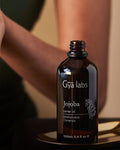
Gya Labs Organic Jojoba Carrier Oil is cold-pressed from jojoba seeds and has a lightweight feel, making it a versatile addition to everyday skincare and cosmetic blending routines.
Explore Gya Labs Organic Jojoba Carrier Oil.
Is Argan Oil Comedogenic?
Argan oil is commonly assigned a comedogenic rating of 0, which is quite low in conventional comparison charts.
It is composed of linoleic and oleic acids, together with natural tocopherols and other minor constituents.
Its relatively lightweight feel makes it popular in facial oil blends, moisturising routines and hair care.
Gya Labs Organic Argan Carrier Oil is cold-pressed from argan kernels and has a soft, nutty aroma. It can be used in everyday skin and hair care routines.
Explore Gya Labs Organic Argan Carrier Oil.
Is Rosehip Oil Comedogenic?
Generally, Rosehip oil is given a comedogenic rating of 1, which is considered low.
It contains linoleic acid, alpha-linolenic acid and oleic acid. Its composition and lightweight feel make it a popular choice for facial oil formulations.
In skincare use, rosehip oil is a good alternative to a lighter, more botanical oil.
Gya Labs Organic Rosehip Carrier Oil, another one of the options to choose when comparing botanical oils for face and body care.
Explore Gya Labs Organic Rosehip Carrier Oil.
What About Butters? Shea, Cocoa and Mango Butter Comedogenic Ratings
Carrier oils are not the only ingredients people compare when choosing skincare products. Plant butters are also commonly used in moisturisers, balms and body care formulations.
They tend to have a thicker, more luxurious feel to them, but in terms of comedogenicity, the texture is not always indicative.
Is Shea Butter Non-Comedogenic?
Shea butter is commonly assigned a comedogenic rating of 0, although some reference lists place it within a broader 0–2 range.
It contains a mixture of fatty acids, including oleic and stearic acids, as well as naturally occurring unsaponifiable components.
While its rich consistency has made shea butter unpopular, its not known as a high comedogenic.
It is commonly used in:
-
Body butters
-
Hand creams
-
Lip balms
-
Moisturising balms
-
Hair and body care products
If you are wondering is shea butter non comedogenic, the answer that most people see listed is a low one. But remember that the overall formula and your skin can still matter.
Is Cocoa Butter Comedogenic?
Cocoa butter is generally assigned a comedogenic rating of 4.
Its mixture is high in stearic, palmitic and oleic acids, which is why it is thick and gooey at room temperature.
It is commonly used in body butters, balms and rich moisturising formulations.
If you tend to favor lightweight facial products, then you may find cocoa butter to be too dense compared to oils like jojoba or argan.
Mango Butter and Kokum Butter
Many of us use mango butter and kokum butter in cosmetics.
The comedogenic ratings of these aren't so well documented in the usual reference lists, so they'd be inappropriate to list as having one.
Both are used in:
-
Body butter formulations
-
Balms
-
Lip care products
-
Creams and moisturising products
Their suitability depends on the finished formulation, concentration and individual skin preferences.
Do These Oils Really Clog Pores? Myth vs Reality
There's a common misconception that non-comedogenic means a product or ingredient will not cause or clog pores. However, the relationship between individual oils and your skin isn't quite so simple.
Here are some common misconceptions worth understanding.
|
Myth |
Reality |
|---|---|
|
A rating of 0 guarantees no clogged pores. |
A low rating does not guarantee an individual response. |
|
All natural oils are suitable for facial skin. |
Natural ingredients can differ considerably in texture and composition. |
|
Thick oils always clog pores. |
Texture alone does not determine comedogenicity. |
|
Lightweight oils never cause congestion. |
Even lightweight ingredients may not suit every person. |
|
A high rating means an oil cannot be used on the body. |
Comedogenic ratings are mainly relevant to leave-on applications where pore congestion is a concern. |
|
All coconut-derived oils have the same rating. |
Regular and fractionated coconut oils have different compositions. |
Does Almond Oil Clog Pores?
Sweet almond oil is generally assigned a comedogenic rating of 2.
It contains oleic and linoleic acids and is commonly used in massage oils, body oils and cosmetic moisturisers.
Its rating suggests a relatively low tendency to clog pores in traditional charts, but that does not guarantee that it will suit every facial skincare routine.
Does Avocado Oil Clog Pores?
Avocado oil is commonly assigned a rating between 2 and 3, depending on the reference.
It has a relatively rich fatty-acid profile, with oleic acid as a major component. This gives it a more substantial feel than some lighter carrier oils.
commonly found in body oils and more luxurious moisturizers. Those who lean towards thinner consistency facial products may wish to compare the consistency with products such as jojoba or argan.
The bottom line is really quite simple: a comedogenic rating is just a reference guide to help you choose your ingredients, not a guarantee of how your skin will react.
Final Thoughts
Understanding comedogenic ratings of carrier oils makes it easier to compare ingredients and choose products that fit your skincare preferences. Oils such as argan, hemp seed, sunflower, rosehip and jojoba are commonly included among lower-rated options, while regular coconut oil, cocoa butter and wheat germ oil are generally placed higher on traditional charts.
But lower isn't always better for each individual. Read the composition of the oil, and consider the texture, application and how your skin reacts. Use the 0-5 scale as a guideline, trial one ingredient at a time and if you experiment with other carrier oils, select those that you can enjoy.