



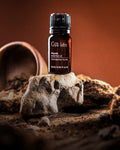

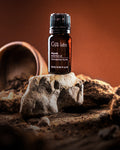
If you've heard people compare copaiba with CBD, you're probably wondering whether they're actually related. Copaiba is a botanical oil derived from Copaifera trees, while CBD is a cannabinoid derived from cannabis or hemp. They are chemically different, but copaiba is often discussed alongside CBD because copaiba oils can contain beta-caryophyllene, a naturally occurring aromatic compound that also interacts with the body's endocannabinoid system. That doesn't make copaiba a form of CBD, though. Think of them as two very different ingredients that sometimes enter the same wellness conversation.
I find that distinction useful because the “calm cousin” nickname can be intriguing, but it can also create confusion.
Copaiba isn't CBD in disguise.
It doesn't contain CBD.
And it doesn't need to pretend to.
What makes copaiba interesting is its own character: a soft, sweet, woody, resinous aroma and a naturally occurring chemistry that has made it a longtime ingredient in traditional and modern botanical practices. Gya Labs describes its copaiba oil as sweet, woody, and resinous, and lists Copaifera officinalis as its botanical source.
So, what exactly is this understated oil, why does beta-caryophyllene keep coming up, and how can you actually use it without turning your bathroom into a chemistry lab?
Let's get into it.
Meet Copaiba
If you're new to copaiba, the first thing to know is that it comes from trees in the Copaifera genus, which are native to tropical regions of South and Central America. Gya Labs' Copaiba Essential Oil is identified as Copaifera officinalis with a sweet, woody, and resinous aroma. For a broader look at copaiba's uses and properties, our copaiba oil uses guide covers blending, topical applications, and more.
The trees produce an aromatic oleoresin, traditionally known as copaiba balsam. That material can be processed into copaiba oil used in aromatherapy, personal care, and fragrance applications.
That aroma is probably the first thing you'll notice.
Copaiba isn't sharp like peppermint.
It isn't strongly floral like a rose.
And it doesn't have the intense medicinal character that some people associate with eucalyptus or tea tree.
Instead, it's quiet.
Warm.
Softly woody.
There's something almost creamy about the way it sits in a blend.
I've found that copaiba is particularly useful when I want an aromatic blend to feel grounded without becoming heavy. It can soften sharper oils and give a blend a smoother overall character.
What Does Copaiba Oil Smell Like?
If I had to describe copaiba to someone who had never smelled it, I'd say imagine walking into a room filled with polished wood, warm resin, and a subtle sweetness.
It's earthy without smelling dirty.
Woody without being dry.
And resinous without becoming overwhelming.
That makes it incredibly easy to blend.
Copaiba works particularly well with oils such as frankincense, cedarwood, lavender, and Roman chamomile. Gya Labs also lists frankincense, Ylang Ylang, cedarwood, and Roman chamomile among oils that pair well with copaiba. For more on frankincense as a pairing oil, our frankincense aromatherapy guide covers its aromatic profile and ritual applications in detail.
This versatility is one of the reasons I think copaiba deserves more attention.
It's not the loudest oil in the bottle.
It doesn't have to be.
The “Cousin of CBD” Comparison
Let's clear up the biggest misconception first.
Copaiba is not CBD.
CBD, or cannabidiol, is a cannabinoid associated with cannabis and hemp. Copaiba is a botanical oil derived from Copaifera trees.
So why do people compare the two?
The answer comes down largely to beta-caryophyllene.
Copaiba oils can contain substantial amounts of beta-caryophyllene, depending on the Copaifera species and oil source. A scientific review of Copaifera chemistry found that copaiba oils are often dominated by sesquiterpene hydrocarbons, with beta-caryophyllene frequently being a major constituent.
That's where the comparison gets interesting.
Beta-caryophyllene is an aromatic compound found naturally in several plants, including copaiba, black pepper, and cloves.
But here's where I think we need to slow down.
A chemical connection doesn't mean two products are interchangeable.
Copaiba isn't a cannabis extract.
Copaiba doesn't contain CBD.
And using copaiba in aromatherapy isn't the same thing as using a CBD product.
Copaiba vs CBD at a Glance
|
Feature |
Copaiba |
CBD |
|
Botanical source |
Copaifera trees |
Hemp or cannabis |
|
What it is |
Aromatic botanical oil |
Cannabinoid |
|
Contains CBD? |
No |
Yes, when present in a CBD product |
|
Notable compound |
Beta-caryophyllene |
Cannabidiol |
|
Common wellness format |
Essential oil, aromatic blends, topical dilution |
Oils, capsules, topical products, and other formats |
|
Aromatherapy use |
Diffusion and diluted topical blends |
Not generally treated as an essential oil |
So, is copaiba like CBD? In one narrow chemical sense, there is an interesting connection through beta-caryophyllene and cannabinoid receptor research. In every practical sense, however, they're different ingredients.
I think that's the more useful way to look at it.
Beta-Caryophyllene, Explained
The name sounds intimidating.
Beta-caryophyllene.
Try saying that three times before your morning coffee.
But the basic idea is actually pretty straightforward.
Beta-caryophyllene, often abbreviated as β-caryophyllene, is a naturally occurring aromatic compound found in a range of plants. It's classified as a sesquiterpene and contributes to the characteristic aroma of several essential oils.
The fact is, some copaiba oils have a high percentage of beta-caryophyllene, which makes copaiba especially fascinating. However, because not all copaiba oils have the same specific compositions and percentages of their chemical compounds, it's more appropriate to discuss the chemistry of copaiba oil broadly, rather than assume a similar concentration of specific compounds in every bottle.
Why Does Beta-Caryophyllene Matter?
Beta-caryophyllene gets attention because it is also found in black pepper and cloves, and it contributes to copaiba's warm, woody aroma.
That's the part that fuels comparisons between copaiba and CBD.
But there's an important distinction.
CBD itself is a cannabinoid.
Beta-caryophyllene is not CBD.
It belongs to a different chemical class and has its own properties.
So when you see someone call copaiba “nature's CBD” or “the calm cousin of CBD,” I'd treat that as a catchy comparison rather than a scientific definition.
Personally, I think “calm cousin” is more useful as a description of the conversation around copaiba than as a literal description of what the oil is.
It's memorable.
Just don't take it too literally.
How to Use Copaiba in Aromatherapy
Copaiba is one of those oils that fits into several routines without demanding much attention. That's exactly what I like about it.
You can diffuse it.
You can dilute it into a massage blend.
You can add a properly diluted amount to body oil.
Or you can blend it with other essential oils when you want to soften the overall aroma.
In a Diffuser
For a simple evening atmosphere, try:
• 3 drops copaiba
• 2 drops lavender
• 1 drop frankincense
Add the blend to your diffuser according to the diffuser manufacturer's instructions.
The result is warm, resinous, and softly floral without being overwhelmingly sweet.
If lavender isn't your thing, swap it for cedarwood. That gives you a much woodier profile.
In a Personal Aroma Blend
Copaiba also works nicely in a personal aroma blend.
Try:
• 3 drops copaiba
• 2 drops cedarwood
• 1 drop frankincense
Do not use this concentrated blend undiluted on skin. This formula is intended for topical applications and needs to be diluted in a carrier oil to achieve your desired percentage. I often love using this combination at night, as the aroma is earthy but not too deep and heavy for a relaxing evening.
Copaiba Oil for Skin
Interest in copaiba oil for skin makes sense because copaiba has a naturally soft, resinous character that works well in botanical body care.
But here's where I want to keep expectations realistic.
An essential oil isn't a moisturiser by itself. If you're making facial or body oil, the carrier oil is what provides the main moisturising base. Copaiba is there as the aromatic botanical ingredient.
Jojoba, sweet almond, argan, and other suitable carrier oils can provide the base, depending on your skin preferences.
For a simple body oil, you could combine a carrier oil with a small amount of properly diluted copaiba. That's it. No need to add twelve other essential oils just because you have them.
A Simple Copaiba Skin Blend
Try:
|
Patch Test Reminder Before applying any new diluted blend to your skin, test a small amount on your inner arm and wait 24 hours. Discontinue use if redness, itching, or irritation develops. Never apply undiluted essential oils directly to the skin. |
• 1 tablespoon jojoba oil
• 1 drop copaiba essential oil
Mix well and apply a small amount to clean skin.
If you're making a larger batch, calculate the essential oil quantity based on the desired final dilution rather than simply multiplying drops without checking the concentration.
And if you're using it on the face, I'd be especially conservative. Facial skin deserves fewer experiments, not more.
In a Soothing Massage Blend
This is probably my favourite way to use copaiba.
There's something about a warm, woody aroma during a massage that instantly changes the atmosphere.
For a simple massage blend:
What You'll Need
|
Patch Test Reminder Before applying any new diluted blend to your skin, test a small amount on your inner arm and wait 24 hours. Discontinue use if redness, itching, or irritation develops. Never apply undiluted essential oils directly to the skin. |
• 2 tablespoons jojoba or another suitable carrier oil
• 2 drops copaiba essential oil
• 1 drop lavender essential oil
• 1 drop frankincense essential oil
How to Make It
1. Add the carrier oil to a clean glass container.
2. Add the essential oils.
3. Mix gently.
4. Patch test before wider topical use.
5. Use a small amount for massage.
The scent is gentle, warm, and grounding. It doesn't smell like medication.
And that's one of the reasons I like it.
If you're looking for calming essential oils, copaiba can be an interesting addition to a broader aromatic blend without needing to dominate it.
Safety and Dilution
Copaiba may have a gentle personality, but it's still a concentrated essential oil.
That means the same basic safety rules apply.
Dilute Before Topical Use
Don't apply undiluted copaiba essential oil directly to your skin.
For a general adult topical routine, a 1% dilution is a sensible starting point for many everyday applications, while a 2% dilution may be used for some short term body applications when appropriate.
For example, a 1% dilution is approximately 6 drops of essential oil per 30 mL, or 2 tablespoons, of carrier oil.
Always account for the total number of essential oil drops if you're combining multiple oils.
Patch Test First
Apply a small amount of your diluted blend to a small area of skin first. Wait and observe how your skin responds before using it more broadly.
Keep It Out of Your Eyes
This sounds obvious.
Until you've accidentally rubbed your eyes after applying an essential oil blend.
Then it becomes extremely obvious.
Wash your hands after handling concentrated oils and keep them away from the eyes and other sensitive areas.
Don't Ingest It
I don't recommend internal use of copaiba essential oil. Essential oils are highly concentrated materials, and ingesting them isn't necessary for enjoying their aromatic applications.
When to Ask a Professional
Discuss your routine with a suitably qualified practitioner before use if you are pregnant, breastfeeding, taking any form of medication, managing a health condition, or considering use of essential oils around a child.
The goal here is simple:
Enjoy the aroma.
Use it responsibly.
Don't turn a relaxing ritual into an unnecessary experiment.
Gya Labs Picks for a Copaiba Routine
For a simple copaiba aromatherapy kit, you need just two to three ingredients. Copaiba Essential Oil (linked above) is the aromatic foundation. For topical blends, jojoba oil (linked in the skin blend) is a lightweight, neutral carrier. Browse the full essential oil singles range to explore frankincense, cedarwood, and lavender — the most natural pairing oils for copaiba. For carrier oil options including jojoba, sweet almond, and argan, our carrier oil collection brings them all together in one place.
Final Takeaway
Copaiba doesn't need to be CBD's replacement, and it certainly isn't CBD.
I think it's more interesting when you let copaiba be copaiba.
Its soft woody aroma, resinous character, and naturally occurring beta-caryophyllene make it an intriguing ingredient for aromatherapy and personal care. It can add depth to a diffuser blend, soften a massage oil, or bring a warm botanical note to a simple skincare routine.
And that is probably what I like most about it. It's understated. You don't have to build an elaborate ritual around it. Add a little to a thoughtful blend, dilute it properly, and let the aroma do its thing.
If you're curious about exploring more single oils alongside copaiba, the Gya Labs essential oil singles range offers a broad selection of botanical aromas for building personalised aromatherapy routines.