



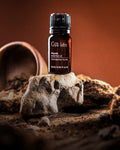

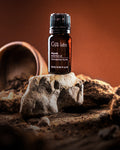
The easiest way to make aromatherapy playdough is to prepare a basic homemade playdough recipe and add only a tiny amount of a carefully selected essential oil to the finished dough. For a simple afternoon activity, I prefer lavender for its gentle floral aroma, but the dough should always be supervised, kept away from mouths and eyes, and made with an age-appropriate amount of essential oil.
If you've ever experienced the late afternoon witching hour with kids, you know what I mean.
Everyone's tired.
Someone is hungry.
Someone else has apparently decided that socks are an unacceptable form of clothing.
And somehow, the afternoon still has two hours left.
That's when I like sensory activities.
They're hands on, they're easy to set up, and they give little hands something to do while creating a calmer atmosphere at home. Homemade playdough is already a classic. Adding a very small amount of fragrance can turn it into an even more engaging sensory experience.
But there's an important distinction here.
We're not using essential oils as a treatment for stress, anxiety, hyperactivity, or any other health condition. We're simply adding a gentle scent to an ordinary play activity.
And honestly, that's enough.
Why Scented Sensory Play Can Make Afternoons More Enjoyable
Sensory play gives children an opportunity to explore texture, movement, color, and smell all at once.
Playdough happens to be particularly good for this because there's no right way to play with it.
You can roll it.
Squish it.
Cut it.
Flatten it.
Make an extremely questionable-looking dinosaur.
I've seen all of the above.
For parents, sensory activities can also be wonderfully low tech. You don't need an app, a screen, batteries, or a complicated craft kit. A bowl of homemade dough and a few cookie cutters can keep children occupied for surprisingly long stretches.
Adding a gentle aroma introduces another sensory element.
The American Academy of Pediatrics notes that aromas can influence how people experience their surroundings, and its aromatherapy guidance specifically discusses lavender and chamomile as relaxing aromas while noting that undiluted essential oils can irritate skin.
That's why I like the idea of scented playdough as an age-appropriate sensory activity, rather than presenting it as a wellness treatment.
The goal isn't “make your child calm.”
The goal is: create an inviting activity that encourages slower, hands on play.
There's a big difference.
Choosing Essential Oils for Children's Playdough
This is where I want to slow down.
The phrase kid safe essential oils makes things sound much simpler than they really are.
An essential oil isn't automatically safe just because it's natural, and an oil that is appropriate for one age or application may not be appropriate for another.
Poison Control specifically warns that essential oils can cause poisoning when misused and recommends keeping bottles locked away and out of children's sight and reach. It also notes that children may be more susceptible to toxic effects because of their smaller bodies and developing systems.
So for playdough, I'm conservative.
Very conservative.
Lavender for a Gentle Floral Scent
Lavender is the first oil I'd consider for this type of project. Our Lavender Essential Oil has a familiar floral aroma that the American Academy of Pediatrics lists among essential oils commonly used for a relaxing aroma. For a broader look at lavender blending ideas, our lavender oil blends guide covers combinations worth exploring.
That doesn't mean lavender will make a child sleepy or treat anxiety. It simply means its familiar floral aroma can be a pleasant addition to a sensory activity.
The National Center for Complementary and Integrative Health also notes that lavender aromatherapy is considered possibly safe but can cause reactions such as headache or coughing, while topical lavender products can cause allergic skin reactions in some people.
That's exactly why I'd use very little.
What About Citrus?
A bright citrus scent can make playdough smell cheerful and fresh. For an older child who doesn't mouth objects, a tiny amount of sweet orange may be considered for the optional citrus version below. If you'd like to explore citrus essential oil blending more broadly, our citrus essential oil blends guide covers the most useful combinations.
However, I wouldn't use a citrus essential oil simply because a recipe calls for “something fruity.” Essential oils vary considerably, and some citrus oils can create sun-sensitivity concerns when applied to skin. NCCIH notes that sun sensitivity may occur with some citrus and other essential oils when applied to skin before sun exposure.
Because children may rub their hands on their faces or arms while playing, I prefer keeping the formula extremely simple.
How Much Essential Oil Should You Add?
Less than you probably think.
For children's playdough, I wouldn't turn the dough into a strongly scented aromatherapy product. The scent should be subtle.
For one full batch of homemade playdough, use no more than 2 drops of essential oil total for this recipe.
That's the entire batch.
Not 2 drops per cup.
Not 2 drops per handful.
Two drops for the whole bowl of dough.
And even that isn't a substitute for supervision.
There isn't a universally established “kid-safe dilution” for every child and every essential oil, so I wouldn't present a single percentage as a guarantee of safety. Poison Control recommends following product directions, using essential oils appropriately diluted for skin applications, and keeping concentrated oils away from children.
The playdough itself also shouldn't be treated like a topical product. Its purpose is play, not skincare.
The Homemade Playdough Recipe
Here's the base I use because it requires ordinary kitchen ingredients and doesn't turn preparation into a science project.
|
Before You Start: Activity Safety Checklist A supervising adult must be present throughout the entire activity. Keep the essential oil bottle with the adult at all times — never within a child's reach. This dough is for play, not eating. If your child still mouths play materials, use plain dough without any essential oil. Wash children's hands thoroughly after play, especially before eating. |
What You'll Need
• 2 cups all-purpose flour
• 1 cup salt
• 1½ cups warm water
• 1 tablespoon vegetable oil
• Food coloring, optional
• 1 to 2 drops essential oil, depending on the version
• Large mixing bowl
• Saucepan
• Wooden spoon
How to Make the Base
1. Add the flour and salt to a saucepan and stir them together.
2. Add the water and vegetable oil.
3. Stir over low to medium heat until the mixture starts pulling away from the sides of the pan.
4. Once it forms a soft dough, remove it from the heat.
5. Let it cool until comfortable to handle.
6. Knead the dough on a clean surface until smooth.
7. Divide it into portions if you're making different colors or scents.
Here's the important part:
Let the dough cool before adding the essential oil. I don't want anyone heating essential oils unnecessarily, and working with a cooler dough also makes it easier to distribute the scent evenly.
A Calming Lavender Playdough Version
Once the dough has cooled, add 1 to 2 drops of lavender essential oil to the entire batch.
That's it.
Work the dough thoroughly with clean hands so the aroma disperses throughout the mixture.
I prefer starting with one drop. You can always decide that the scent is subtle enough and leave it there. You can't remove an essential oil once you've dumped five more drops into the dough.
And believe me, “strong lavender cloud” isn't the goal here.
A Few Things I Like About This Version
The finished dough has the familiar texture children already know, but the lavender adds another sensory layer.
You can pair it with:
• Lavender colored food coloring
• Flower shaped cutters
• Wooden rolling pins
• Small animal molds
• Letter stamps
Keep the activity focused on play rather than turning it into an aromatherapy lesson.
Let the child decide what the dough becomes.
That's usually where the fun starts.
A Bright Citrus Version
If you want something less floral, you can make a separate batch with 1 drop of sweet orange essential oil.
I would reserve this version for children who are old enough not to put the dough or their hands into their mouths and who can follow clear instructions about not touching their eyes.
How to Make It
1. Prepare the same playdough base.
2. Allow it to cool.
3. Add 1 drop of sweet orange essential oil to the full batch.
4. Knead thoroughly.
That's all.
I wouldn't combine several citrus oils just to make the scent stronger. One is enough.
And if you're planning outdoor play immediately afterward, I'd skip topical citrus products altogether. The playdough isn't meant to be applied to skin, but children don't always keep their hands exactly where you expect them to.
Welcome to parenting.
Safe Play Tips I Wouldn't Skip
This is the part that matters most.
Supervise the Activity
A child should never be left alone with concentrated essential oils.
The playdough may be part of the child's activity, but the essential oil bottle belongs with the adult.
Poison Control recommends storing essential oils securely, out of sight and reach of children, because swallowing them can cause serious poisoning.
Keep the Dough Away From Mouths
This activity isn't appropriate for children who are still likely to eat their play materials.
That is particularly important for toddlers.
For this recipe, I'd use a conservative 3+ guideline, with close adult supervision. If a younger child still mouths objects, I'd skip the essential oil entirely and use plain playdough instead.
That's a much better trade-off.
Avoid Eyes and Broken Skin
Essential oils can irritate the eyes and skin.
If the dough gets into the eyes, stop the activity and rinse thoroughly with clean water. If irritation continues, seek appropriate medical advice.
Don't use scented playdough on irritated, broken, or damaged skin.
Wash Hands After Playing
Once the activity is finished, have children wash their hands.
Especially before eating.
It's a tiny step, but it's worth building into the routine.
Keep the Essential Oil Bottles Locked Away
Don't leave the bottle on the table because “we're only using two drops.”
Two drops may be all you're using.
The bottle contains much more.
That's the difference.
What Ages Is Aromatherapy Playdough Suitable For?
For this specific recipe, I recommend 3 years and older with active adult supervision, particularly because essential oils should not be swallowed and younger children are more likely to mouth toys and craft materials.
For toddlers who still put objects in their mouths, make plain playdough instead.
The sensory activity itself can remain exactly the same.
Roll it.
Squish it.
Make shapes.
Use cookie cutters.
You simply don't need the essential oil.
This is one of those situations where leaving something out doesn't make the activity worse. It makes it simpler.
Can Children With Sensitive Skin Use It?
Children with sensitive skin may be more likely to react to fragranced products, so I wouldn't automatically assume scented playdough is suitable for them.
If your child has a history of fragrance reactions, eczema, allergies, or very sensitive skin, check with their paediatrician before introducing essential oils.
The American Academy of Pediatrics recommends discussing questions about natural therapies and products with a child's doctor, and Poison Control notes that essential oils can cause skin irritation and allergic reactions.
For a child who shouldn't use scented dough, plain homemade playdough is the easy alternative.
And honestly, kids don't care nearly as much about the scent as adults think they do.
Give them a rolling pin and some cookie cutters and they're usually perfectly happy.
How Long Does Homemade Aromatherapy Playdough Keep?
Plain homemade playdough can last for several weeks when stored properly, but scented dough should be treated as a homemade product with no commercial preservative system.
I recommend keeping it in an airtight container or sealed bag and checking it before every use.
Throw it away if you notice:
• Mould
• Unusual discolouration
• A strange smell
• Excessive moisture
• A change in texture
I also prefer making smaller batches. There's no prize for keeping the same lump of playdough alive for six months. Fresh batches are easy enough to make.
Make the Activity Part of a Calmer Afternoon Routine
The playdough itself isn't the whole activity.
The environment matters too.
I like setting everything up before bringing the child to the table.
A small tray.
Two or three cutters.
A rolling pin.
The playdough.
That's it.
Too many options can turn a calming activity into a tiny craft-store explosion.
You can also add a simple routine around the play.
• Start with five minutes of rolling.
• Then make shapes.
• Then let the child create something.
If you're doing this after school, keep expectations low. The goal isn't perfect behavior or a picture perfect craft.
The goal is simply to give them something tactile and enjoyable to focus on.
That makes it one of my favorite calming activities for kids, especially when everyone in the house is running low on patience.
What About Sensory Play Essential Oils?
If you're interested in sensory play essential oils, I'd keep the same principle in mind: the scent should be secondary to the activity.
• Don't create an intensely scented dough.
• Don't mix five different oils.
• And don't assume that a stronger aroma means a better sensory experience.
Children can be more sensitive to strong smells than adults, and some fragrances can cause irritation or discomfort.
A subtle scent is plenty.
For most families, lavender is the easiest starting point.
If your child doesn't like it? Skip it. There are plenty of other sensory activities that don't involve essential oils at all.
Which Gya Labs Oils Would I Choose?
For this particular project, I'd keep the selection extremely narrow. Lavender Essential Oil would be my first choice for the floral version because lavender has a familiar aroma and is commonly used in aromatherapy. The American Academy of Pediatrics specifically discusses lavender among oils used for relaxing aromas. For the optional citrus version, I'd choose a clearly labelled sweet orange essential oil rather than mixing multiple citrus oils. Both are available from Gya Labs, and the full calming and relaxing range includes other oils suited to gentle evening routines.
But I wouldn't recommend buying several oils just for this project.
One bottle is enough.
The idea here is no fuss sensory play, remember?
Final Takeaway
The best thing about this activity is that it doesn't have to become a big production.
Make the dough.
Add a subtle scent if it's appropriate for your child.
Put out a few cutters.
Then let them play.
That's it.
You don't need a perfectly themed sensory tray or twelve different tools. You don't even need to call it aromatherapy playdough when you're talking to your child.
It's just playdough.
A little softer.
A little more interesting.
And hopefully enough to buy everyone in the house a little breathing room before dinner.