




Yes, fall hair shedding is usually normal. Seasonal changes in the hair growth cycle can make some people notice more loose hair in their brush, shower, or pillowcase during late summer and fall. A gentle scalp oil routine may support the look and feel of healthy hair, but it isn't intended to stop or treat hair loss.
I've had that moment myself: you look down at your brush and suddenly wonder where all those hairs came from. It can be surprisingly alarming, especially when the shedding seems to increase almost overnight.
The good news is that seeing more loose hair doesn't automatically mean something is wrong. Hair naturally moves through different stages, and seasonal patterns may make shedding more noticeable at certain times of year.
That's where a simple fall hair care routine can help. Not by trying to “stop” the natural cycle, but by giving your scalp and hair some gentle, consistent care.
Yes, Fall Shedding Is Usually Normal
The phrase fall hair loss sounds much scarier than “a few extra hairs in the shower.”
That's partly because we tend to notice shedding much more when it's concentrated in one place. You might see a few strands on your pillow, several in the brush, and another handful after washing your hair. Suddenly, it looks like you've lost half your head.
You probably haven't.
The American Academy of Dermatology notes that losing around 50 to 100 hairs a day can be normal because the body continually grows new hair while older hair sheds.
Seasonal changes can make that process more noticeable. Research has documented annual patterns in hair growth and shedding, with some studies finding a higher proportion of hair in the resting phase around late summer and early autumn.
That's why hair shedding in fall can seem to appear almost overnight.
But here's the part I don't want you to overlook.
Not every increase in shedding is seasonal.
Stress, illness, hormonal changes, nutritional issues, certain medications, and other factors can also contribute to noticeable shedding. The AAD points out that several different conditions can cause hair loss, which is why identifying the underlying cause matters.
So yes, is fall hair shedding normal?
Often, yes.
But “often” is doing some important work in that sentence.
If the pattern looks dramatically different from your usual shedding, it's worth paying attention rather than automatically blaming autumn.
What's Happening With the Hair Cycle?
To understand why do I shed hair in fall, it helps to know that every strand on your scalp follows a cycle.
Hair doesn't simply grow forever.
Instead, individual hairs move through different stages. During the active growth phase, the follicle produces a hair that continues getting longer. Eventually, that activity slows, the follicle enters a resting phase, and the hair is eventually shed.
Then the cycle starts again.
Think of it like a rotating schedule.
Not every follicle is doing the same thing at the same time, which is exactly why we don't suddenly lose all our hair when a large number of hairs reach the end of their cycle.
Research has found seasonal variation in this process. One study following healthy men found that the proportion of hair in the active growth phase decreased toward late summer, while shedding peaked around August and September.
Another study found seasonal changes in hair growth among healthy women, with a higher proportion of hair in the resting phase during summer and a less pronounced secondary peak in spring.
The exact pattern isn't identical for everyone.
And that's important.
I wouldn't use a calendar as a diagnostic tool. Your hair doesn't know it's September 1st.
What matters is the bigger picture: how much you're shedding, how long it lasts, whether your overall density appears to be changing, and whether you're experiencing other symptoms.
Why the Brush Makes It Look Worse
Here's another little trick our brains play on us.
Loose hair doesn't always leave your head immediately.
Some stay tangled in your hair until you brush, wash, or run your fingers through it. If you've gone a few days without thoroughly brushing or washing, several days' worth of naturally shed hair may appear at once.
That's enough to make anyone nervous.
I've had moments where I pulled a clump of loose hair from a brush and thought, “Well, that's unfortunate.”
Then I remembered that a brush is essentially a collection point.
The number looks dramatic because the hair is gathered together.
A Supportive Scalp Oil Routine
Now let's talk about oils. This is where I want to be particularly clear. I don't use scalp oils as a promise to stop shedding. That's not realistic, and it's not how I would position them. Instead, I think of oiling as a grooming ritual that can help keep the scalp and hair feeling conditioned and cared for. For more DIY hair oil ideas, our scalp oil recipes guide covers a range of combinations worth exploring.
For a simple seasonal routine, I like three aromatic options: rosemary, castor oil as a carrier or conditioning ingredient, and peppermint.
Rosemary Oil for Hair
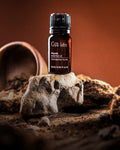
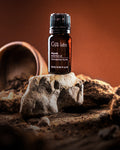
Rosemary oil for hair has become one of the most talked-about ingredients in DIY scalp care. Our Rosemary Essential Oil has a fresh, herbaceous aroma and fits naturally into scalp oil routines.
The important distinction is between saying an oil supports a healthy looking scalp and claiming that it treats hair loss.
I stick with the first.
If you're already using scalp oil, rosemary can add a pleasant botanical aroma while becoming part of a consistent grooming routine.
Consistency is useful here.
Not because oil magically changes the hair cycle, but because a simple routine is easier to maintain.
Castor Oil for a Richer Feel
Castor oil is much thicker than many popular carrier oils.
That can be useful if you like a richer scalp treatment, but it can also make application messy.
I usually recommend blending a small amount with a lighter carrier oil rather than applying a heavy layer directly to the scalp.
Otherwise, you may end up looking like you've lost a fight with a bottle of cooking oil.
Not exactly the autumn look we're going for.
Peppermint Oil for a Fresh Scalp Ritual
Our Peppermint Essential Oil brings something different to the routine. Its aroma is crisp and refreshing, and it can make a scalp massage feel particularly invigorating.
That said, peppermint essential oil can irritate the skin when used improperly. The National Center for Complementary and Integrative Health notes that topical peppermint can cause skin rashes or irritation in some people.
So this is absolutely not a “more is better” ingredient.
Use it sparingly and dilute it properly.
How to Apply a Scalp Oil
You don't need to soak your entire head in oil.
I prefer a targeted approach.
What You'll Need
|
Patch Test Reminder Before applying any new scalp oil blend, test a small amount of the diluted mixture on your inner arm and wait 24 hours. Discontinue use if redness, itching, or irritation develops. Peppermint essential oil in particular can cause skin irritation in some people — always use it properly diluted and in small amounts. |
• 1 tablespoon jojoba oil or another suitable carrier oil
• 1 drop rosemary essential oil
• 1 drop peppermint essential oil
For a more conditioning blend, you can replace part of the carrier oil with a small amount of castor oil.
How to Apply
1. Combine the carrier oil and essential oils in a small container.
2. Mix thoroughly.
3. Part your hair in a few places and apply a small amount directly to the scalp.
4. Massage gently with your fingertips for a few minutes.
5. Leave it on for a short period before washing, if your scalp tolerates it.
6. Shampoo gently and rinse thoroughly.
I wouldn't aggressively massage the scalp.
Your follicles don't need a workout.
Gentle fingertips are enough.
And if your scalp feels itchy, burning, unusually dry, or irritated afterward, wash the product out and discontinue use.
How Often Should You Oil Your Scalp?
For most people, once or twice a week is plenty for a simple scalp oiling routine.
You don't need to oil every day.
In fact, daily oiling may simply leave some scalps feeling greasy or uncomfortable.
Start once a week.
See how your scalp responds.
If everything feels comfortable, you can decide whether twice weekly fits your routine.
The goal is consistency, not quantity.
I've found that people often make the same mistake with DIY hair care that they make with skincare: they assume using more products will produce better results.
It usually just produces more products.
Do I Apply Oil to the Scalp or the Lengths?
That depends on what you're trying to accomplish with your routine.
If your goal is a scalp focused ritual, apply a small amount directly to the scalp.
If your lengths feel dry or rough, you can smooth a tiny amount through the mid lengths and ends.
I actually prefer keeping the two purposes separate.
Scalp care should be light and targeted.
Hair length care can be more conditioning.
You don't need to turn your roots and ends into the same oil slick.
When to Check With a Professional
This is the section I never want readers to skip.
It's easy to see normal hair shedding discussed online and assume every increase in shedding is seasonal.
That's not necessarily true.
The AAD explains that hair loss can have many causes, including hereditary hair loss, illness, stress, certain medical events, and hair care practices.
Consider speaking with a dermatologist or other qualified professional if you notice:
• Abrupt or drastic loss
• Clearly visible thinning
• Bald or smooth patches
• A widening part or rapidly changing hairline
• Scalp redness, scaling, pain, or persistent itching
• Shedding that continues or keeps worsening
• Other unexplained changes in your health
A professional can help determine whether what you're seeing is seasonal shedding or something else.
That's much more useful than trying ten oils and hoping one solves the mystery.
Realistic Expectations From an Oil Routine
Let's set expectations properly.
A scalp oil routine can help support the look and feel of healthy looking hair. It can make grooming feel more intentional. A light oil can help hair feel conditioned, while a pleasant botanical aroma can turn a basic scalp massage into something you'll actually look forward to. For more scalp care context, our guide to essential oils for dry scalp covers scalp health routines in more detail.
But oils shouldn't be presented as a guaranteed way to stop shedding or make hair grow faster.
That's not what this routine is about.
If you're dealing with genuine hair loss, the most useful first step is understanding what's causing it.
If you're simply noticing more loose hair around autumn, a gentle routine can be a nice way to care for your scalp while you observe what happens over time.
And patience matters.
Hair changes slowly.
The AAD notes that when temporary excessive shedding occurs after certain stressors, people may regain their usual fullness over time once the underlying trigger has resolved.
So don't check your part in the mirror every morning expecting a dramatic transformation.
Give your routine time.
And give your hair some peace.
A Simple Fall Hair Care Routine I Actually Like
If I wanted to keep this entire routine as simple as possible, I'd do this:
• Once or twice a week: Apply a lightly diluted scalp oil blend and massage gently.
• On wash days: Use a gentle shampoo and conditioner, avoiding unnecessarily rough handling. The AAD recommends gentle hair care because thinning or shedding hair can be fragile and more susceptible to damage.
• For the lengths: Use a small amount of carrier oil if they feel dry.
• Throughout the season: Pay attention to your overall hair density rather than counting every strand.
• If something seems unusual: Ask a professional rather than trying to diagnose the cause yourself.
That's my entire philosophy.
Simple enough to follow.
Gentle enough to repeat.
And realistic enough that you're not expecting a bottle of rosemary oil to perform miracles.
Gya Labs Picks for a Scalp Oil Routine
For a simple autumn scalp care kit, all three key ingredients are available from Gya Labs. Rosemary Essential Oil and Peppermint Essential Oil (both linked in the routine above) are the aromatic additions, while jojoba oil provides the lightweight carrier base. Browse the full essential oils for hair care collection to explore rosemary, peppermint, castor, and other oils suited to scalp routines. For a broader range of hair-specific products, the hair care range brings Gya Labs' full selection together in one place.
Final Takeaway
Fall can make your hairbrush look far more alarming than it actually is.
If you're noticing a little more hair than usual, take a breath. Hair shedding in fall could be linked to natural hair cycles, and the science does confirm that humans have seasonal patterns of shedding.
For me, the best approach is simple: care for the scalp gently, keep the hair conditioned, avoid aggressive handling, and don't expect essential oils to do something they're not designed to do.
A little rosemary.
A little peppermint.
A good carrier oil.
And a reasonable amount of patience.
That's a much better fall routine than staring nervously at the shower drain every morning.