



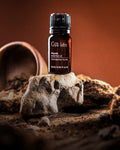

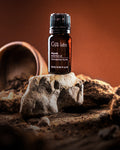
Aromatic traditions are an important part of many cultural histories, including the long standing use of fragrant resins such as copal in Mesoamerica. Today, essential oils such as frankincense, myrrh, cedarwood, and copaiba offer modern ways to explore warm, woody, and resinous aromas while keeping their distinct cultural histories in context.
September 15 marks the beginning of Hispanic Heritage Month in the United States, a month-long observance that celebrates the histories, cultures, and contributions of people whose roots include Spain, Mexico, the Caribbean, and Central and South America. More symbolically significant is the fact that many Latin American countries achieved independence around September 15th. Others, such as Mexico and Chile, celebrated this on the 16th and 18th of September respectively.
But heritage isn't only something we read about in history books. Sometimes, we experience it through the senses.
A familiar dish can bring back a family gathering. Music can transport us to a particular place. And scent can do something similar. Aromatic traditions have long connected plants, resins, smoke, ceremony, and everyday life across different cultures.
One of the most fascinating examples is copal resin, a fragrant tree resin with deep Indigenous roots in Mesoamerica. It has been used in ritual and ceremonial settings for centuries and continues to have cultural significance today.
There is an important distinction worth making from the beginning: copal is not simply a “Hispanic” ingredient. Its history predates the Spanish arrival in the Americas and is closely connected to Indigenous cultures and knowledge. Hispanic Heritage Month provides an opportunity to learn about the many histories that exist across the region, but those histories should not be blended into one simplified tradition.
So, rather than treating these aromas as interchangeable, let's take a closer look at where they come from, what they have meant to different communities, and how modern essential oils can provide a contemporary way to appreciate resinous and botanical aromas.
Scent as Cultural Heritage
Scent has a remarkable way of carrying stories.
Unlike an object that sits in a museum or a photograph that captures one moment, an aroma can become part of a ritual, a celebration, a home, or a memory. That makes aromatic traditions especially interesting when we're exploring cultural heritage.
The history of aromatherapy is not one single story. People in different parts of the world have worked with aromatic plants for thousands of years, using woods, flowers, leaves, seeds, roots, gums, and resins in very different contexts.
Incense is one of the clearest examples. The Metropolitan Museum of Art notes that ceremonial incense dates to antiquity and spans many religious and cultural traditions. Aromatic materials have included everything from woods and herbs to seeds, flowers, and resinous substances such as frankincense and myrrh.
That broader history helps us understand why resinous aromas still feel so distinctive today.
There is something especially evocative about a scent that is warm, smoky, balsamic, earthy, or slightly sweet. Unlike a bright citrus oil, a resinous aroma tends to feel slower and deeper.
But when discussing cultural heritage, context matters just as much as scent.
A copal ceremony, for example, should not be reduced to “an ancient aromatherapy technique.” That wording would strip away the cultural and spiritual significance of the practice. Indigenous communities have their own histories, beliefs, languages, and contemporary relationships with copal.
That's why I think the most respectful approach to cultural aromatherapy is curiosity without appropriation.
We can learn about the plants.
We can understand their history.
We can appreciate their aromas.
And we can recognise that some practices belong within specific cultural or ceremonial contexts rather than being turned into generic wellness trends.
Copal and Sacred Resins
If you've never encountered copal resin, the first thing to know is that copal isn't one single botanical species.
Copals come from trees in the Bursera genus, and Mexico is home to numerous species that produce these fragrant resins. Mexican biodiversity authorities note that copal has been documented archaeologically and historically, with examples connected to Maya and Aztec contexts.
The archaeological record is fascinating.
Copal has been found among offerings at sites including the Sacred Cenote at Chichén Itzá and the Templo Mayor of Tenochtitlan. Historical and ethnobotanical research also documents its continued use among Indigenous and mestizo communities.
The word itself has Indigenous roots. “Copalli” comes from Nahuatl and refers to resin or incense. Different communities and languages have their own terminology, which is another reminder that there isn't one universal “copal tradition.”
What Is Copal Used For?
Historically and today, the answer depends on the community and the specific type of copal.
Government and ethnobotanical sources document copal's use as incense and in ritual, ceremonial, festive, and other traditional contexts. Its aromatic smoke has been part of offerings and ceremonies, and its use has continued in various communities into the present day.
The Smithsonian's National Museum of the American Indian also documents copal as a ceremonial material associated with Q'eqchi' Maya culture in Guatemala, including a copal incense burner in its collection.
This living connection is important.
It's easy to talk about copal as though it belongs entirely to the past. It doesn't.
In parts of Mexico, copal harvesting remains connected to community livelihoods and cultural practices. Sustainable harvesting is therefore part of the conversation too. Mexican environmental authorities describe community-based collection practices designed to avoid overexploiting the trees, including allowing harvested trees periods of rest. Its importance — historically and today, culturally, ecologically, and economically — is noted across scientific literature and government reports.
That gives the story another dimension. Copal isn't simply a fragrant material. It is connected to ecology, traditional knowledge, craftsmanship, community economies, and cultural continuity.
And that's exactly why I would avoid treating copal as just another ingredient to add to a diffuser.
Resins in Aromatherapy Today
Modern aromatherapy uses a number of resin-derived oils, but it's important not to suggest that they all come from the same cultural tradition.
Frankincense and myrrh, for example, have their own ancient histories rooted in regions outside Mesoamerica.
Frankincense comes from Boswellia trees associated with regions including southern Arabia and parts of East Africa. The plant sources of myrrh are species of the genus Commiphora. The history of these two plants is also a history of aromatic goods transported across long distances.
The Metropolitan Museum of Art describes frankincense and myrrh as highly prized commodities in the ancient world. Frankincense was burned in temples, palaces, and private homes, while both resins were associated with fragrance, religious and funerary practices, and other uses.
Frankincense
The frankincense history is particularly fascinating because it is also a history of trade.
South Arabian kingdoms built significant economic power around the incense trade, with frankincense transported along caravan routes toward Mediterranean markets.
Today, Frankincense Essential Oil offers a warm, balsamic, woody aroma. Gya Labs' steam distilled frankincense has a warm, woody profile with balsamic and slightly citrusy notes. It can be used in diffuser blends, home fragrance projects, and personal aromatherapy routines. For a fuller look at frankincense's aromatic history and uses, our frankincense spiritual benefits guide covers it in detail.
What I find most interesting is the transformation from resin to essential oil. The raw resin and distilled oil aren't identical materials, but they share a connection through the aromatic plant material from which the oil is produced.
Myrrh
Myrrh has an equally long history.
Its aroma tends to be deeper, earthier, and more balsamic than frankincense. Gya Labs' Myrrh Essential Oil is steam distilled from myrrh resin and has a warm, earthy, resinous aroma.
I particularly like myrrh when it is paired with brighter or woodier oils because its depth gives a blend some character.
Copaiba
Copaiba is another resin-derived botanical worth knowing about. Our Copaiba Essential Oil comes from Copaifera trees native to tropical regions of South America. Unlike frankincense and myrrh, copaiba isn't simply another “ancient incense” equivalent, and it shouldn't be presented that way.
Instead, it belongs to the broader family of aromatic botanical materials that show how diverse resin-producing plants can be.
That distinction is important when discussing these oils alongside Hispanic and Latin American heritage.
The goal isn't to claim that all resin oils represent one shared tradition.
The goal is to appreciate the botanical connection while keeping each plant's history in context.
Bringing These Aromas Home
You don't have to recreate a historical ceremony to appreciate resinous aromas.
In fact, I think the simplest approach is often the most respectful.
Use modern essential oils for what they are: contemporary aromatic products.
Let's start with a diffuser. For a practical guide to combining frankincense and myrrh, our frankincense and myrrh blend guide covers diffuser blends and topical applications together.
If you like warmer, resinous smells, experiment with:
• 2 drops frankincense + 1 drop myrrh + 1 drop cedarwood
The effect is warm, woody and grounding without being heavy.
For something brighter, try:
• 2 drops frankincense + 2 drops sweet orange + 1 drop cedarwood
The citrus lifts the resin notes and makes the blend lighter.
For extra earthiness:
• 2 drops myrrh + 2 drops cedarwood + 1 drop vetiver
That's the kind of aroma I like on a quiet evening when I want the room to feel warm and settled.
Gya Labs currently offers a range of resinous and woody oils that work well for this kind of exploration, including frankincense, myrrh, cedarwood, vetiver, and other aromatic oils within its Aromatherapy Collection.
How Do I Diffuse Resin-Style Oils?
If you're new to resinous oils, start with fewer drops than you think you need.
Frankincense and myrrh can be quite characterful, so adding six or seven drops immediately can make a blend feel much heavier than expected.
I usually begin with three to five total drops in a diffuser, depending on the diffuser's capacity and the manufacturer's instructions.
Then I let the aroma develop.
This is especially useful with resinous oils because their scent profile can change as the blend disperses.
You may notice the brighter notes first, followed by warmer woody or balsamic notes.
That gradual development is part of the appeal.
Exploring These Aromas Respectfully
This is the section I think matters most.
When we talk about cultural aromas, there's a temptation to turn everything into a product.
A sacred resin becomes a “spiritual wellness ingredient.”
A traditional ceremony becomes a “ritual.”
An Indigenous practice becomes a “self care hack.”
And so, respect can quickly slip into appropriation. Copal deserves better than that. Its history, inextricable from the Indigenous peoples of Mesoamerica, endures today within communities in which it remains a part of daily life.
So if you're exploring Copal, start by learning rather than imitating.
Read about the communities associated with it.
Learn where the resin comes from.
Understand that different species and regional traditions exist.
And don't assume that a practice described as ceremonial or sacred can simply be reproduced as a generic home ritual.
There is also a sustainability dimension. Copal trees are living, renewable resources. According to Mexican environmental authorities, there are practices in place aimed at helping community members gather copal responsibly without overexploiting the trees.
That gives us another reason to appreciate the story behind the aroma instead of focusing only on the scent itself.
Modern Oils That Echo the Aromatic Experience
If you are interested in a similar warmth and resinous quality without attempting to recreate an older ceremony, there are some contemporary essential oils that can meet that need.
• Frankincense provides a balsamic, woody scent profile.
• Myrrh adds an earthy depth.
• Cedarwood offers a dry, woody character.
• Vetiver gives a smoky, earthy note.
• Sandalwood adds richness and warmth with soft spice notes.
These are not copal. They would not claim to be substitutes for Indigenous ceremonial aromatics in any way.
They are simply modern botanical options that can help you explore a similar broad category of resinous, woody, and grounding scent profiles.
That distinction is not a small one.
Final Takeaway
Aromas can carry narratives, but the narrative is larger than the scent.
Copal is an excellent illustration: a fragrant material inextricably linked to Indigenous histories, ritual, ecological knowledge, and community life. Frankincense and myrrh tell other stories tied to geographies, trade routes, and peoples across Africa and the Arabian Peninsula.
Hispanic Heritage Month gives us an opportunity to explore those stories with curiosity, while remembering that Hispanic, Latin American, and Indigenous identities encompass enormous cultural diversity.
That's why aromatic traditions appeal to me so much.
There is something wonderful about diffusing frankincense and appreciating the warmth it brings to a room. It is even more meaningful when you also understand something about when copal was used and why these aromatic resins have mattered so deeply to civilisations across the globe.
The most meaningful part is understanding the story behind the aroma.