


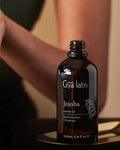

Making a DIY solid perfume is surprisingly simple. Melt 1 tablespoon of beeswax with 2 tablespoons of jojoba oil, remove the mixture from the heat, then stir in 20 to 25 drops of essential oils using a blend of top, middle, and base notes. Pour it into a small tin, let it cool completely, and your perfume balm is ready to use. The result is compact, spill-proof, travel-friendly, and can last for several months when stored correctly.
I'll admit something.
The first perfume balm I ever made wasn't great.
I overheated the oils, used too much peppermint, and somehow ended up smelling more like a candy cane than a signature fragrance. Lesson learned.
I've made dozens more combinations since then-tinkering with the percentage of beeswax, experimenting with various carrier oils and testing fragrance families-but I found that the most shocking thing about DIY perfumery wasn't how difficult it was. It was just how accommodating it could be once I got the hang of it.
If you've been curious about how to make solid perfume, you don't need expensive equipment or professional perfumery training. A few good ingredients and a bit of patience will help you produce something uniquely your own.
Why Make a Solid Perfume Balm?
Liquid perfumes certainly have their place, but I've found myself reaching for solid perfume far more often.
For one thing, it's incredibly convenient.
I can toss a small tin into my backpack, gym bag, or carry-on without worrying about leaks or airport liquid restrictions. There's no glass bottle to protect and no chance of accidentally spraying half the room while trying to freshen up.
Another advantage is control.
Instead of creating a cloud of fragrance, a solid balm stays close to the skin. That makes it ideal for anyone who prefers a more subtle scent or works in environments where strong perfumes aren't appreciated.
There's also something satisfying about making your own fragrance.
Rather than buying a scent that thousands of other people wear, you can create something that reflects your own preferences. Maybe you enjoy warm woods and spices. Maybe fresh citrus with herbal notes feels more like you. Either way, the fragrance becomes personal.
And honestly, it's fun.
Once you make your first diy perfume balm, you'll probably start thinking about seasonal versions, gift ideas, or different blends for daytime and evenings.
Understanding Perfume Notes Before You Start
One of the biggest mistakes beginners make is mixing several oils together and hoping they'll magically smell good.
Sometimes they do.
Most of the time...not so much.
Professional perfumes are built in layers, and following the same principle makes a noticeable difference when creating a natural solid perfume with essential oils.
Top Notes
Top notes are the first aromas you'll notice.
They're usually fresh, bright, and uplifting but fade relatively quickly.
Some of my favorite top notes include:
-
Sweet Orange
-
Lemon
-
Grapefruit
-
Peppermint
Whenever I want a fragrance that feels energetic, I start here.
Middle Notes
Middle notes form the heart of the perfume.
Once the top notes begin to soften, these become more noticeable.
Popular middle notes include:
-
Lavender
-
Roman Chamomile
-
Rosemary
-
Clary Sage
These ingredients often determine the overall personality of the fragrance.
Base Notes
Base notes are the foundation.
They last the longest and give the perfume depth.
Some of my favorites include:
-
Cedarwood
-
Frankincense
-
Vetiver
-
Patchouli
If you've ever wondered why some homemade perfumes disappear after an hour, it's often because they don't contain enough base notes.
A simple rule I follow is:
30% top notes, 50% middle notes, and 20% base notes.
It's not the only way to build a fragrance, but it's an excellent starting point for beginners.
The Best Essential Oils for Natural Perfume
One question I hear surprisingly often is, "Which oils actually smell good together?"
There isn't one perfect answer.
Fragrance is personal.
Still, there are a few combinations I come back to again and again because they feel balanced and easy to wear.
Fresh and Everyday
For a fresh, light, and clean aroma, blend:
-
Bergamot
-
Sweet Orange
-
Cedarwood
It's uplifting, not too orangey.
Floral with a Modern Twist
For something softer:
-
Lavender
-
Geranium
-
Sandalwood
I've worn this blend for casual weekends, and it always feels understated rather than overly floral.
Warm and Woodsy
This is probably my favorite combination.
-
Cedarwood
-
Frankincense
-
Vetiver
The fragrance develops beautifully throughout the day and works well year-round.
Cozy Evening Blend
When cooler weather arrives, I often switch to:
-
Sandalwood
-
Sweet Orange
-
Cinnamon Bark
Just remember that cinnamon bark is a particularly potent essential oil, so use it sparingly and always dilute appropriately.
DIY Solid Perfume Balm Recipe
Now for the fun part.
This solid perfume recipe is the one I return to most often because it's easy to customize while remaining beginner friendly.
Ingredients
-
1 tablespoon beeswax pellets
-
2 tablespoons jojoba oil
-
20 to 25 drops essential oils
-
Small metal tin or glass jar
Why This Ratio Works
The solid perfume with beeswax recipe comes down to balance.
Too much beeswax and the balm becomes difficult to apply.
Too little and it feels more like an oil than a solid perfume.
After experimenting with different formulas, I keep coming back to a 1:2 beeswax-to-oil ratio because it creates a smooth balm that's firm enough for travel while still melting easily with body heat.
Instructions
-
Place beeswax and jojoba oil in a glass container which is safe in the heat.
-
Melt over a double boiler.
-
Take it off the heat.
-
Once the mixture is cooled a minute, add your essential oils.
This last step matters.
Early on, I added my essential oils while the mixture was still extremely hot. The finished perfume smelled noticeably weaker because some of the more delicate aromatic compounds had already begun to evaporate.
From now on, I will let it cool down a bit before applying it.
That difference is immense.
Mix again.
Put into a jar.
Let cool completely before putting the cap on.
And that's it! That is how your DIY scent balm works.
My Favorite Beginner Blend
If you're making perfume for the first time, don't overcomplicate it.
I've learned that three oils are usually enough.
Here's one of my favorite combinations:
-
8 drops Bergamot
-
10 drops Lavender
-
7 drops Cedarwood
Fresh at first, it softens out to a warm, woody base that smells delightful and lasts without being cloying. It's the blend that I recommend to my friends when they first venture out and try creating an essential oil perfume recipe of their own.
Sometimes simple really is better.
Create a Signature Scent That Feels Like You
One of my favorite things about making solid perfume is that no two batches have to smell exactly the same.
Once you understand how fragrance notes work, you can start adjusting blends to match your personality, the season, or even the occasion.
Generally, I advise beginners to stick to one fragrance family rather than dumping a little bit of everything into the same tin. The woody, slightly citrus scent is a little easier for the nose to digest and balance compared to a blend with a little citrus, flower, herbs, spices, and resin.
When I design a signature fragrance for a client, I ask where it is that they will wear this signature scent most.
For Everyday Wear
Choose clean, versatile oils that aren't overpowering.
Try:
-
8 drops Bergamot
-
8 drops Lavender
-
6 drops Cedarwood
It's bright enough for daytime while still having enough warmth to carry into the evening.
For the Office
A subtle fragrance tends to work best.
I like:
-
Sweet Orange
-
Frankincense
-
Sandalwood
The aroma stays close to the skin and doesn't overwhelm shared spaces.
For Evenings
When I want something richer, I usually reach for:
-
Sandalwood
-
Vetiver
-
Patchouli
It's warm, slightly smoky, and develops beautifully over time.
One lesson I learned early on is that adding more oils doesn't necessarily make a better perfume. In fact, some of the nicest blends I've made contain only three essential oils.
If a fragrance feels too complicated, remove one ingredient rather than adding another.
More often than not, the blend immediately improves.
How to Make Your Solid Perfume Last Longer
One question I hear constantly is why homemade perfume sometimes fades faster than expected.
There are several reasons.
Fortunately, they're all easy to fix.
Start with Strong Base Notes
Base notes give your perfume staying power.
Without them, the brighter citrus oils disappear quickly.
I almost always include cedarwood, sandalwood, frankincense, or vetiver because they help anchor the lighter fragrances.
Apply to Pulse Points
Instead of rubbing perfume everywhere, apply a small amount to areas that naturally generate warmth.
These include:
-
Wrists
-
Neck
-
Behind the ears
-
Inner elbows
The warmth helps the fragrance develop naturally throughout the day.
Moisturized Skin Holds Fragrance Better
One trick I discovered by accident was applying perfume immediately after moisturizing.
Dry skin tends to absorb fragrance more quickly, while moisturized skin allows the scent to linger longer.
Even a small amount of unscented lotion or jojoba oil makes a noticeable difference.
Resist the Urge to Overapply
When your own nose adjusts to a fragrance, it's easy to think it has disappeared.
Usually it hasn't.
You've simply become accustomed to it.
Instead of applying more every hour, ask someone else whether they can still notice the scent.
You'll probably be surprised.
Storage and Travel Tips
One of the biggest advantages of solid perfume is portability.
Unlike liquid fragrances, there's no risk of leaks inside your bag, and you don't need to worry about airport liquid restrictions.
I keep one tin in my backpack almost year-round.
Another stays in my desk drawer.
And there's usually one somewhere in the car.
Keep It Away from Heat
Although beeswax creates a firm balm, extreme temperatures can soften it.
Avoid leaving your perfume in direct sunlight or inside a hot vehicle for long periods.
Store It with the Lid Closed
Essential oils naturally evaporate over time.
Keeping the container tightly sealed helps preserve the fragrance.
Shelf Life
When stored in a cool, dry place, most homemade solid perfumes remain in good condition for six to twelve months.
If the scent changes significantly or the balm develops an unusual odor, it's time to make a fresh batch.
Fortunately, this recipe only takes about fifteen minutes from start to finish.
Quick Reference Guide
| If you want... | Try these essential oils |
|---|---|
| Fresh everyday fragrance | Bergamot, Lavender, Cedarwood |
| Warm woodsy scent | Cedarwood, Vetiver, Frankincense |
| Soft floral blend | Lavender, Geranium, Sandalwood |
| Bright summer perfume | Sweet Orange, Grapefruit, Cedarwood |
| Cozy autumn fragrance | Sandalwood, Cinnamon Bark, Sweet Orange |
Final Thoughts
Making your own DIY natural perfume with essential oils isn't about recreating a luxury fragrance bottle. It's about creating something that's uniquely yours.
I've made enough perfume balms over the years to know that the "perfect" recipe doesn't really exist. My favorite blend today probably isn't the same one I'll be wearing six months from now, and that's part of the fun.
Don't be afraid to play with various note combinations. Make a list of blends you really like. Don't be shy about streamlining a blend if it seems overly complicated - some of the best fragrances I've ever formulated consisted of only three precisely chosen oils.
Making any batch of solid perfume – whether you are a complete novice learning how to make your own solid natural perfume at home, or if you are in the process of recreating that beloved scent you have used for decades – is another chance to develop a uniquely personalized fragrance. And when someone asks what fragrance you're wearing, there's something incredibly satisfying about saying, "I made it myself."