



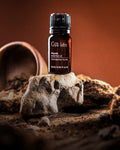

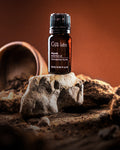
If you're comparing valerian vs vetiver, the right choice depends on the experience you're after. Valerian oil for bedtime relaxation has a softer, herbaceous aroma that many people enjoy as part of a calming evening ritual, while vetiver oil for sleep is known for its deep, earthy, woody scent. Both can be used in diffuser blends or diluted topical applications to create a relaxing bedtime atmosphere, making the best option a matter of personal scent preference rather than one being universally better.
If you've ever browsed essential oils for an evening diffuser blend, you've probably noticed two earthy contenders appearing again and again: valerian and vetiver. They aren't floral, bright, or citrusy. Instead, they're deep, grounding, and surprisingly distinctive.
The first time I opened a bottle of vetiver, I wasn't so sure something wasn't wrong. Smelt of wet earth after an afternoon shower in the middle of summer – rich, smouldering and unlike anything I'd come across before. Then valerian was opened up, also earth-bound but rounder, greener. I wasn't ‘in love at first sniff’, not by a long shot but now they both work their way into my evenings.
If you're comparing valerian vs vetiver, there's no right or wrong answer. A better way to pose the question is which of these sedative essential oils is the best for you, based on your bedtime routine, smell, and diffuser choice. We'll dive into how each one is distinct, and help you pick the perfect essential oil for your night table.
Why Grounding Oils Feel Different at Night
Some essential oils instantly brighten a room. Think lemon, sweet orange, or peppermint. Grounding oils take a different approach.
Instead of creating an energetic atmosphere, they add depth and warmth to a space. Their aromas are often described as woody, earthy, smoky, or resinous. I find they naturally encourage me to slow down, switch off my laptop, and leave the day behind.
That's why grounding essential oils for bedtime relaxation have become popular in evening aromatherapy routines. They don't need to be overpowering to make an impression. In fact, the best ones tend to linger quietly in the background while the rest of your home becomes calmer.
And since I'm always about cues, fragrance almost always lets me know the day is over. Flipping on my diffuser with a grounding mix, dimming the lights, and lighting my favourite candle is a routine my body knows that it's time to slow down.
No need to say it, but we all prefer very different scent profiles – some opt for something light and floral whereas for some an earthy and rich fragrance works best. That's exactly why comparing valerian and vetiver is worthwhile before buying a bottle.
Valerian Oil: Earthy, Herbal, and Comforting
Valerian has earned a reputation as one of the more unusual essential oils in aromatherapy.
The aroma isn't delicate or traditionally “pretty.” Instead, it's earthy, herbal, and slightly musky, with a richness that some people instantly appreciate while others need a little time to get used to.
For me, valerian eventually…grew on me.
Initially when I diffused valerian, I really wasn't a fan of the scent. A few days and nights later, though, I discovered its underlying depth and nuance that has quickly moved it up my list when I just want my bedroom to feel warm and lived in, not freshly scrubbed.
What Does Valerian Smell Like?
If I had to describe it in one sentence, I'd say it smells like a quiet woodland after rainfall.
It has earthy notes with a gentle herbal character that blends beautifully with lavender, cedarwood, frankincense, and chamomile. Because of its distinctive aroma, I rarely diffuse it on its own. For a deeper look at valerian's full range of uses and blends, our valerian essential oil guide covers it in detail.
When I Reach for Valerian
I'll opt for valerian when I'm in need of a softer, more cozy kind of vibe for the night. It sort of gives the impression that it's not ‘filling the air with scent, but contributing to what else is in my environment in preparation for sleeping’.
If you're exploring valerian oil for bedtime relaxation, try starting with just one or two drops in your diffuser alongside a more familiar oil like lavender. It softens the earthy notes while allowing valerian's unique character to come through.
Oils That Blend Well with Valerian
Some of my favourite combinations include:
• Lavender and valerian
• Cedarwood and valerian
• Roman chamomile and valerian
• Frankincense and valerian
These blends feel balanced rather than overpowering, especially in smaller rooms.
Vetiver Oil: Deep, Woody, and Grounding
While I associate valerian with the woods on a rainy day, I associate vetiver with the rich woody notes of a cutroot with fresh earth. The smell is smoky, woody, and distinctly rich. It is also the kind of oil where one can add to a blend, and instantly increase its complexity, because vetiver is so strong on its own.
The first time I used vetiver oil for sleep in my diffuser, I made the mistake of adding five drops.
That was far too much.
Vetiver is incredibly concentrated, and a little goes a long way. These days, I rarely use more than one or two drops at a time.
What Does Vetiver Smell Like?
Vetiver has a dry, earthy aroma with woody and smoky undertones. It's often used as a base note in fine fragrances because it anchors lighter scents and helps them last longer. For a closer look at these aroma layers, our detailed vetiver scent guide is a helpful read.
If you enjoy cedarwood or sandalwood, there's a good chance you'll appreciate vetiver too.
When I Prefer Vetiver
Vetiver has become my go to choice when I want a diffuser blend with a richer aroma.
Unlike brighter oils that quickly fill a room, vetiver unfolds slowly. It doesn't demand attention, but it adds a sense of depth that makes an evening blend feel more complete.
Because of that, I often pair it with:
• Lavender
• Bergamot
• Cedarwood
• Sandalwood
• Sweet orange
The combination of the sparkly light notes over woody, earthly vetiver works wonderfully.
My Favourite Vetiver Diffuser Blend
If all else fails I will almost certainly reach for this blend of two:
• 2 drops lavender
• 1 drop vetiver
• 1 drop cedarwood
It's simple, woodsy, and one of the easiest ways I've found to create a relaxing atmosphere without making the room smell too heavy.
Which One Should You Choose?
After using both oils for years, I've realised they aren't really competitors.
They're simply different.
Valerian feels softer, herbal, and comforting.
Vetiver feels deeper, woodier, and richer.
I don't think one replaces the other. Instead, I choose between them based on the atmosphere I want to create that evening.
Here's a quick comparison.
|
If you're looking for… |
Valerian |
Vetiver |
|
A soft herbal aroma |
✓ Excellent |
Good |
|
A deep woody scent |
Good |
✓ Excellent |
|
Blending with lavender |
✓ Excellent |
✓ Excellent |
|
A rich base note |
Good |
✓ Excellent |
|
A subtle diffuser blend |
✓ Excellent |
Good |
|
An earthy fragrance profile |
✓ Excellent |
✓ Excellent |
Neither oil is objectively “better.” If you prefer lighter herbal aromas, valerian may become your favourite. If you're drawn to smoky, woodsy fragrances, vetiver will probably feel like the better match.
How to Use Valerian and Vetiver in Your Evening Routine
Once you've chosen your oil, the next question is usually, “What's the best way to use it?”
The good news is that neither valerian nor vetiver requires a complicated routine. I like to think of them as supporting players rather than the star of the show. A few drops, used consistently, can become part of an enjoyable bedtime ritual without adding extra steps to your evening.
Diffuser
Diffusing is my favourite way to enjoy both oils because it fills the room with a gentle aroma rather than applying the oils directly to the skin.
If you're new to these oils, start small.
• Valerian: 1 to 2 drops
• Vetiver: 1 drop (it's surprisingly potent)
Add 3 to 4 drops of a complementary oil such as lavender, cedarwood, or Roman chamomile.
I usually switch on my diffuser about 30 minutes before I plan to read or wind down for the evening. By the time I walk into the bedroom, the aroma feels soft and settled rather than overpowering.
Roller Blend
A roller blend is another super easy option that's perfect if you like having your own personal aromatherapy on the go all evening.
For a 10 ml roller bottle, combine:
Patch Test Reminder
Before applying this blend to your skin, test a small amount of the diluted mixture on your inner arm. Wait 24 hours. Discontinue use if redness, itching, or irritation develops.
• 10 ml jojoba oil
• 1 drop valerian
• 1 drop vetiver
• 2 drops lavender
Shake gently before each use and apply to pulse points if it suits your personal routine.
I like this option because it's portable. Whether I'm travelling or spending the night away from home, the familiar aroma helps recreate part of my usual bedtime ritual.
Massage Oil
Massage blends are another easy way to include grounding essential oils for bedtime relaxation in an evening routine.
For a body oil, combine:
Patch Test Reminder
Before applying this blend to your skin, test a small amount of the diluted mixture on your inner arm. Wait 24 hours. Discontinue use if redness, itching, or irritation develops.
• 2 tablespoons carrier oil (jojoba or sweet almond oil)
• 1 drop valerian
• 1 drop vetiver
• 2 drops cedarwood
Massage into shoulders, neck, or feet as part of a relaxing self care routine.
Why I Sometimes Blend Valerian and Vetiver Together
When people compare valerian vs vetiver, they often assume they have to choose one.
Honestly?
I usually don't.
Even though each is strongly unique, they surprisingly fit quite beautifully as a team: valerian brings that softer herbal feel to it; vetiver brings that ground and wood richness. There's not a “heavy” vibe at all about it.
One blend I keep coming back to contains:
• 1 drop valerian
• 1 drop vetiver
• 2 drops lavender
• 1 drop cedarwood
I now regularly use these as my evening blend – it doesn't contain any oils so strongly that one overwhelms all others, but instead, layers as they diffuse making the air feel peaceful, but not saturated by the oil scent.
If both of these are new to you, I would advise smelling each one on its own, to get familiar with the distinct profiles, before combining them. Understanding each aroma on its own makes it much easier to appreciate how they work as a pair.
Gya Labs Picks for Your Evening Routine
Both oils featured in this guide are available from Gya Labs. Our Vetiver Essential Oil is a rich, smoky base note perfect for grounding evening blends — just one or two drops go a long way. For the softer, herbal counterpart, our Valerian Essential Oil diffuses beautifully alongside lavender and cedarwood.
If you'd like to explore beyond these two, our earthy and woodsy collection brings together similarly grounding oils, while the herbaceous range includes valerian's aromatic neighbours. For a curated selection built specifically around bedtime, the sleep collection is a good place to start.
Final Takeaway
Choosing between valerian vs vetiver isn't about determining a clear winner. Rather, it is simply a matter of selecting the evening scent that is best for you. If you appreciate a soothing, earthy fragrance that mixes perfectly with chamomile and lavender, valerian might be your ideal match.
If you prefer rich, earthy, woodsy scents that anchor a diffuser blend, vetiver is likely to become your favourite.
Personally, I keep both on my shelf.
Some evenings call for valerian's softer character. Others feel better with the depth of the vetiver. And every now and then, I blend them together and let them do what they do best, creating a simple ritual that reminds me the day is over.
Whether you're exploring the best essential oil for bedtime relaxation or simply looking for calming essential oils for bedtime, the right choice is the one that makes you look forward to slowing down each evening.
FDA Disclaimer
These statements have not been evaluated by the Food and Drug Administration. This product is not intended to diagnose, treat, cure, or prevent any disease.