


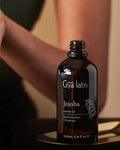

Some of the best carrier oils for skincare include jojoba oil, rosehip oil, and argan oil. These lightweight oils help support a healthy-looking complexion, lock in moisture, and fit easily into both simple and advanced skincare routines.
A few years ago, my skincare routine was far more complicated than it needed to be. I once believed, just as most people do, that in order to have good-looking skin I'd need an abundance of beauty products to adorn my bathroom shelf. Now I know a few select carrier oils often work better on my skin than a dozen bottles of cream or serum.
That's one of the many reasons carrier oils for glowing skin remain a constant in natural skin care routines. Whether you want to streamline your skin care regimen, add moisture, or make your own facial oil, carrier oils offer a solid foundation to your skin care routine.
The key is choosing the right oil for your skin's needs.
Why Carrier Oils Deserve a Place in Your Skincare Routine
These are plant-based oils often used to dilute essential oils and to carry their benefits into our skin with topical treatments. They can generally be applied directly to the skin without dilution, and are known for their moisturizing and skin-benefiting properties.
I enjoy carrier oils because many of them can be so simple and used in more ways than one, such as facial oils, massage blends, and even body butters and DIY skin care recipes.
If you're new to natural skincare, understanding the difference between essential oils and carrier oils is an excellent place to start. Difference Between Essential Oils And Carrier Oils explores how these two categories of oils work together and why each serves a different purpose in a skincare routine.
The Best Carrier Oils for Skincare
Each carrier oil will feel slightly different on the skin; some will be quick to absorb and sink in, whereas others will form a heavier barrier. This choice is often dependent upon the needs of the skin.
Jojoba Oil
When people ask me which oil I would recommend to a beginner, jojoba oil for skin is usually my first answer.
Despite its name, jojoba is technically a liquid wax rather than a traditional oil. What makes it unique is how lightweight and balanced it feels on the skin.
I've been using jojoba oil on and off for years as it never feels thick or oily. It layers well with the rest of a skincare routine, making it one of the most adaptable moisturisers out there.
Best For
- Everyday facial moisturizing
- Combination skin
- Lightweight skincare routines
Rosehip Oil
If jojoba is the all-rounder, rosehip oil for face applications is often the specialist.
Rosehip oil has become increasingly popular in facial skincare because of its lightweight texture and luxurious feel. I often reach for it when my skin looks dull or tired, particularly during seasonal changes.
One of the things I like most about rosehip oil is that it feels nourishing without leaving behind a heavy residue.
Best For
- Facial oils
- Evening skincare routines
- Supporting a healthy-looking glow
Argan Oil
Few oils have achieved the popularity of argan oil for skin, and it's easy to understand why.
Argan oil has a silky texture that makes it feel instantly luxurious. While some richer oils can sit on the skin's surface, argan oil tends to absorb surprisingly well.
I particularly love using argan oil when it's cooler as it adds that little bit extra moisture needed in the skin.
Best For
- Dry skin
- Overnight skincare
- Facial and body moisturizing
Sweet Almond Oil
Sweet almond oil doesn't always receive the same attention as jojoba or argan, but it remains one of the most dependable carrier oils available.
Its smooth texture makes it an excellent choice for massage oils, body moisturizers, and DIY skincare blends.
Whenever I'm making body oil, sweet almond oil is often the first carrier I consider.
Best For
- Body care
- Massage oils
- Dry skin support
Coconut Oil
Coconut oil has earned a devoted following in natural skincare.
Personally, I tend to use it more often on the body than on my face because of its richer texture. That said, many people enjoy incorporating coconut oil into their broader skincare routine.
Best For
- Body moisturizing
- DIY beauty recipes
- Rich hydration
Quick Comparison of Popular Carrier Oils
| Carrier Oil | Texture | Best For |
|---|---|---|
| Jojoba Oil | Lightweight | Daily facial use |
| Rosehip Oil | Light | Healthy-looking glow |
| Argan Oil | Silky | Extra moisture |
| Sweet Almond Oil | Smooth | Body care |
| Coconut Oil | Rich | Deep hydration |
How to Use Carrier Oils in Your Skincare Routine
One of the most common questions I hear is how to use carrier oils in your skincare routine.
Fortunately, it doesn't need to be complicated.
As a Facial Oil
Apply 2–3 drops after cleansing and gently press into damp skin.
Mixed Into Moisturizer
Mix one or two drops of a carrier oil into your moisturizer for added hydration.
As a Body Oil
After showering while the skin is still damp, apply all over the skin.
In DIY Blends
Carrier oils create the foundation for many DIY skincare recipes and help dilute essential oils for topical use.
Choosing a Carrier Oil Based on Skin Type
All oils are not created equal, and one that works for someone else might not work for you.
Oily or Combination Skin
Lightweight options such as jojoba oil often work well.
Dry Skin
Argan oil and sweet almond oil can provide even more moisture.
Sensitive Skin
Simple formulations are often best. If sensitivity is a concern, Best Carrier Oils For Sensitive Skin explores several gentle options that can fit comfortably into a skincare routine.
Common Mistakes People Make With Carrier Oils
Using Too Much Product
Small amounts can also be sufficient.
Expecting Overnight Results
Natural skincare is most effective when applied on a regular basis.
Skipping Patch Tests
Even nature-based ingredients might not suit some people.
Choosing Oils Based Only on Trends
What works well for someone else may not be the best fit for your skin.
If You Want...Try
Lightweight daily oil Jojoba
Healthy-looking glow Rosehip
Extra moisture Argan
Body care Sweet Almond
Rich hydration Coconut
Final Thoughts
Your skincare routine doesn't have to be the most intricate in order to be the best one. Sometimes, even just one, well-researched carrier oil can benefit you more than having several products that you're unsure about using for a long period of time. So if you are looking to learn about the uses of carrier oils for face, are on the hunt for carrier oils for glowing skin or are interested in the best carrier oils for skincare, using a general carrier oil such as Jojoba, Rosehip, or Argan is typically the best starting point.