



To make a simple DIY all purpose spray, combine a vinegar or castile soap base with water and a small amount of essential oil. Lemon, tea tree and sweet orange are popular choices for their fresh, clean smelling aromas. Always test your spray on an inconspicuous area first, and avoid using homemade sprays as disinfectants.
Two cups of liquid, a handful of drops, and about five minutes. That is the whole recipe, and it is the one I keep coming back to when the seasons turn and I want the house to feel reset rather than just tidied.
Below you will find the vinegar version, a castile soap version for the surfaces vinegar should not touch, how many drops actually belong in a 16 oz bottle, and the part most homemade cleaner articles skip, which is what these sprays can honestly be said to do.
The Fall Deep Clean Reset
There is something about the arrival of fall that makes me want to open every window, clear out the cupboards and give the whole house a proper reset.
Maybe it is the change in weather. Maybe it is spending more time indoors. Or maybe I simply like the feeling of starting a new season with a home that smells fresh and feels a little more put together.
Whatever the reason, fall is one of my favorite times to rethink my cleaning routine. Instead of filling the cupboard with a dozen different products, I prefer keeping a few simple DIY cleaning sprays on hand that I can reach for throughout the house.
That is where essential oils come in. With a few household ingredients and oils such as lemon, tea tree and sweet orange, you can make easy sprays for everyday surface cleaning and seasonal deep cleaning.
Oils for a Fresh Smelling Clean
Not every essential oil belongs in a cleaning spray. I choose oils on two things: how they smell, and whether that smell suits the room I am cleaning.
For fall, three stand out. All three sit in the bright citrus oils and wider single essential oils ranges.
Lemon Essential Oil
Lemon is the first oil that comes to mind when I think about a freshly cleaned kitchen.
Its bright citrus aroma makes a room feel instantly fresher, which is why it works so well in homemade cleaning blends. A few drops give a basic spray that familiar clean, lemony character without a heavily fragranced commercial cleaner.
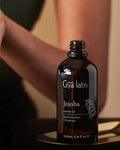
Gya Labs Lemon Essential Oil is Citrus limon, cold pressed from the peel and sourced from Italy, California and Argentina. $9.99 for 10ml. I use it for counters, everyday wipe downs and anywhere I want crisp rather than sweet.
Tea Tree Essential Oil
Tea tree has a sharper, more herbal aroma than lemon. I reach for it when I want a blend to smell particularly fresh and clean rather than fruity.
It pairs well with citrus. Lemon and tea tree make a bright, crisp combination, and adding sweet orange softens the whole thing and warms it up.
Gya Labs Tea Tree Essential Oil (Melaleuca alternifolia) is $8.99 for 10ml. If cleaning is your main use for it, the 30ml at $11.99 is better value, since this is the oil you will get through fastest.
Sweet Orange Essential Oil
Sweet orange brings the cozy side of fall cleaning.
Its citrus aroma is softer and sweeter than lemon, which makes it especially nice for living rooms, entryways and anywhere you want the house to smell welcoming once you have finished.
Gya Labs Sweet Orange Essential Oil (Citrus sinensis) is $9.99 for 10ml. Lemon with sweet orange is my favorite of the three combinations: lemon keeps it bright, orange gives it a warmer finish.
The All-Purpose Spray Recipe
You do not need a complicated formula. Everything below makes one 16 oz spray bottle, which is roughly 2 cups.
What you need
• 1 cup distilled water
• 1 cup white vinegar
• 10 to 15 drops essential oil in total
• A 16 oz spray bottle, glass or PET plastic
For a fall blend, try 6 drops lemon, 5 drops sweet orange and 3 drops tea tree.
How to make it
1. Pour the water and vinegar into the bottle.
2. Add the essential oils.
3. Close the bottle and shake gently.
4. Label it with the ingredients and the date.
5. Test it on a small hidden patch of the surface you plan to clean, and wait a few minutes before going further.
Shake before every use. Essential oils do not dissolve in water, so they separate between uses no matter how well you mixed them the first time. That is normal and not a sign the spray has gone off.
Spray onto the surface, then wipe with a clean cloth.
Vinegar Base or Castile Base
There are two common directions for a homemade cleaner, and they are not interchangeable.
|
|
Vinegar base |
Castile soap base |
|
Makes |
1 cup water, 1 cup white vinegar, 10 to 15 drops oil |
2 cups water, 1 tablespoon liquid castile soap, 10 drops oil |
|
Character |
Sharp, cuts through everyday grime, dries fast |
Soapier feel, gentler, better on greasy residue |
|
Smells like |
Vinegar at first, fading as it dries |
Mild soap |
|
Avoid on |
Marble, granite, travertine and other stone, unsealed grout, waxed or oiled wood, cast iron |
Anything where a soap film would show, such as glass and mirrors |
|
Good for |
Sealed counters, sinks, tiles, painted surfaces |
Painted walls, plastic, greasy kitchen surfaces |
Pick by the job. I use vinegar for a quick everyday spray and castile when I want something that feels more like soap and less like a wipe down.
Never put them in the same bottle.
Vinegar is acidic and castile soap is alkaline. Put them together and the acid breaks the soap back down into its oils, so the bottle curdles into a greasy white liquid that cleans less well than either ingredient would have on its own. It is not a matter of taste. The mixture simply stops working.
Surface Safety: Test First
Natural ingredients do not automatically mean a spray suits every surface.
Before using any homemade cleaner over a large area, test it on a small, hidden section first. This matters most on delicate, porous or specialty materials.
I would also avoid treating a DIY all purpose spray as genuinely all purpose. Acidic vinegar formulas can etch stone such as marble, granite and travertine, dull a waxed wood finish and wear away unsealed grout over time. When in doubt, check the manufacturer’s care instructions for the surface.
It is a small step, but one that saves you from discovering a cleaning experiment went wrong after you have already sprayed the entire countertop.
Two Things Never to Mix
This has nothing to do with essential oils and everything to do with keeping a vinegar spray in the house.
• Never mix vinegar with bleach, or with any product containing bleach. The combination releases chlorine gas, which is dangerous to breathe in an enclosed room. Do not use a vinegar spray on a surface you have just cleaned with bleach either, and never store the two where one could be poured into the other.
• Never mix bleach with ammonia, which is in many glass cleaners, for the same reason.
If you only take one thing from this article into the cupboard with you, take that one.
What DIY Sprays Can and Can’t Claim
This is one area where simple language is especially important.
A homemade spray can make a surface feel freshly cleaned and leave your home smelling bright, citrusy or pleasantly herbal. That is a perfectly useful role for a cleaning spray.
But fresh smelling is not the same thing as disinfected.
DIY essential oil sprays should not be described as disinfectants, sanitizers or products that kill germs. Unless a cleaning product has been specifically formulated, tested and registered for those claims where required, it is better to keep the language focused on everyday cleaning, freshening and scent.
So instead of saying:
"This spray kills bacteria."
Say:
"This spray helps clean everyday surfaces and leaves behind a fresh citrus aroma."
That distinction matters, especially when you are making your own cleaning products at home. Essential oils can contribute an appealing aroma to your cleaning routine, but they do not turn an ordinary homemade spray into a tested disinfectant.
If something in your home genuinely needs disinfecting, after raw chicken on a counter or during illness in the house, use a product registered for that purpose and follow its instructions, including how long the surface needs to stay wet.
How Much Essential Oil Should You Use?
More is not better.
Essential oils are highly concentrated, so I start modest rather than pouring in a large number of drops. For a 16 oz bottle, 10 to 15 drops is a reasonable starting point for an aroma focused household spray. You can always adjust in the next batch.
If the finished spray smells too sharp, reduce the tea tree or the vinegar. If you want something brighter, lemon and sweet orange are the easy combination.
One handling note. Wash your hands after measuring drops, and keep neat oil away from your eyes. Expressed citrus oils including lemon can also make skin more sensitive to sunlight, so if a spray goes on your hands, rinse them rather than heading straight outside. Our guide to citrus oils and sun sensitivity covers which oils that applies to.
The goal is not the strongest smelling cleaner possible. It is something pleasant enough that you will actually enjoy using it.
Build Your Fall Deep Clean Kit
Once you have one spray you like, it is easy to build a small seasonal kit around it. I keep it to four.
Everyday all purpose spray
Lemon and sweet orange in the vinegar base, for general household cleaning.
Fresh herbal spray
Lemon and tea tree when you want something sharper. This is the one that empties fastest, which is why I keep the 30ml bottle of tea tree rather than the 10ml.
Soap based cleaner
The castile formula, kept for the surfaces and jobs vinegar does not suit.
Scented cleaning cloths
Add a few drops of essential oil to a reusable cloth after washing and drying it, rather than putting undiluted oil directly onto a surface.
The idea is not a separate bottle for every room. It is a small set of formulas that fit the way you already clean. If you want the house to smell good while you work rather than after, a kitchen diffuser blend running in the background does that job better than any spray.
Storage and Labels
A homemade spray is simple, but labelling it is still worth the minute it takes.
Write the ingredients and the date directly on the bottle. If you have made a few formulas, add the intended use as well.
Fall Citrus All Purpose Spray
Water + vinegar + lemon + sweet orange + tea tree
Made: September 2026
Make smaller batches rather than one huge bottle that sits around for months. Homemade formulas do not contain the preservatives most commercial cleaners use, so how long they stay good varies with the ingredients, the container and where you keep them.
Keep bottles closed, somewhere cool and out of direct sunlight, and out of reach of children and pets. A labelled bottle of something that looks like water is exactly the kind of thing a child picks up. If the appearance, smell or texture changes noticeably, pour it away and make a fresh batch.
A Few Cleaning Mistakes I Avoid
After making homemade cleaners for a while, I have found that keeping things simple works better than trying to recreate an entire cleaning aisle at home.
Combining random ingredients
More ingredients do not make a better cleaner, and some combinations are actively unsafe. Stick to a recipe you understand.
Using essential oils neat on surfaces
Undiluted oil can mark or soften some finishes, particularly plastics and varnished wood. It belongs in the bottle with everything else, not straight onto the counter.
Assuming natural means suitable everywhere
Vinegar is natural and it will still etch marble. Think about what you are spraying before you spray it.
Confusing fragrance with cleaning
A room can smell wonderful after you finish and still have a surface you wiped badly. Scent tells you the spray is there. It does not tell you the surface is clean.
Skipping the label
If you make more than one formula, labelling prevents confusion and makes it obvious what is in each bottle.
Final Thoughts
A fall deep clean does not have to become a full weekend project.
The easiest way to make seasonal cleaning feel a little more enjoyable is to keep a couple of straightforward recipes on hand and give them scents you actually like. Lemon brightens. Sweet orange warms. Tea tree brings a sharper herbal note. Together they make a simple foundation for a natural all purpose cleaner that smells fresh and fits into the way you already clean.
The one thing I would hold on to is realistic expectations. These sprays are for cleaning and for making the house smell good. They are not disinfectants, and nothing about adding an essential oil makes them one.
Start with a single bottle of oil and one recipe. If it earns its place on the shelf, build the rest of the kit around it.


