


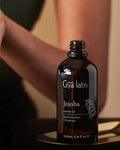

The best face oil for skin depends on your skin type and skincare goals. Jojoba is a lightweight choice for skin prone to excess oil, rosehip is often preferred for mature-looking or uneven-looking skin, and argan delivers rich moisture for dry skin while leaving a soft, nourished finish.
Walk into any skincare aisle and you'll probably find dozens of facial oils promising glowing, healthy-looking skin. Scroll through social media, and you'll see one creator recommending rosehip while another swears by argan or jojoba. It's no surprise that choosing the right one can feel overwhelming.
I've been there myself.
When I first started experimenting with facial oils, I assumed they all did the same thing. I bought whichever bottle had the nicest packaging, used it for a few weeks, and wondered why everyone seemed to have such strong opinions about different oils.
It didn't take long to realise that facial oils aren't one-size-fits-all. The way an oil feels on your skin, how quickly it absorbs, and where it fits into your routine can vary quite a bit.
That's why comparisons like jojoba vs argan oil, rosehip vs argan oil, and jojoba vs rosehip oil have become so common. Each oil has its own texture, finish, and ideal use, making some a better fit than others depending on your skincare routine and personal preferences.
In this article, I'll compare three of the most popular natural face oils, explain how they differ, and help you decide which face oil is best for your skin type and everyday routine.
Why Facial Oils Deserve a Place in Your Skincare Routine
Facial oils sometimes get an unfair reputation, especially among people with skin that tends to look shiny by midday.
I used to think adding oil to my face would only make things worse.
Instead, I discovered that the right facial oil can feel surprisingly lightweight and comfortable. Once I found an oil that suited my skin, it became one of the simplest steps in my evening routine.
A good facial oil for a skincare routine doesn't have to replace your moisturizer. Instead, it complements the rest of your products by adding another layer of nourishment and helping leave skin feeling soft and smooth.
The key is choosing an oil that matches your skin type rather than following whatever happens to be trending.
That's exactly why comparisons like jojoba oil vs rosehip for face are so helpful. Looking at how each oil performs makes it much easier to decide which one belongs in your routine.
Meet the Three Most Popular Facial Oils
Although all three are plant-based oils, they feel surprisingly different once you start using them. Let's take a closer look.
Jojoba Oil
If someone asked me to recommend a face oil for beginners, jojoba would probably be my first suggestion.
Despite its name, jojoba is technically a liquid wax rather than a traditional oil, which gives it a silky texture that absorbs quickly without leaving a heavy finish.
One of the things I appreciate most about jojoba is how versatile it is. Some evenings I'll use it on its own, while other times I'll mix a few drops into my moisturizer when my skin feels a little drier than usual.
Many people are interested in jojoba oil benefits for skin because of its lightweight feel and ability to fit comfortably into different skincare routines. It's also frequently included on lists of non-comedogenic face oils, making it a popular option for those looking for a lighter everyday facial oil.
If you're after an everyday face oil that layers easily with other skincare products, jojoba is an excellent place to start.
Rosehip Oil
Rosehip has become one of my favourite oils whenever I want something that feels nourishing without being overly rich.
Its texture is slightly lighter than argan but a little more substantial than jojoba, creating a nice middle ground.
One reason rosehip oil benefits for skin continue to attract attention is its versatility. Whether your goal is adding a facial oil for glowing skin or simply expanding your skincare routine, rosehip fits comfortably into both morning and evening routines.
I usually reach for rosehip at night because I enjoy taking a little more time with my skincare before bed. A few drops warmed between the hands and gently pressed onto the face feel like a relaxing way to finish the day.
Rosehip's fatty acid profile is notably different from the other two it's dominated by polyunsaturated fats, particularly linoleic acid, which is part of why people with oilier or acne-prone skin sometimes find it sits more comfortably than richer oleic-acid-heavy oils.
Argan Oil
Argan oil has earned its reputation for good reason.
It has a richer texture than jojoba, yet it never feels as heavy as many people expect.
Whenever my skin feels particularly dry after travelling or spending time in air-conditioned environments, argan is usually the bottle I reach for first.
Many people exploring argan oil for face enjoy how smoothly it spreads across the skin without leaving an overly greasy finish.
Among the well-known argan oil benefits for skin is its ability to leave skin feeling soft and nourished, making it a favourite for those looking for a more moisturizing facial oil.
For me, argan shines during cooler months when my skin appreciates a little extra comfort.
Comparing Rosehip, Argan and Jojoba Oils
Rather than asking which oil is "best," I think it's more useful to ask which one fits your routine. Here's a quick comparison.
|
Feature |
Rosehip Oil |
Argan Oil |
Jojoba Oil |
|
Texture |
Lightweight to medium |
Medium and silky |
Lightweight |
|
Finish |
Soft, slightly dry |
Smooth and nourishing |
Light, non-greasy |
|
Best For |
Everyday evening routines |
Dry-feeling skin |
Daily use and oil-prone skin |
|
Absorption |
Fast |
Moderate |
Fast |
|
Works Well With |
Moisturizers and serums |
Nighttime skincare |
Almost any routine |
|
Beginner Friendly |
Yes |
Yes |
Excellent |
No single oil is better than the others.
Each simply offers a different experience.
That's why comparisons like rosehip vs argan oil or jojoba vs argan oil don't really have one correct answer.
When I first started using facial oils, I assumed I'd eventually settle on one favourite. Instead, I found myself reaching for different oils depending on the season, the weather, and how my skin felt that day. That's why I think the better question isn't "Which oil is best?" but rather "Which oil is best for me right now?"
If you're also curious how argan and jojoba compare for hair care specifically not just face our full argan oil vs jojoba oil guide covers both skin and hair applications in more depth.
Which Oil Fits Your Skin Type?
Choosing the best oil for your skin type often comes down to how your skin feels rather than what a label says.
Skin Prone to Excess Oil
People are often surprised when I recommend facial oil here.
A lightweight option like jojoba absorbs quickly and doesn't leave my skin feeling overly shiny, which is why it's one of my favourite choices for a facial oil for oily skin.
If you're wondering about the best oil for oily skin, jojoba is an excellent place to begin.
Dry Skin
When my skin feels tight after long flights or colder weather, argan is usually my first choice.
Its richer texture makes it a wonderful moisturizing face oil and one of my favourite options for a facial oil for dry skin.
Combination Skin
Combination skin often benefits from flexibility.
Some days I use jojoba during the morning and rosehip in the evening, depending on how my skin feels.
That combination has worked particularly well for me because neither oil feels excessively heavy.
Sensitive Skin
Whenever you're trying a new facial oil, simplicity is your friend.
Start with one oil rather than several and always patch test first.
Personally, I'd begin with jojoba because of its lightweight texture before experimenting with rosehip or argan.
Mature-Looking Skin
Rosehip and argan are both popular additions to routines designed for mature-looking skin.
I often alternate between the two depending on the season rosehip during warmer months and argan when my skin feels like it could use a little more nourishment.
Building a Simple Facial Oil Routine
One of the biggest misconceptions about facial oils is that they need to replace your entire skincare routine.
In reality, I think they work best as the finishing touch.
After cleansing and applying any water-based products like toners or serums, I finish with a few drops of facial oil to help lock in moisture and leave my skin feeling soft and comfortable.
If you're completely new to facial oils, don't feel like you need to start using several at once.
I certainly didn't.
I began with one bottle of jojoba and used it consistently for a few weeks before trying anything else. That made it much easier to understand how my skin responded and whether I actually enjoyed using it.
A simple facial oil routine can look like this:
Morning Routine
• Cleanser
• Toner (optional)
• Serum (optional)
• Lightweight moisturizer
• A few drops of jojoba oil if desired
• Sunscreen
Evening Routine
• Cleanser
• Serum
• Moisturizer
• Rosehip or argan oil
I also like adjusting my routine with the seasons. During warmer months, I naturally gravitate toward lighter oils like jojoba or rosehip, while argan often becomes my evening favourite once the weather cools down.
If you're looking for more seasonal skincare ideas, our guide to how to choose the right carrier oil for your skin type explores lightweight oils that fit beautifully into warm-weather routines.
Can You Mix Rosehip, Argan, and Jojoba Oils?
Absolutely.
In fact, I think experimenting with different combinations is one of the easiest ways to discover what works best for your skin.
There's no rule that says you have to commit to a single oil forever.
Some evenings I mix jojoba and rosehip together for a lightweight finish, while on particularly dry days I'll add a little argan into the mix for extra nourishment.
The key is keeping things simple.
Rather than combining several oils all at once, start with two and see how they feel on your skin. Over time, you'll naturally discover which combinations suit your routine best.
Common Mistakes to Avoid When Using Facial Oils
Like many skincare products, facial oils work best when they're used correctly. Here are a few mistakes I've made myself and learned from.
Applying Too Much
More isn't always better. Two or three drops are often enough for the entire face. Using more than you need can leave even lightweight oils feeling heavier than intended.
Skipping Patch Tests
Even natural skincare products deserve a patch test. Whenever I introduce a new oil into my routine, I test it on a small area first before applying it more broadly. It only takes a day, and it's worth the peace of mind.
Expecting Overnight Results
One thing I've learned over the years is that consistency almost always beats intensity. Using facial oil regularly tends to be more rewarding than applying large amounts for a few days and then forgetting about it for weeks.
Choosing an Oil Just Because It's Trending
I've definitely bought products simply because everyone else seemed to be talking about them. Sometimes they worked brilliantly. Sometimes they didn't suit my skin at all.
That's why I now choose products based on how they fit my own routine rather than what's popular online.
Final Thoughts
Comparisons like jojoba vs argan oil, rosehip vs argan oil, and jojoba vs rosehip oil don't have a universal answer and that's actually a good thing.
Each oil brings something different to your skincare routine.
If you prefer a lightweight everyday face oil, look no further than jojoba oil. If you enjoy skin that feels particularly dewy and nourished, argan is hard to beat. And if you want something that feels nourishing without being heavy, rosehip is worth trying.
I've used all three at different points, and instead of choosing one favourite, I tend to rotate them throughout the year depending on the season and how my skin feels.
The best skincare routine isn't built around trends it's built around finding products you'll genuinely enjoy using every day.
If you're just getting started with facial and carrier oils, our Essential Oils Guide for Beginners is a helpful next read. It explains the basics of essential oils, carrier oils, and how they can fit naturally into a wellness and skincare routine.